Hunting in Northland
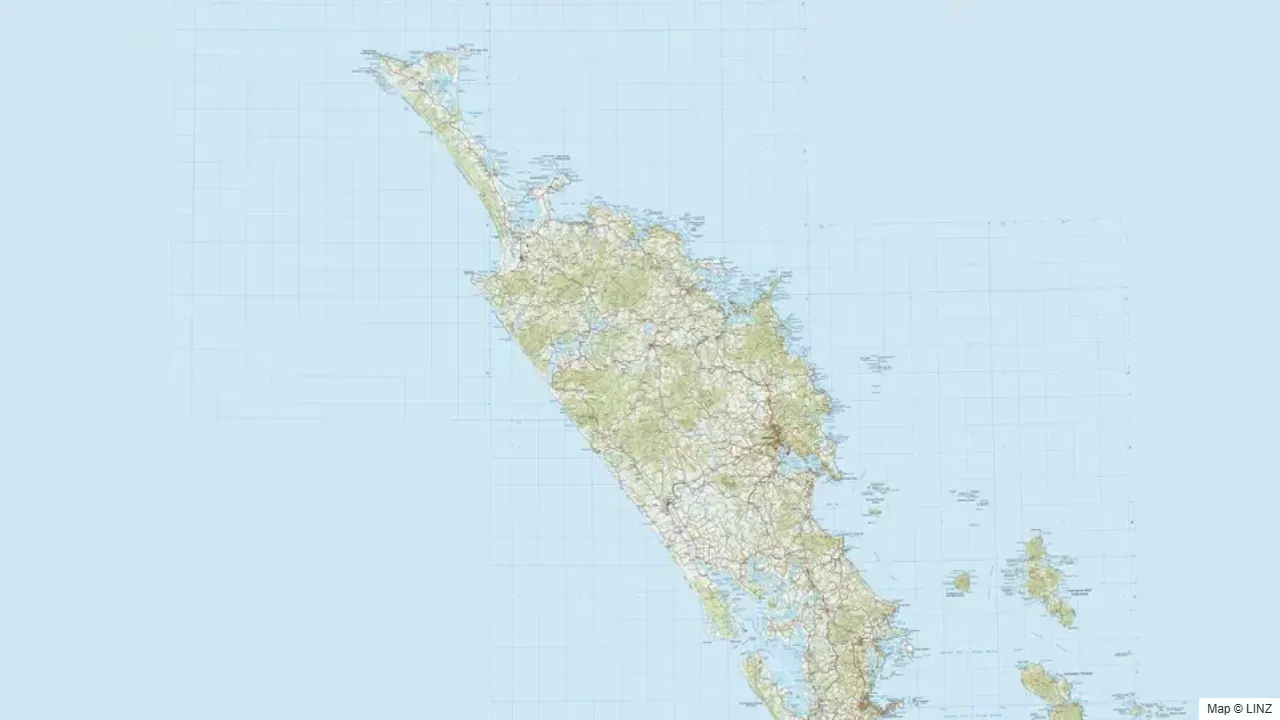
Overview
Northland is the warmest, wettest, and most heavily fragmented of New Zealand's hunting regions. The country runs from sea-level kauri-podocarp bush through gum-land scrub and exotic pine forestry to a few low ranges that rarely top 700 metres. There are no alpine species, no chamois, no tahr, and no wapiti — but Northland makes up for it with some of the country's strongest pig hunting, a long tradition of bush goat hunting, and pockets of lowland red and fallow deer that reward patient locals.
A large share of Northland is in private title or Māori land trust, and serious hunting is typically done either on those blocks by arrangement or on the patches of public conservation land scattered through the region. There is no single "Northland Forest Park" — the public estate is a mosaic of small reserves, recreation hunting areas, and scenic reserves managed out of DOC's Te Tai Tokerau / Northland district.
What You Can Hunt
- Wild pig — the headline species. Northland has a deeply embedded pig hunting culture and produces large boars on a regular basis.
- Wild goat — common through coastal scrub, broken farmland, and bush margins.
- Fallow deer — limited but established populations, most famously in the Russell Forest area on the east coast.
- Red deer — present in some central and western forests in small numbers; densities are low compared to the rest of the country.
Where to Hunt
Public hunting in Northland clusters around a handful of forests and conservation areas rather than one big block of country. Densities and access vary considerably between blocks, and many of the smaller reserves border directly onto private land — knowing exactly where the boundary is matters more here than in the high country.
- Russell Forest (Bay of Islands) — the best-known public fallow deer country in Northland, with pig and goat alongside. Tight, broken kauri-podocarp bush.
- Puketi and Omahuta Forests — large blocks of mature bush west of Kerikeri, with pig, goat, and occasional red deer.
- Waipoua and Mataraua Forests — west coast kauri forest, primarily pig and goat country, with strict kauri dieback hygiene requirements.
- Raetea and Maungataniwha Ranges — central spine of the far north, with pig and goat throughout and some red deer in the deeper bush.
- Coastal Northland — many small scenic reserves and scrub blocks hold goats; access is often through farmland by arrangement.
Getting In
- Road — almost all Northland hunting is reached by sealed or gravel road. State Highway 1 and State Highway 12 are the primary spines; most forest blocks are within an hour of those roads.
- Air — no helicopter-only blocks. Light aircraft and helicopters are occasionally used for pig hunting in remote central forest, but it's rare.
- Water — coastal blocks on the east side are sometimes accessed by boat from the Bay of Islands or Whangaruru, particularly for goat hunting on peninsulas and offshore-adjacent country.
Seasons & Weather
Northland's sub-tropical climate means hunting is largely a year-round proposition, with weather rather than rut timing dictating the calendar.
| Period | Conditions | Notes |
|---|---|---|
| Summer (Dec–Feb) | Hot, humid, dry | Heavy bush; pig hunting tough on dogs in heat. |
| Autumn (Mar–May) | Warm, humid, wet | Fallow rut in April brings most deer activity. |
| Winter (Jun–Aug) | Mild, very wet | Best general hunting period — cool, animals feeding actively. |
| Spring (Sep–Nov) | Warm, drying out | Strong pig hunting as ground firms up. |
Rainfall is high year-round, especially on the west coast. Bush is dense and visibility is short; most shots are inside 80 metres.
Gear & Conditions
Light, quick-handling rifles and shotguns suit Northland's close-range bush hunting. A short-barrelled bolt or lever-action in a moderate calibre (.243 through .308) is more than enough for everything that lives here. Pig hunters work dogs hard — a good first aid kit, rip-stop gear, and confidence with a knife are non-negotiable. Bush is steep and broken; gaiters and quality boots matter more than the brand of rifle. Kauri dieback hygiene stations are present at most forest entries on the west coast and use is mandatory — clean and spray boots and gear before and after every trip.
Permits & Regulations
Public conservation land hunting in Northland requires a free DOC permit, available online from the Department of Conservation. Some forests have additional rules — for example, Russell Forest operates under a block ballot during peak fallow rut. Pig dogs must be controlled and registered; pig hunting on conservation land is permitted but subject to specific dog-related conditions. Spotlighting is generally not permitted on conservation land. Always check the permit area specifics before each trip — Northland's small-block structure means rules vary considerably across short distances.
Open the Map
Open Northland in the full hunting map →
Public conservation land, hunting blocks, tracks, and current pesticide operations layered together for every Northland forest.
Useful Links
Game animals in Northland
Hunting areas in Northland
49 DOC hunting blocks — species, huts, access and an interactive map for each.
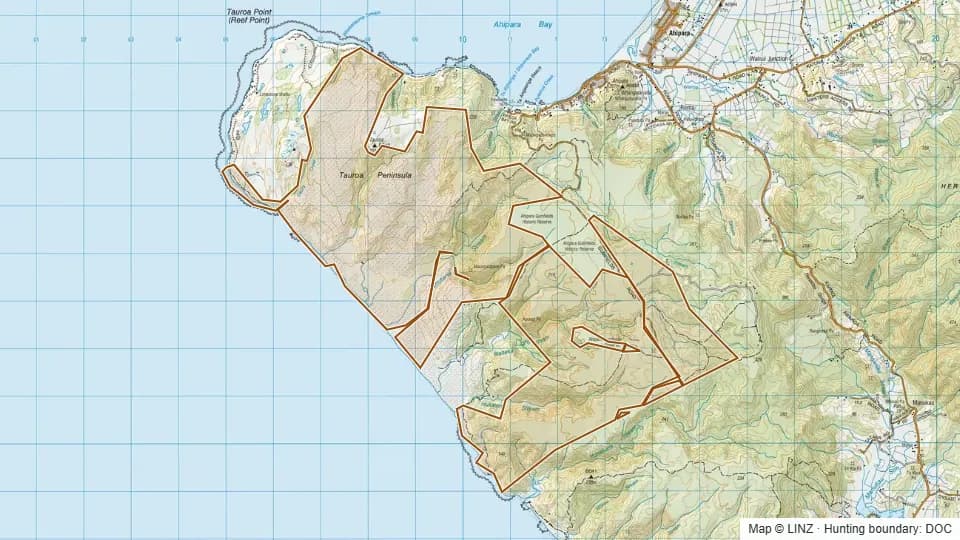 Ahipara Conservation Area3,380 ha
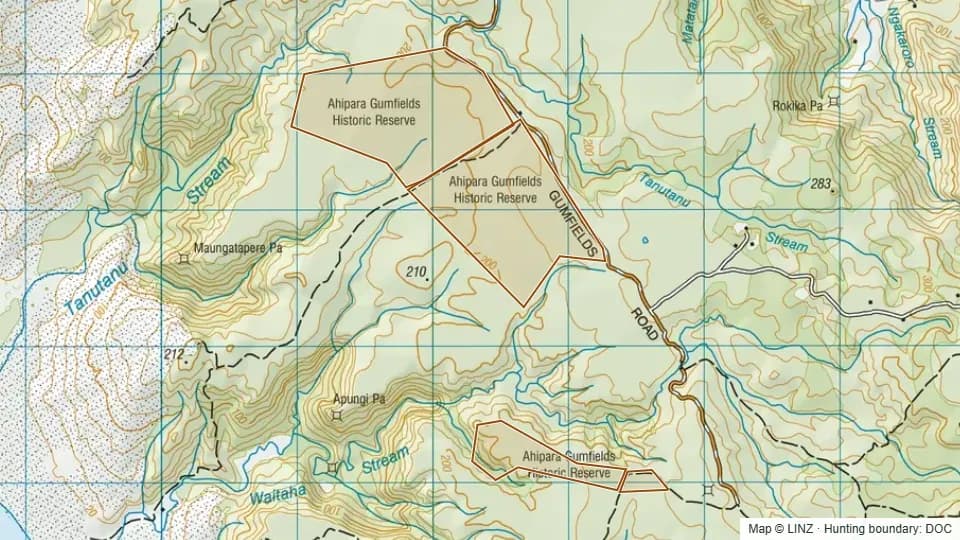 Ahipara Gumfields Historic Reserve227 ha
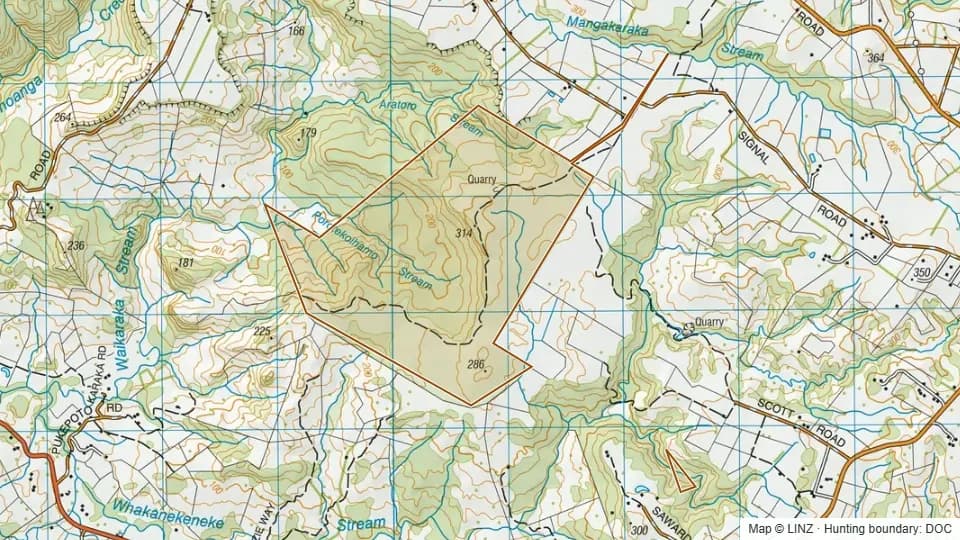 Aratoro Conservation Area387 ha
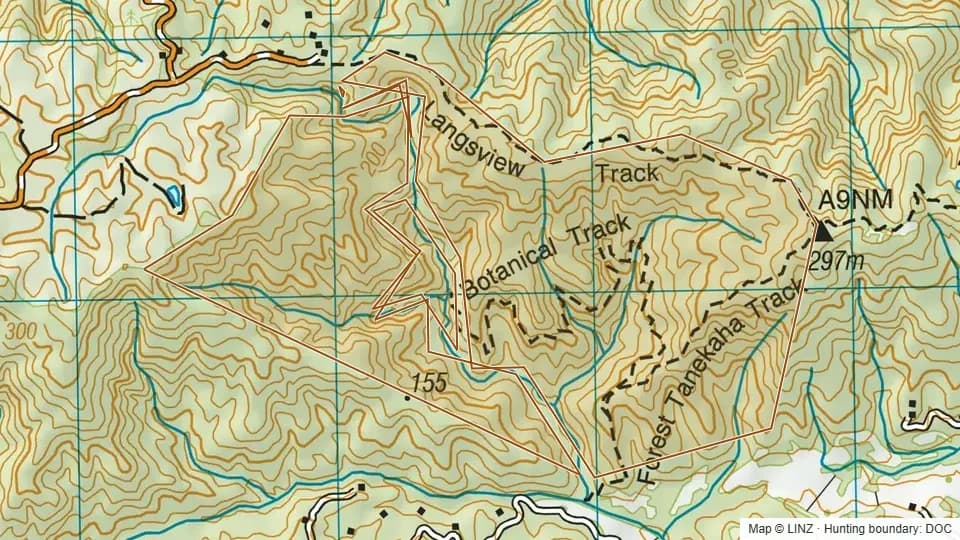 Brynderwyn Hills Scenic Reserve239 ha
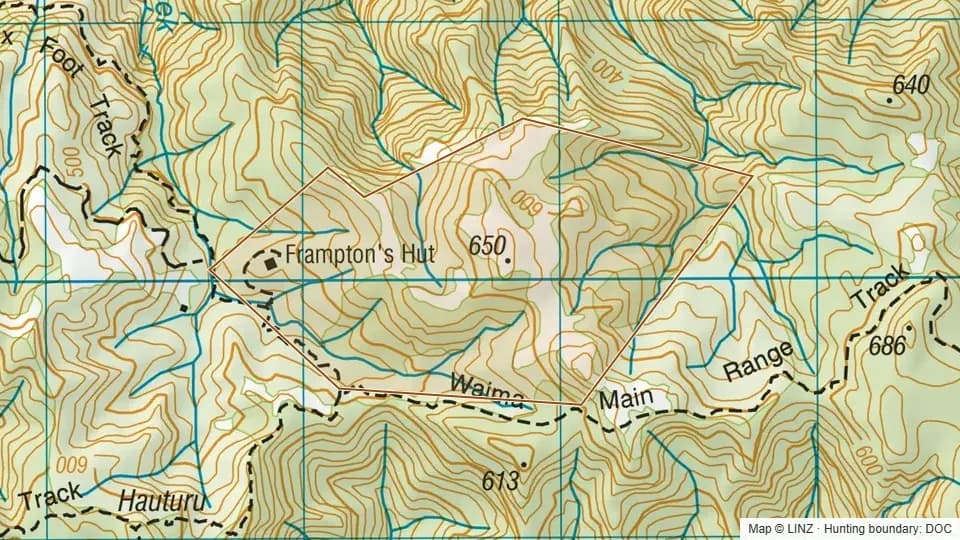 Frampton Sce. Res.154 ha
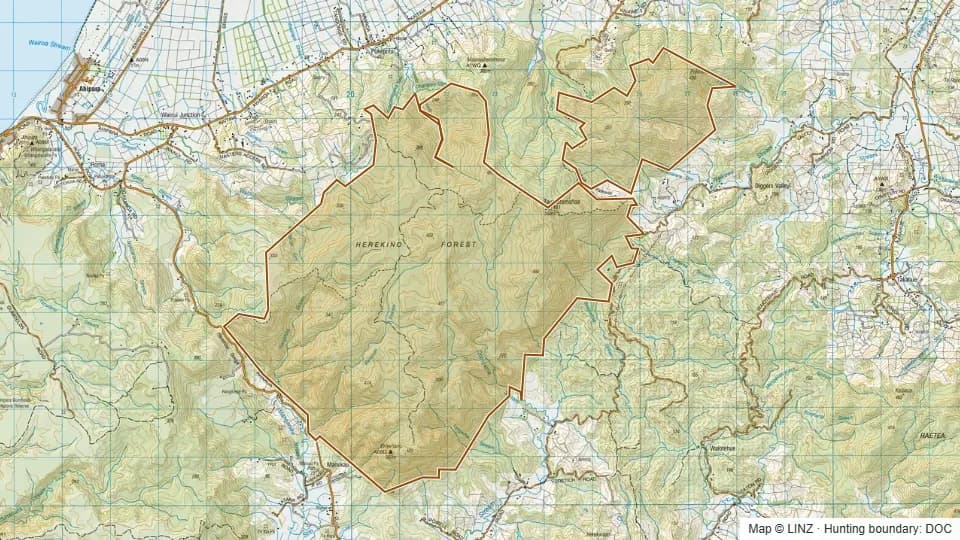 Herekino Forest4,357 ha
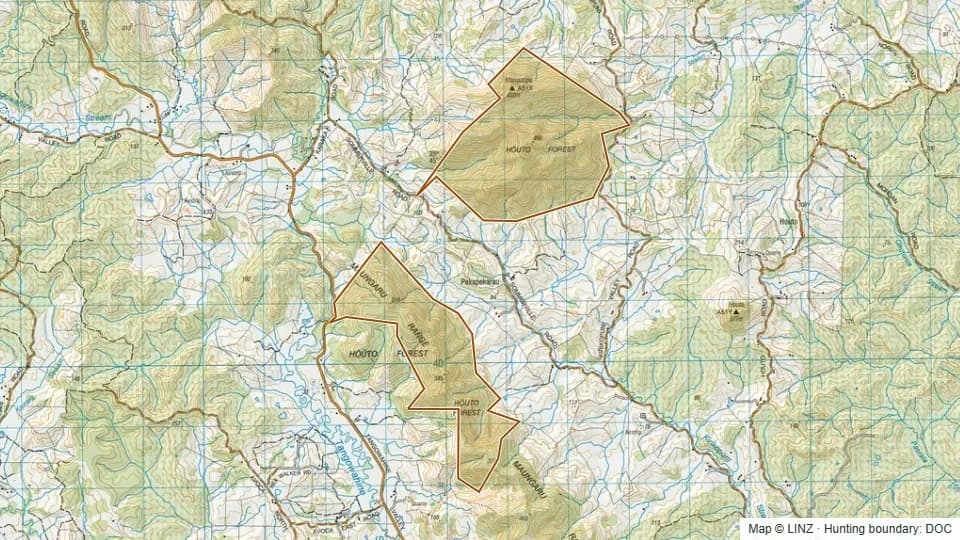 Houto Forest941 ha
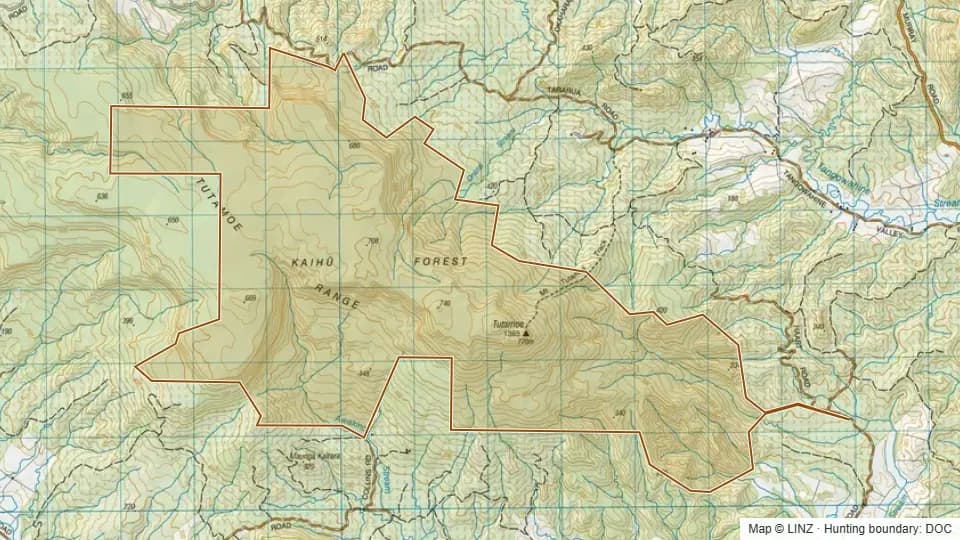 Kaihu Forest2,405 ha
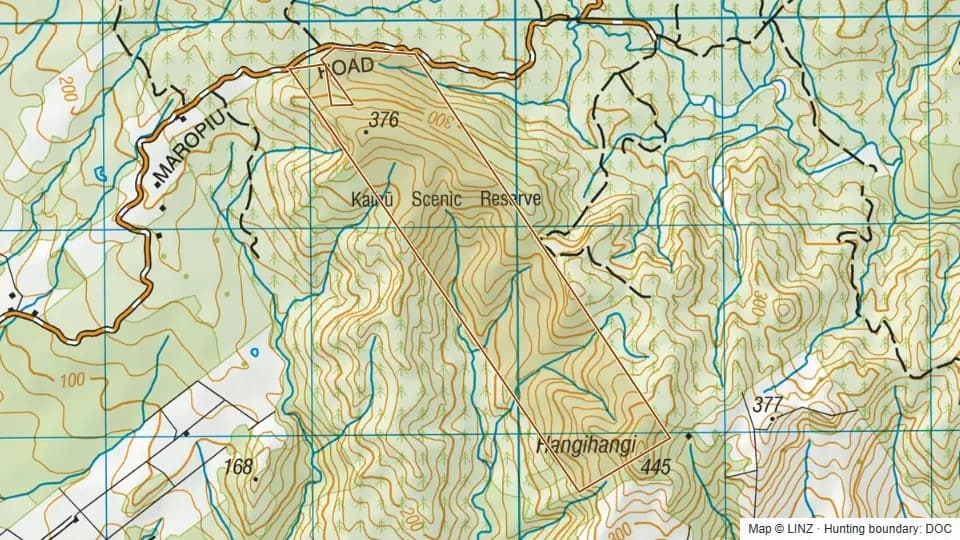 Kaihu Scenic Reserve121 ha
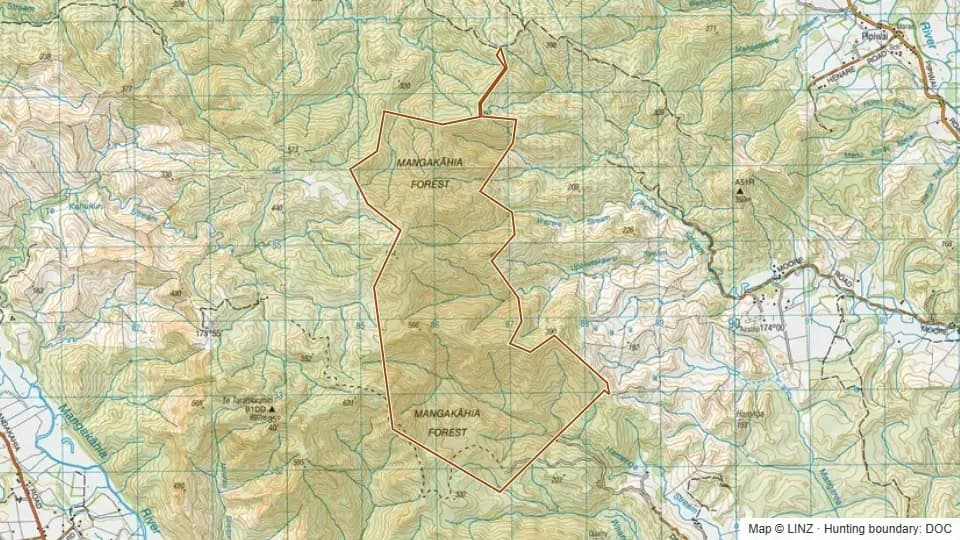 Mangakahia Forest915 ha
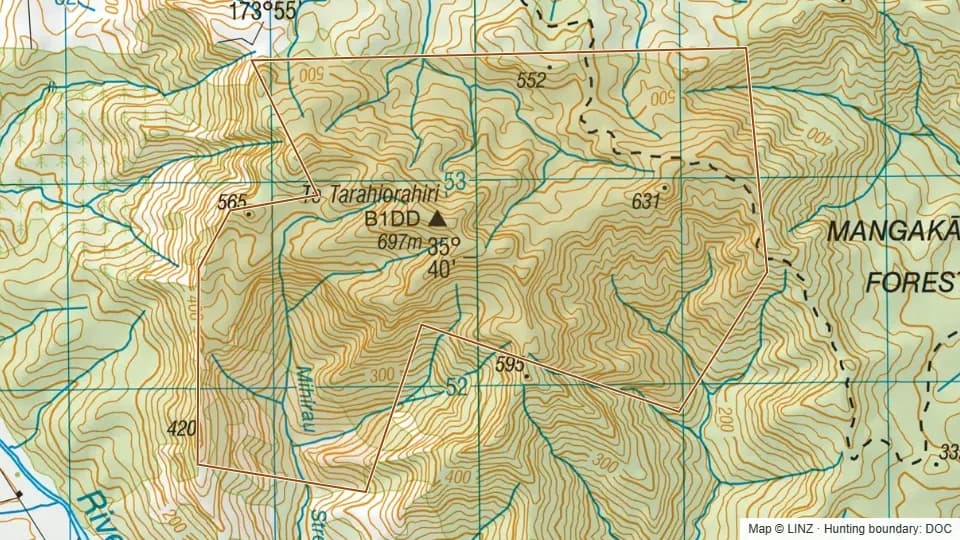 Mangakahia Forest addition427 ha
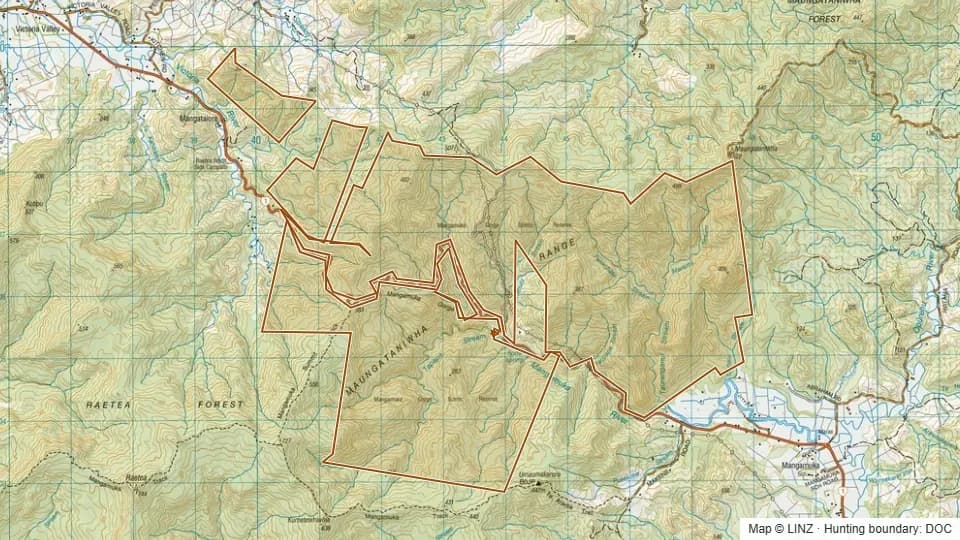 Mangamuka Gorge Scenic Reserve2,954 ha
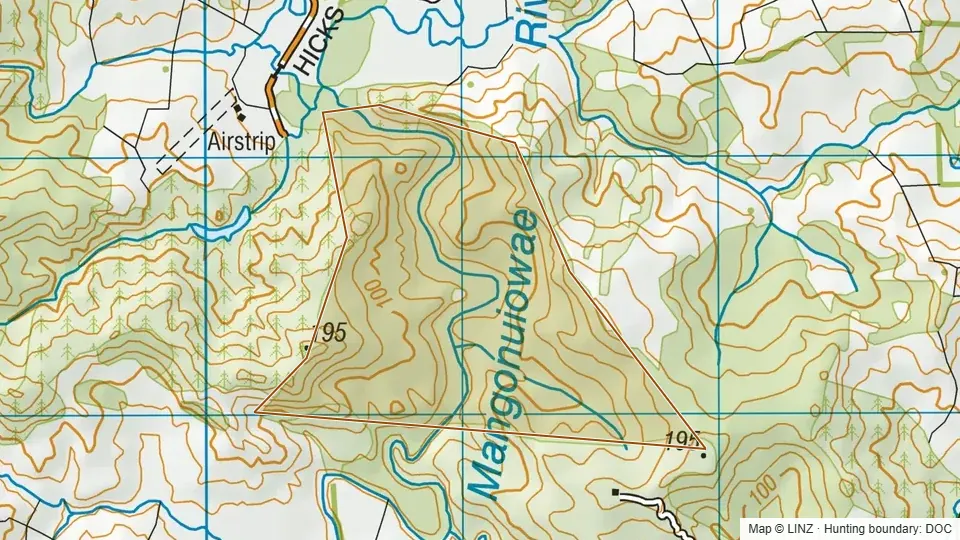 Mangonuiowae (Govt Purpose) Wildlife Management Reserve130 ha
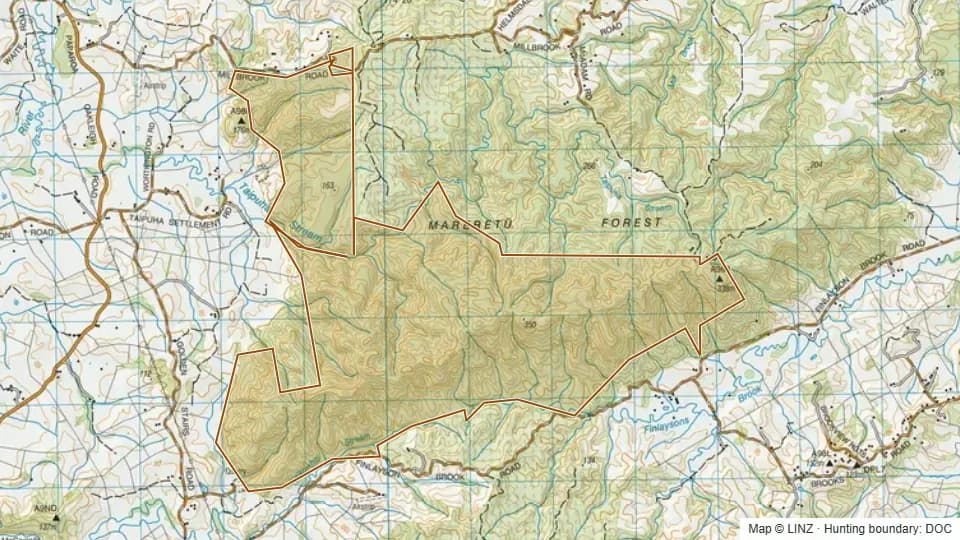 Mareretu Forest1,355 ha
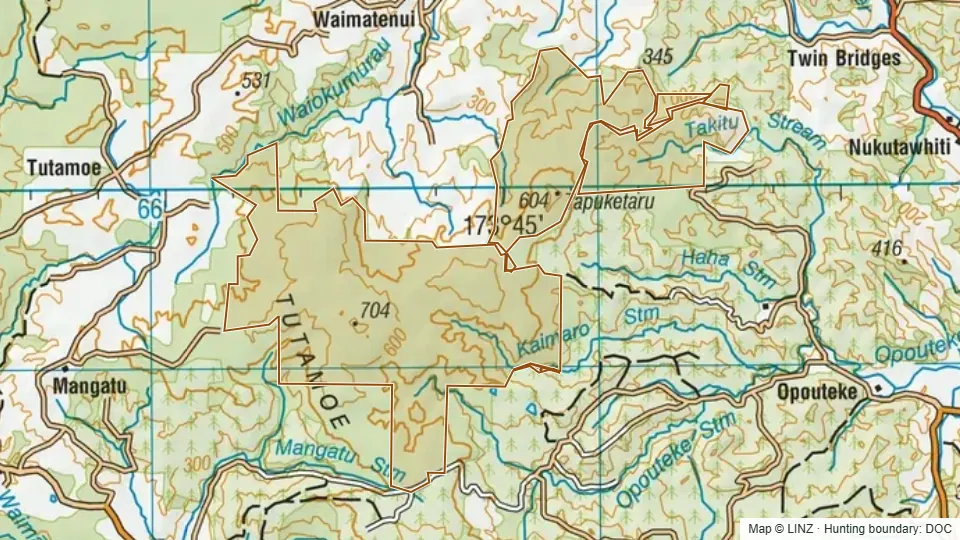 Marlborough Forest3,982 ha
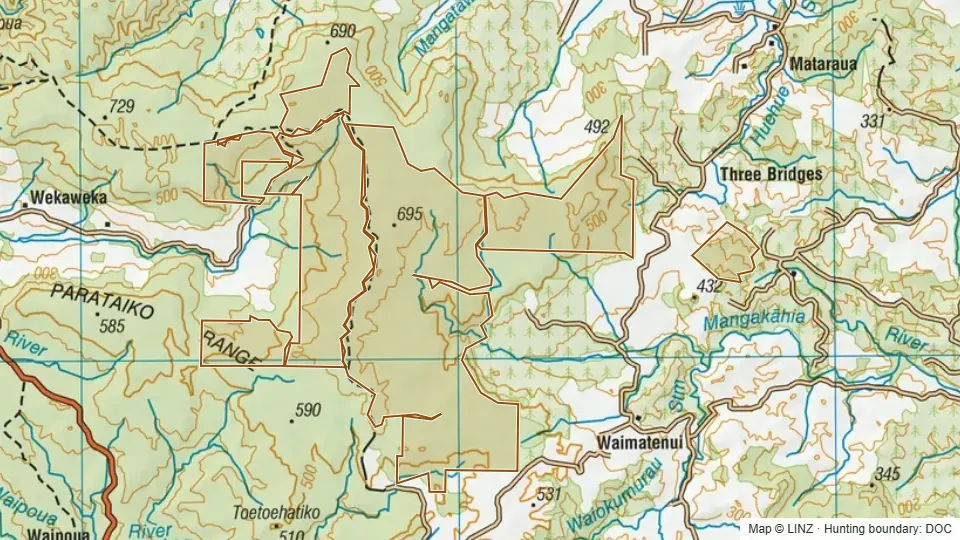 Mataraua Forest5,427 ha
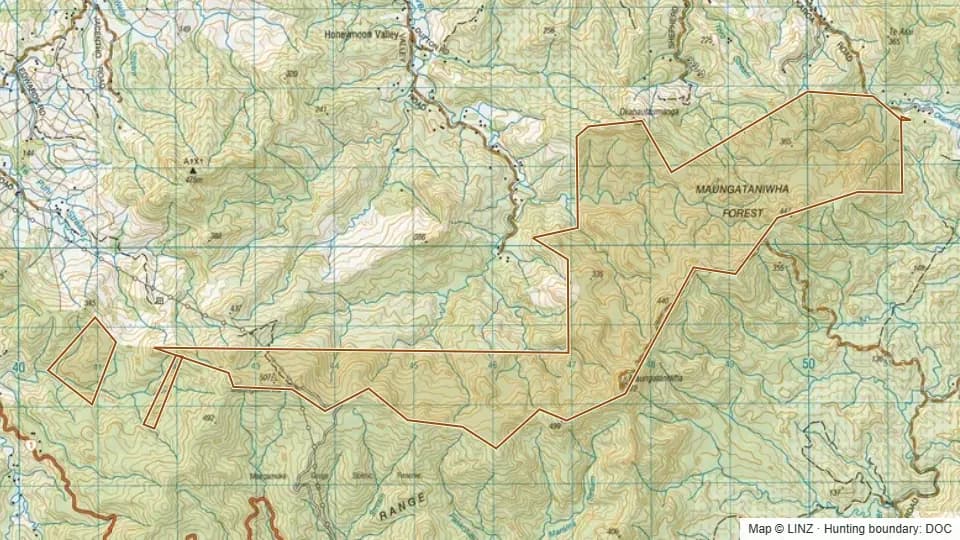 Maungataniwha Forest (Pt Northland Cons. Park)1,219 ha
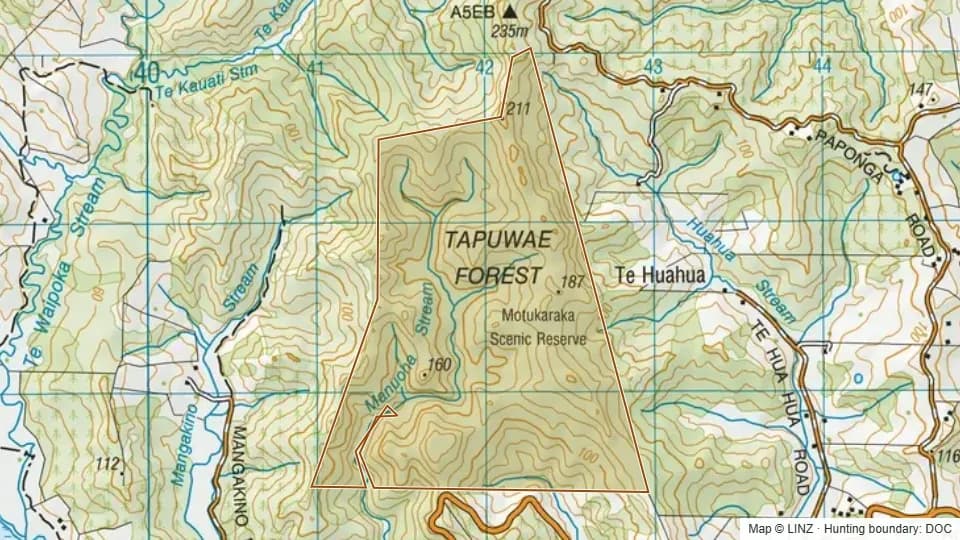 Motukaraka Scenic Reserve313 ha
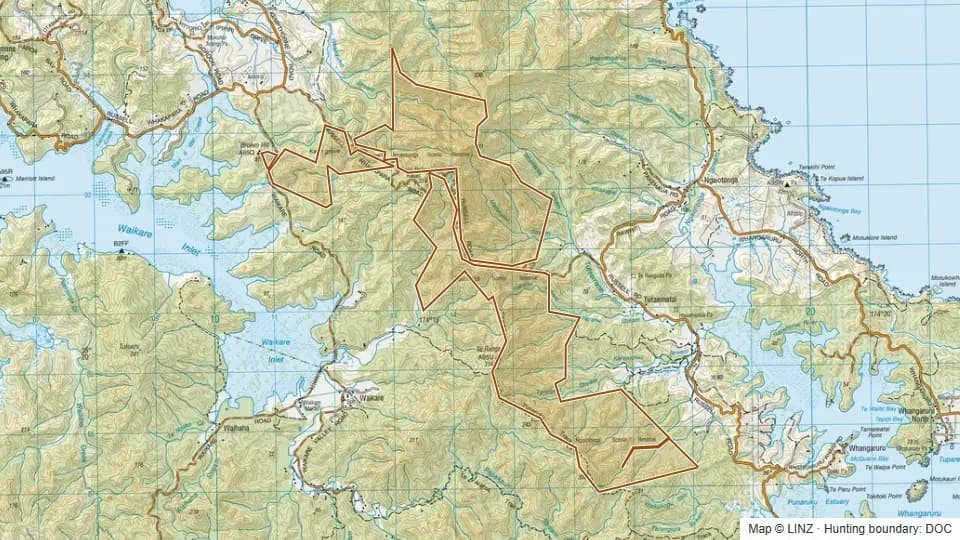 Ngaiotonga Scenic Reserve1,159 ha
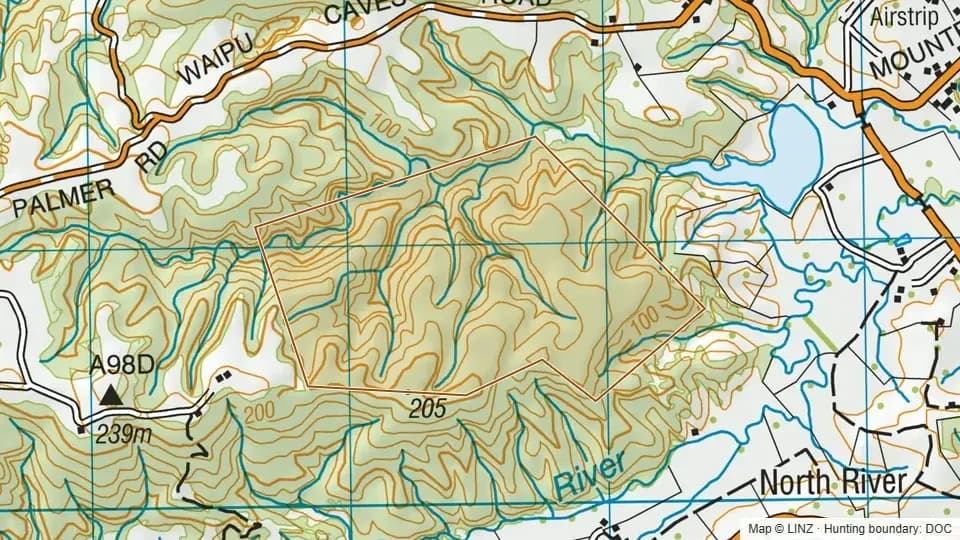 North River Scenic Reserve114 ha
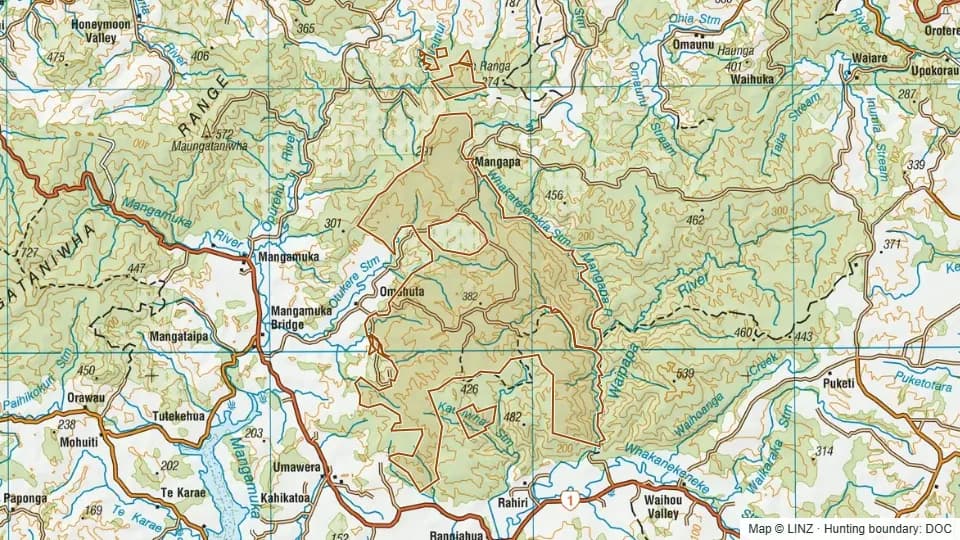 Omahuta Forest6,585 ha
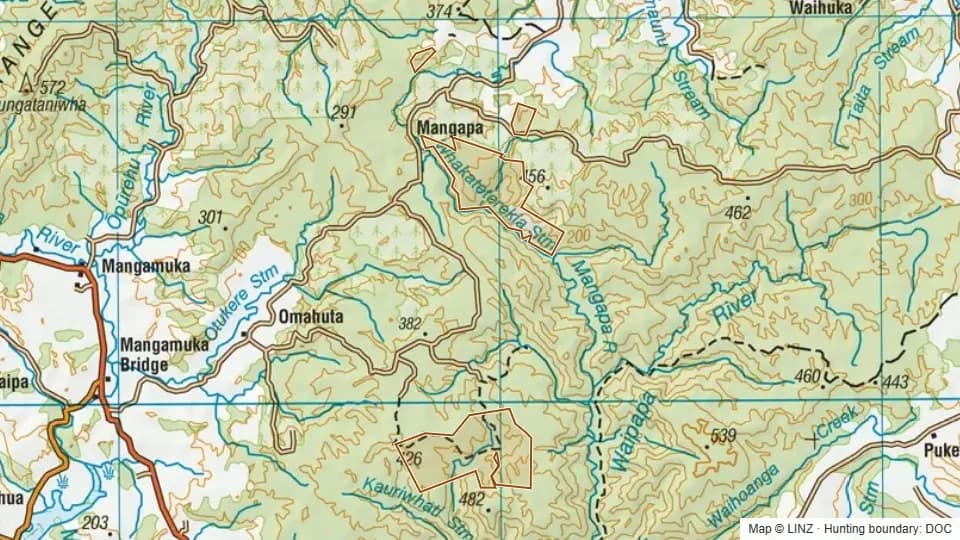 Omahuta Forest Addition973 ha
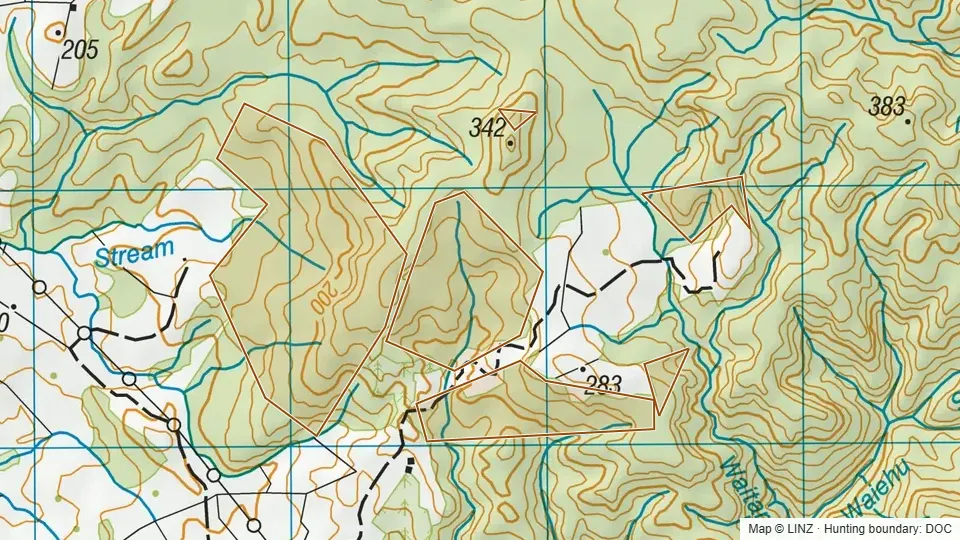 Omahuta Forest Addition No1.Conservation Area108 ha
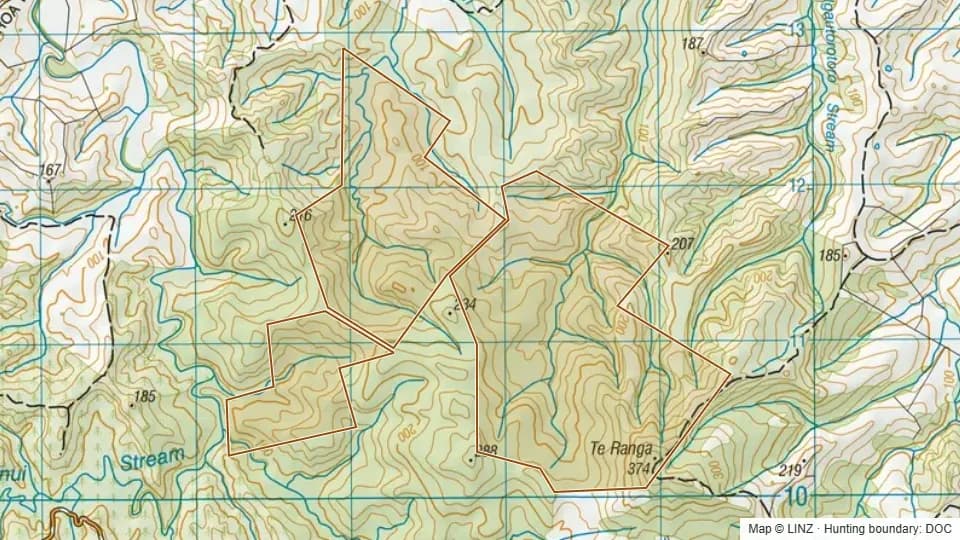 Omahuta Forest Scenic Reserve No 2409 ha
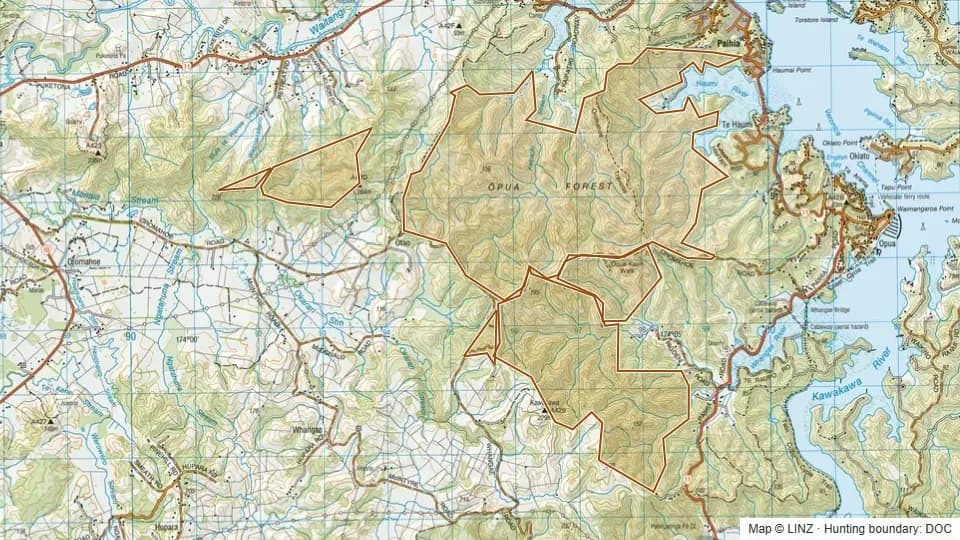 Opua Forest1,924 ha
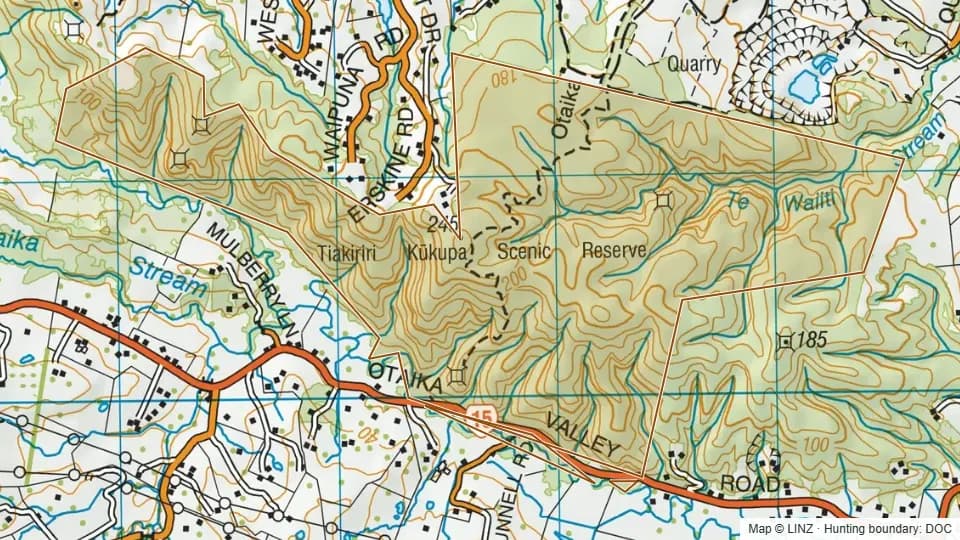 Otaika Valley Scenic Reserve334 ha
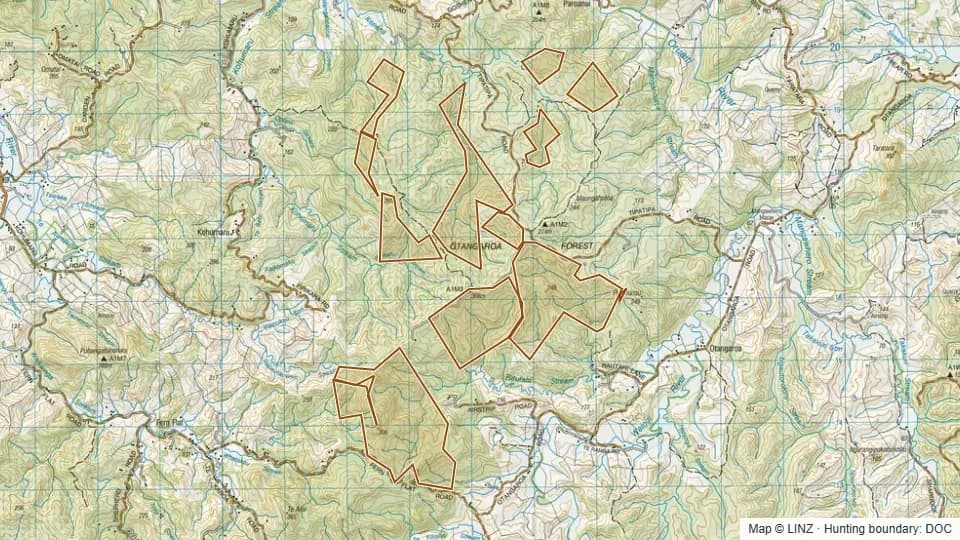 Otangaroa Conservation Area874 ha
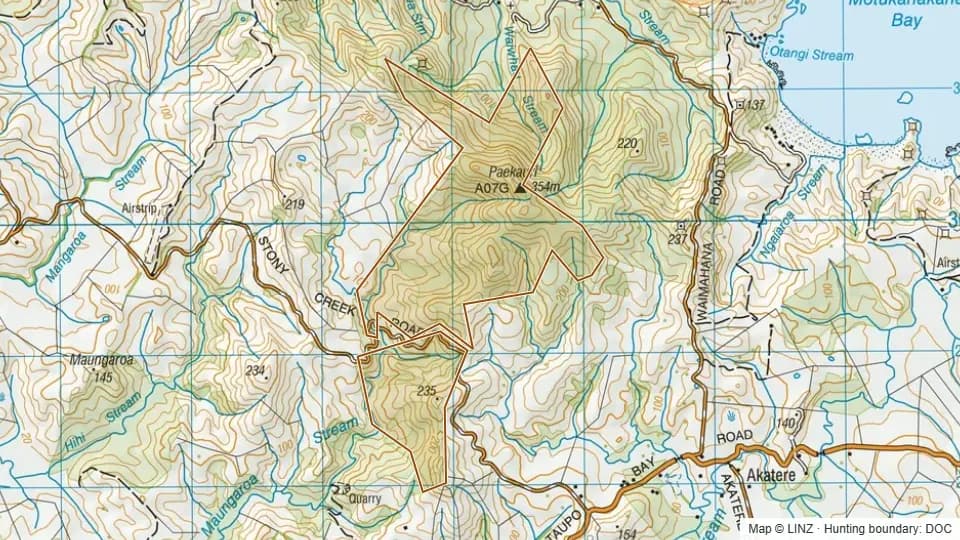 Paikauri Conservation Area247 ha
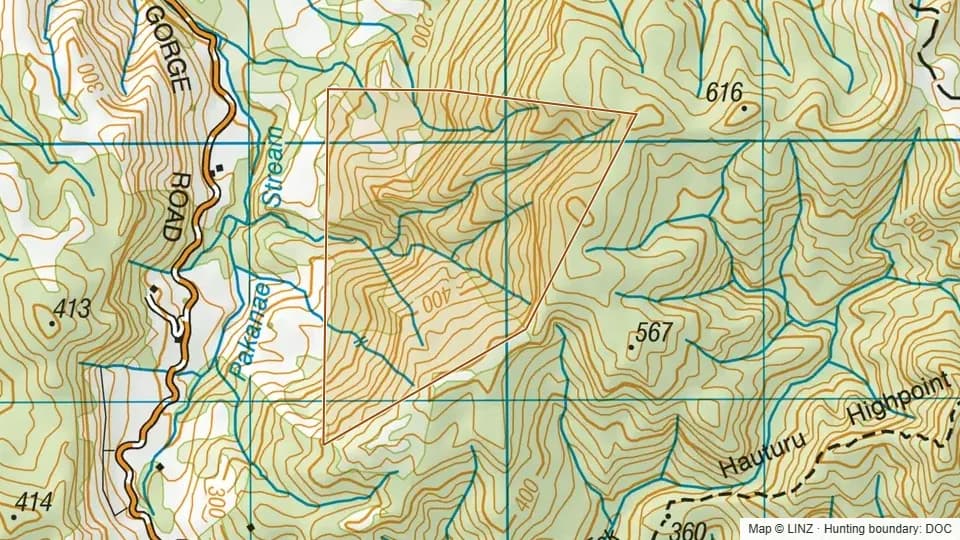 Pakanai Scenic Reserve112 ha
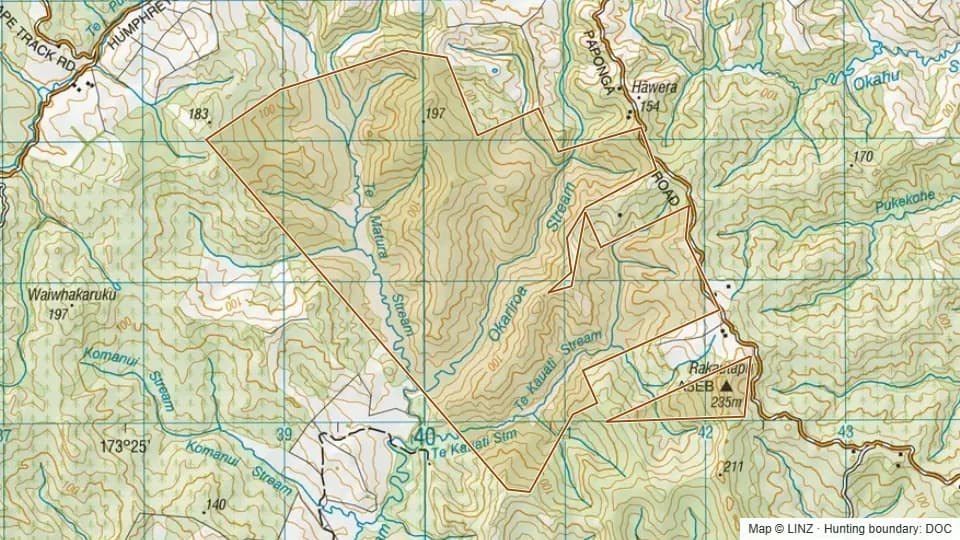 Paponga Conservation Area588 ha
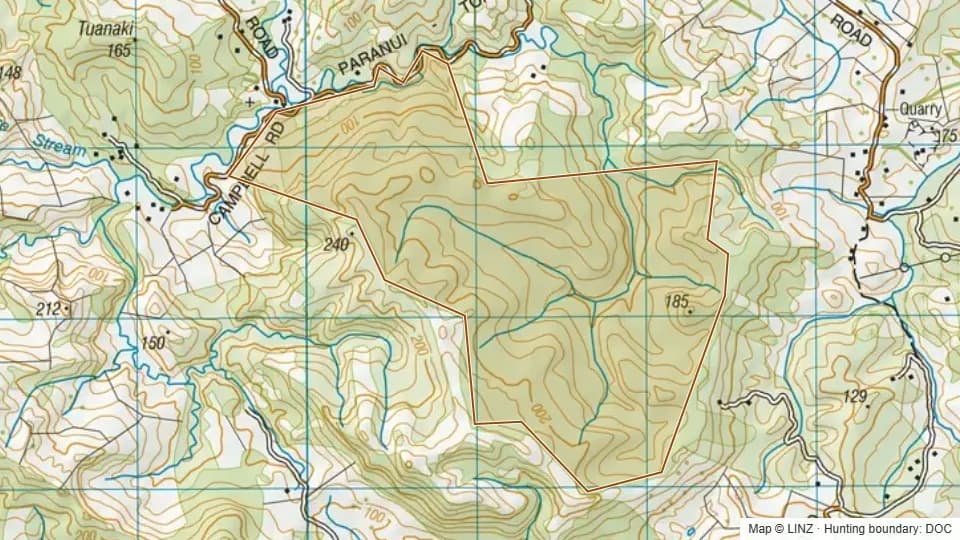 Paranui Scenic Reserve363 ha
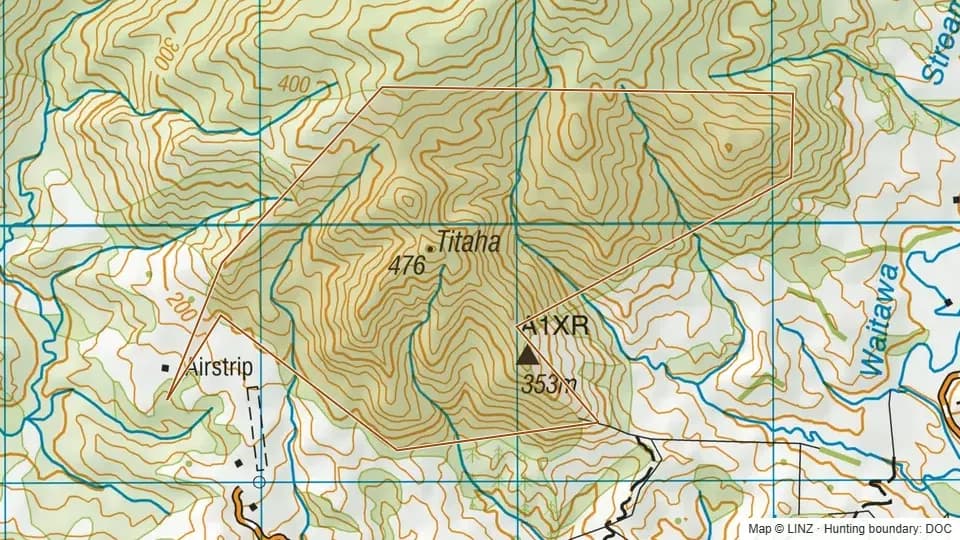 Pukemiro Block Scenic Reserve194 ha
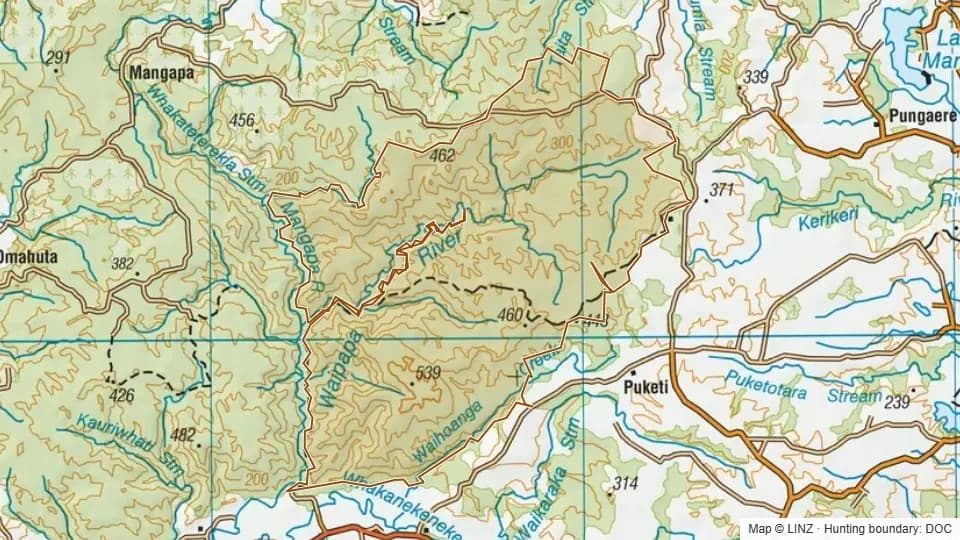 Puketi Forest7,327 ha
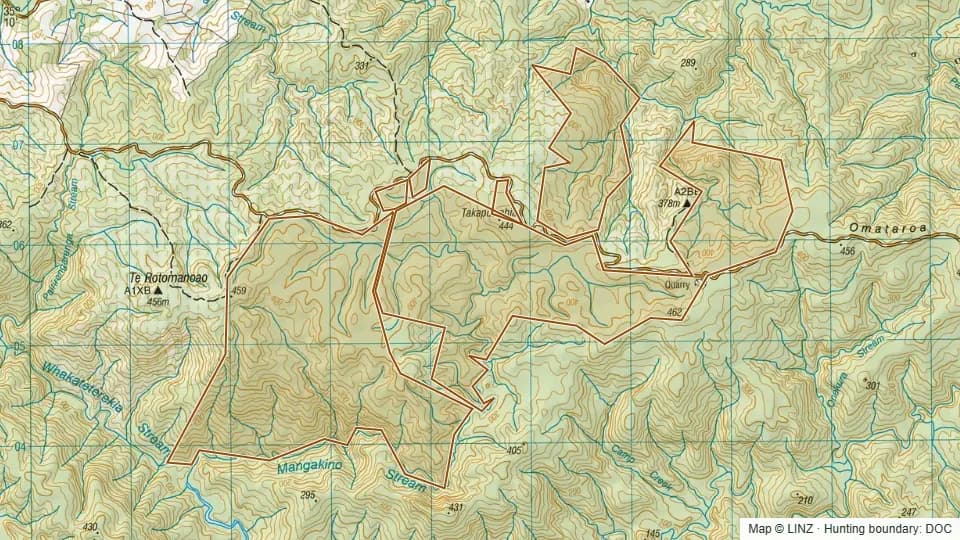 Puketi Forest Addition1,018 ha
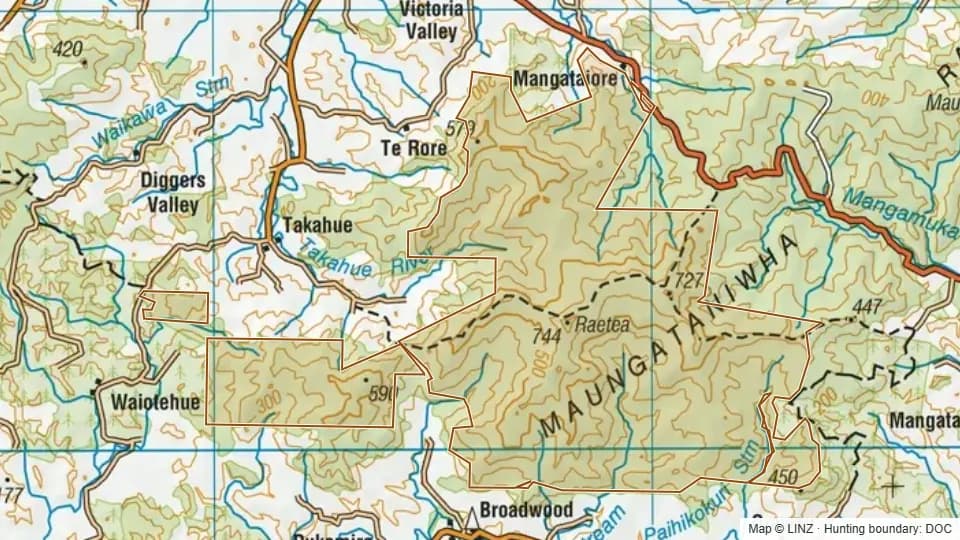 Raetea Forest (Pt.Northland Conservation Park)6,605 ha
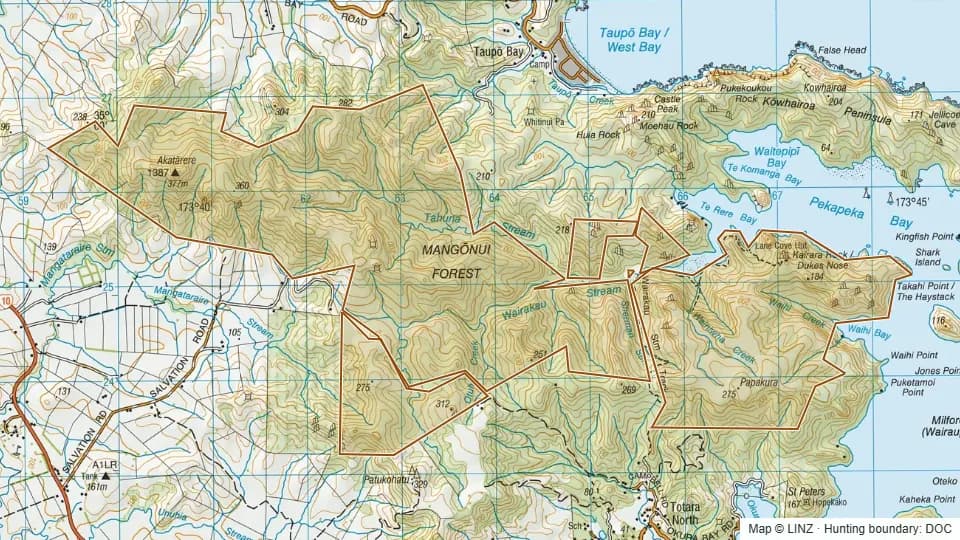 Ranfurly Bay Scenic Reserve1,472 ha
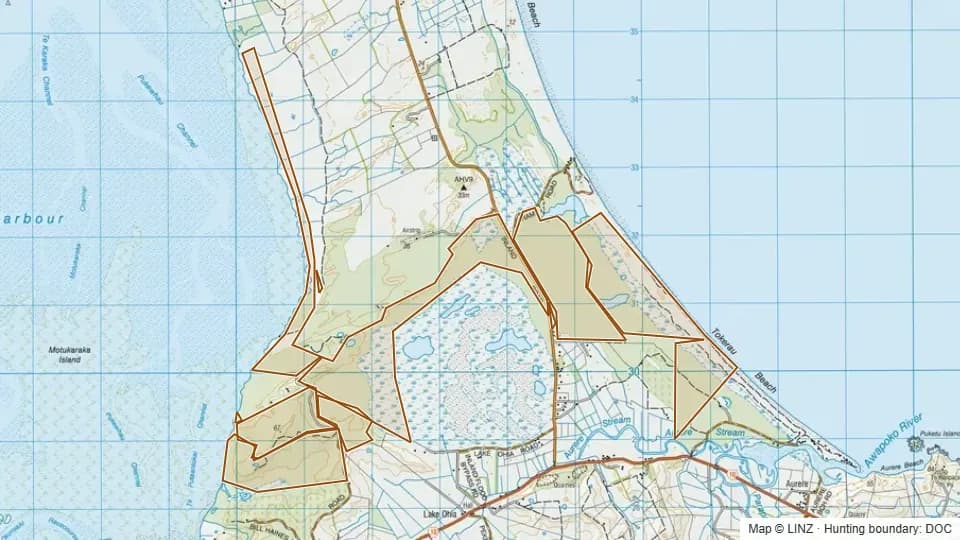 Rangaunu Conservation Area941 ha
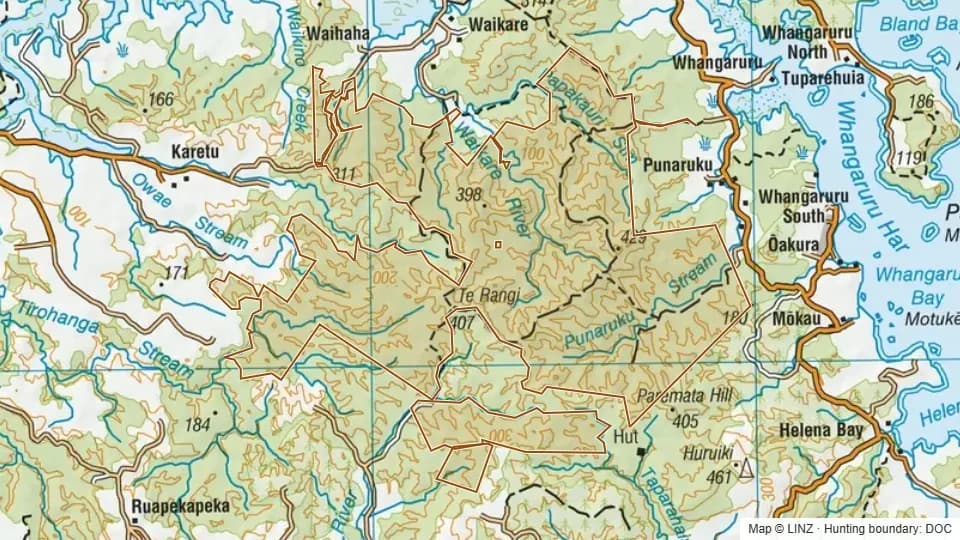 Russell Forest7,115 ha
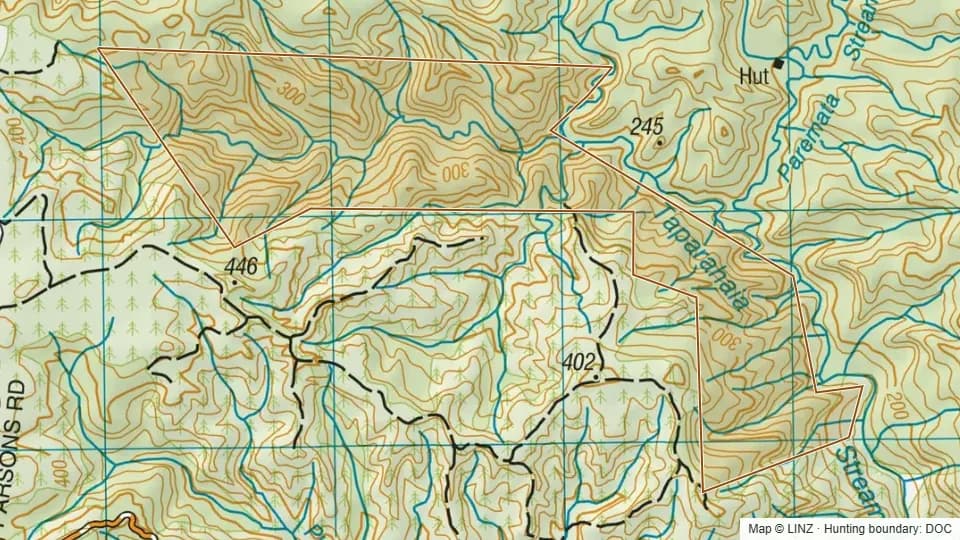 Russell Forest (Addition No2) Conservation Area188 ha
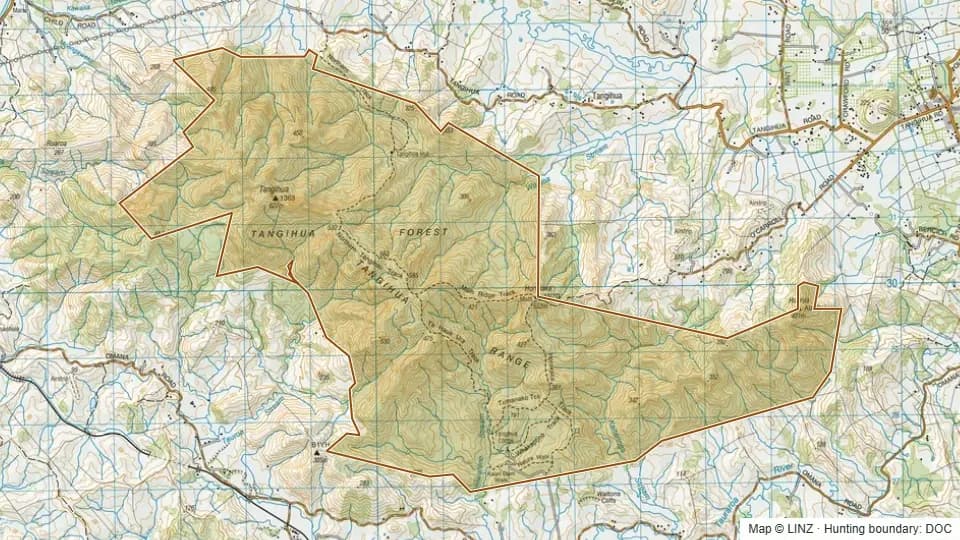 Tangihua Forest3,220 ha
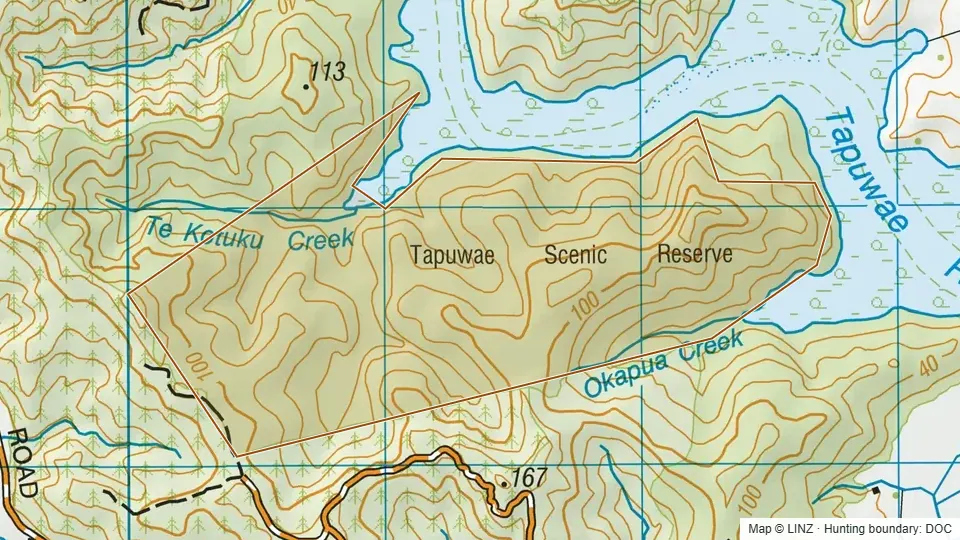 Tapuwae Scenic Reserve208 ha
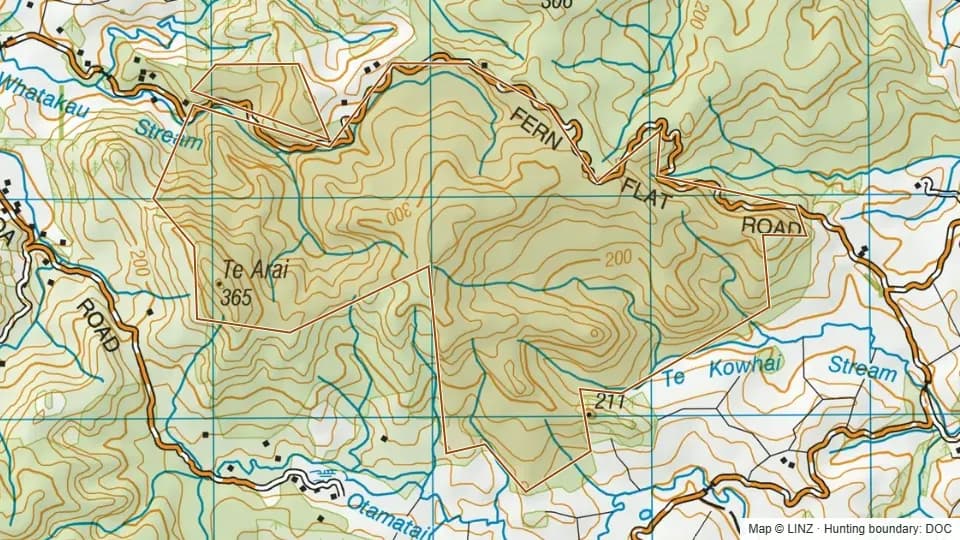 Te Koroa Scenic Reserve296 ha
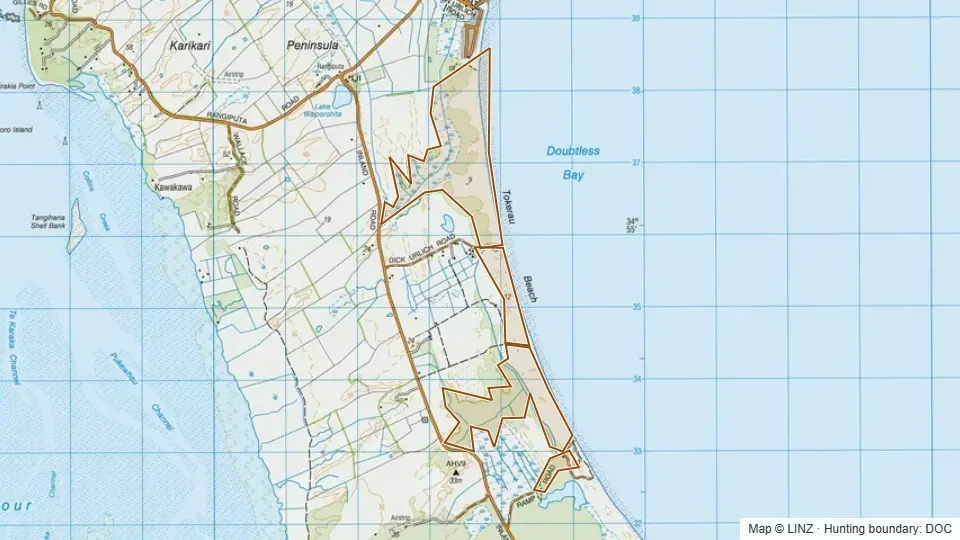 Tokerau Beach Conservation Area373 ha
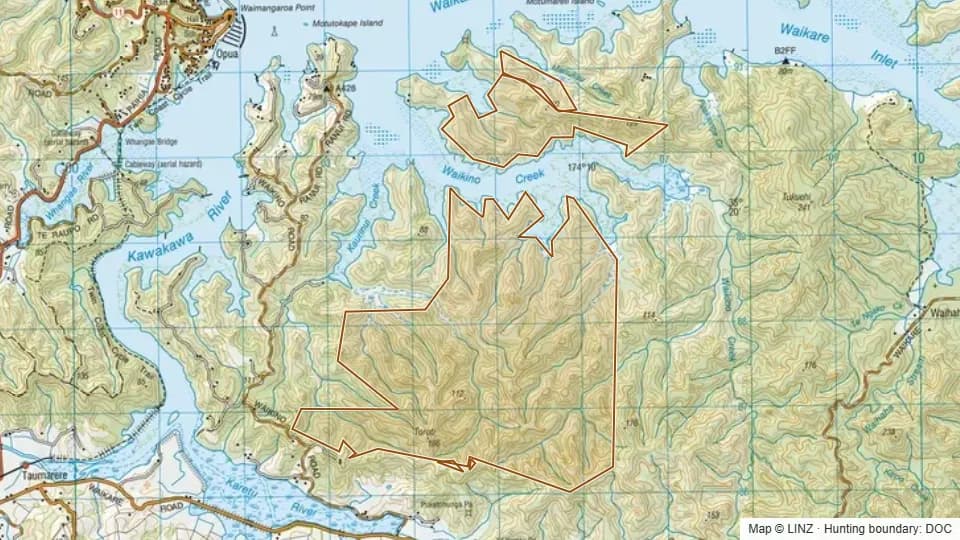 Waikino Forest (Pt Northland Conservation Park)974 ha
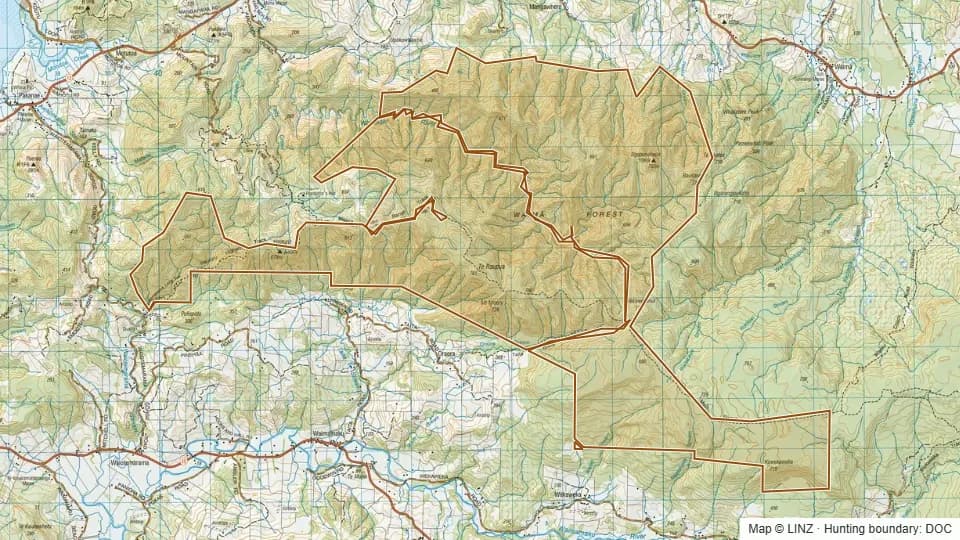 Waima Forest4,351 ha
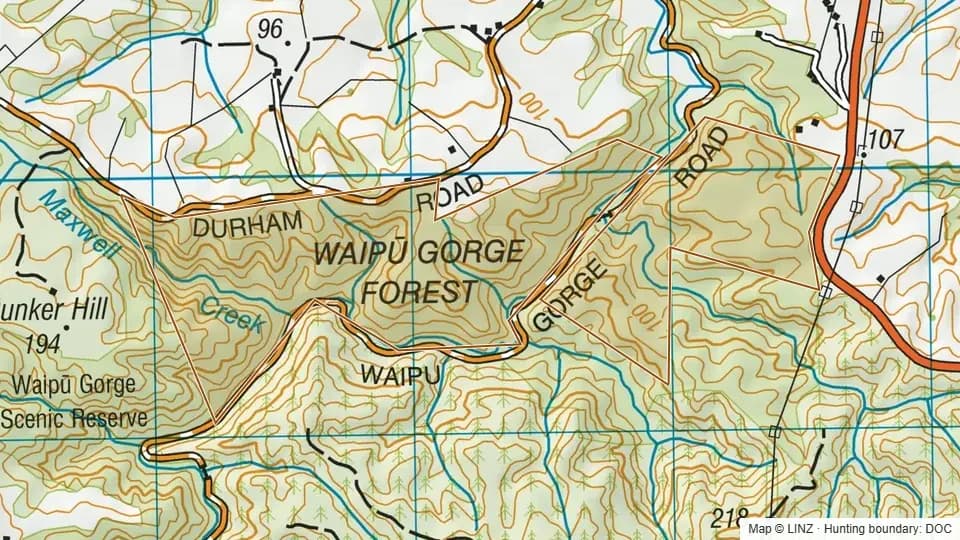 Waipu Gorge Forest146 ha
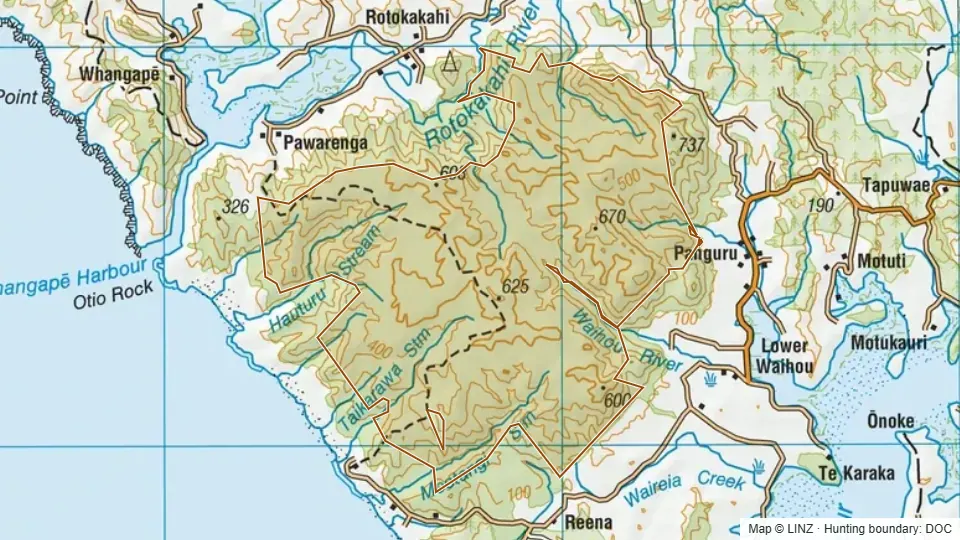 Warawara Forest6,882 ha
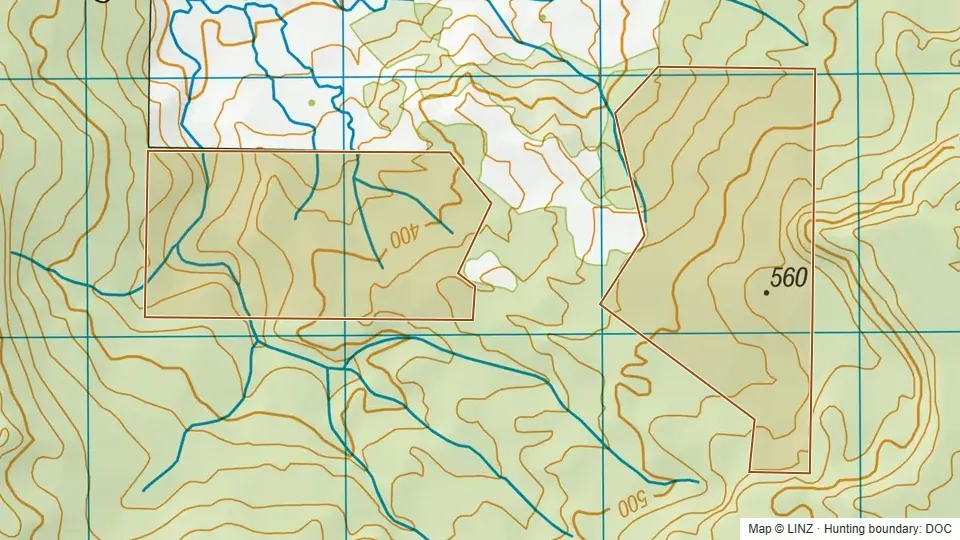 Wekaweka Scenic Reserve177 ha
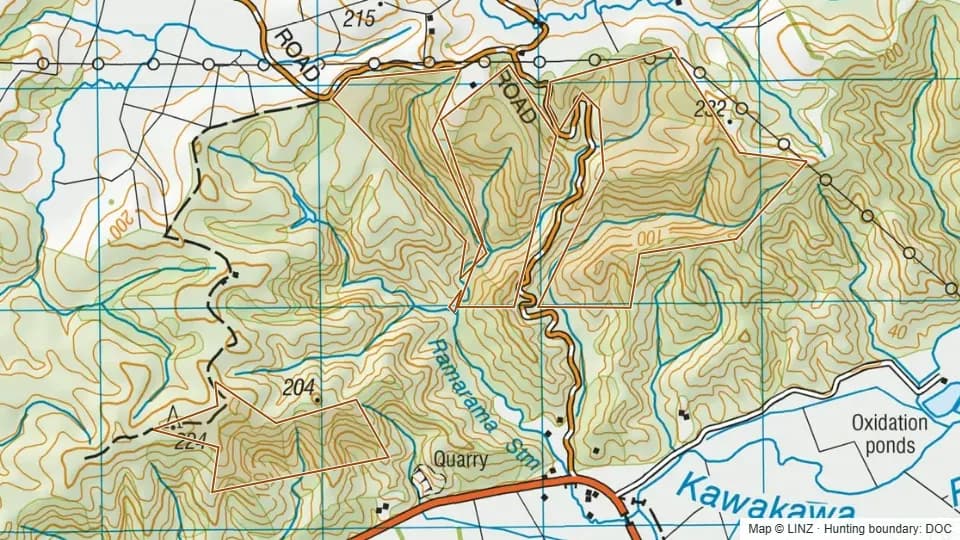 Whangae Conservation Area155 ha