Capra hircus
Wild Goat
See Wild Goat range on the map
View where Wild Goat are found across New Zealand
Overview
Wild goats (Capra hircus) in New Zealand are widespread on both islands and are classed as a pest under the National Pest Management Plan because of their impact on native vegetation. For hunters, wild goats are accessible, year-round, often abundant, and a useful introduction to big-game hunting — most public-land areas have no bag limit, and many hunters use goats to build stalking and shooting skills before moving on to deer.
Origins & Herd History
Wild goats in New Zealand are descended from animals released or escaped from sealing and whaling stations, early farms, and feral release sites going back to the late 1700s. Captain Cook released the first goats on outlying islands as future food sources for visiting ships, and subsequent escapes from coastal stations, missionary farms, and rough country sheep stations through the 19th century established mainland populations.
Goats now exist in dozens of discrete regional populations across both islands. There is no single "stock origin" — most populations carry mixed dairy, meat, and feral genetics dating back centuries. Long-established feral lines (Arapawa Island, Auckland Island until recent eradication) carry distinctive heritage genetics that have been preserved separately by conservation breeders.
Where to Find Them
Wild goats favour steep, broken country with a mix of bush, scrub, and grass. Numbers are highest in the East Coast, Hawke's Bay, and Wairarapa hill country in the North Island, and in Marlborough, parts of the West Coast, and inland Otago in the South Island. Mobs can build up rapidly anywhere with limited control.
- East Coast & Hawke's Bay hill country — North Island stronghold
- Wellington & Wairarapa — accessible to lower North Island hunters
- Nelson & Marlborough Sounds — steep coastal country, sea-accessed blocks
- West Coast and Buller — bush-edge goat country
- Canterbury foothills — Banks Peninsula, Hurunui hill country
- Inland Otago — schist country and tussock faces
- Northland — coastal scrub and forestry margins
- Southland and Catlins — bush-edge populations
Behaviour & Habitat
Goats live in mixed-sex mobs of 5 to 30, with a dominant billy in mature groups. They favour steep, broken country with multiple escape routes, and feed on grass, broadleaf, fern, regenerating bush, and pasture. Daily movement is dawn and dusk on open faces and ridges; bedding in scrub or under bluffs through the heat of the day.
Goats are not seasonal breeders — kids can drop at any time of year — and mobs include all age classes throughout the year. They reproduce quickly, with a single nanny capable of three sets of twins in two years. This is the central reason DOC and regional councils classify them as a pest: limited control allows mob sizes to build rapidly.
Hunting Wild Goats
Goats can be hunted year-round and there is no bag limit on most public conservation land. They are most active early morning and late afternoon, feeding on faces and ridges, then bedding in scrub or under bluffs through the heat of the day. A common method is to glass a face from across a valley, locate a mob, and pick the billy or large nannies first to keep the rest of the group standing for follow-up shots.
DOC sometimes runs targeted control operations in priority conservation areas — these may include aerial or ground control over short periods. Recreational hunting on public conservation land requires a free DOC permit. Many landowners welcome goat hunters because of the pasture and bush damage goats cause; permission for private land can often be arranged directly.
Seasons & Timing
| Period | What's happening | Notes |
|---|---|---|
| Year-round | No seasonal breeding window | Hunt opportunistically; mobs visible in cool weather |
| Apr–Sep | Cooler months — best stalking | Cool, clear mornings push goats onto open faces |
| Oct–Mar | Hot summer — early/late only | Goats bed deep in scrub through midday |
Trophy Notes
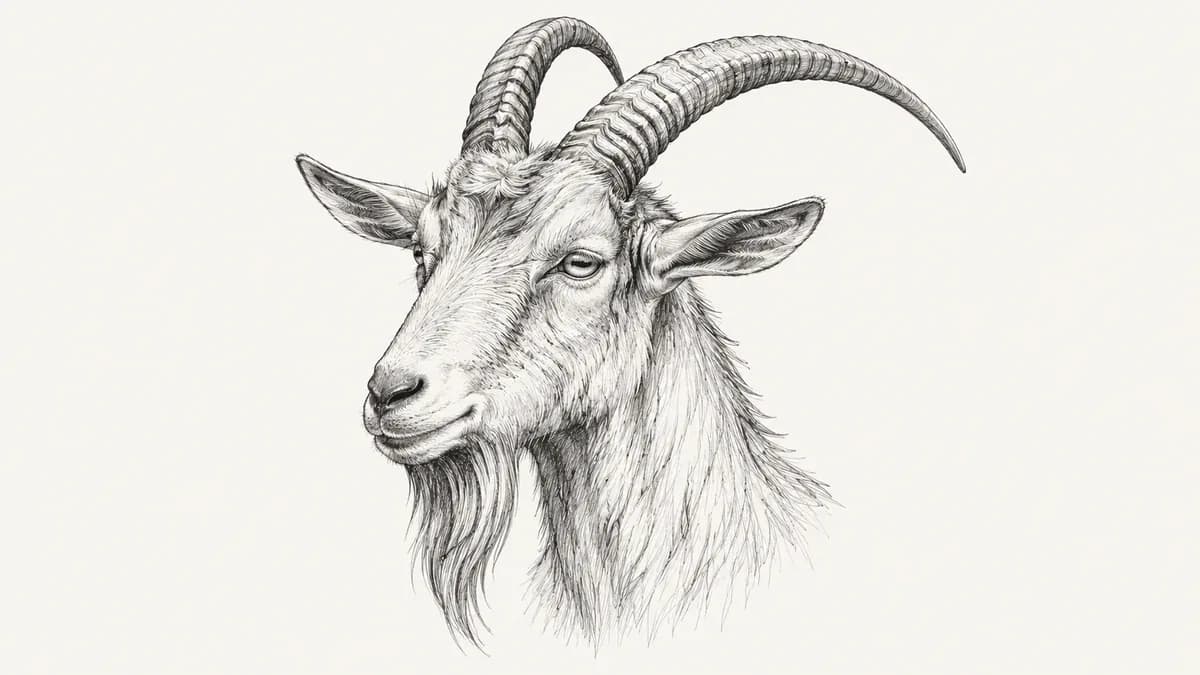
A mature billy can carry horns flaring 30 inches or more tip to tip, with deep base mass and a long, shaggy cape. Coat colours range across white, black, brown, and piebald mixtures; some long-established feral lines carry striking colour patterns. Body weight on a big billy can exceed 80 kilograms.
Trophy scoring on goats weights horn length, base mass, and the spread of the tips. A heavy-based billy with curling 30-inch horns is the classic measure. Capes from mature billies are popular for full-mount taxidermy — long-haired, often colour-striking.
Related Species
- Wild pig — often hunted on the same trips, particularly in the North Island hill country.
- Red deer — overlap in most bush-edge country.
- Chamois — different country (alpine vs scrub), but the trophy hunting culture overlaps for South Island hunters.
Regulations & Permits
A free DOC permit is required for goat hunting on public conservation land. There is no bag limit in most areas — recreational hunting is a recognised part of regional council pest-management programmes. Spotlighting is generally not permitted on conservation land. Some priority conservation areas have hunter-supported control operations with specific reporting requirements; check current rules before any trip.
Goats are formally classed as a pest under the National Pest Management Plan and individual regional pest management plans. Live movement of feral goats between regions is prohibited under the National Pest Management Plan. Carcase movement is generally allowed but check regional council rules for restricted areas.
FAQ
Do I need a permit to hunt goats in New Zealand? Yes — a free DOC permit is required for any public conservation land. Private and forestry land needs the landowner or forestry company's permission separately.
Is there a bag limit on goats? No — most public conservation land has no bag limit on goats, and many regional councils actively encourage high take.
When is the best time to hunt goats? Cool months (April through September) offer the best stalking, with goats visible on open faces in clear weather. Summer hunting works at dawn and dusk only.
Are goats a pest in New Zealand? Yes — formally classed as a pest under the National Pest Management Plan because of their impact on native vegetation. Recreational hunting is encouraged.
Can I shoot goats from a vehicle? Spotlighting and shooting from a vehicle are generally not permitted on conservation land. Private land rules vary and are at the landowner's discretion.
What rifle is best for goats? A flat-shooting light to medium calibre — .223, .243, .308, or 6.5mm Creedmoor — covers it. Most shots are 100 to 300 metres on faces.
Is goat meat good to eat? Younger nannies and yearlings are excellent. Older billies are better suited to slow-cooked dishes or processed into salami and sausage.