Sus scrofa
Wild Pig
See Wild Pig range on the map
View where Wild Pig are found across New Zealand
Plan a guided wild pig hunt
Outfitters, packages, and pricing for guided Wild Pig hunts
Overview
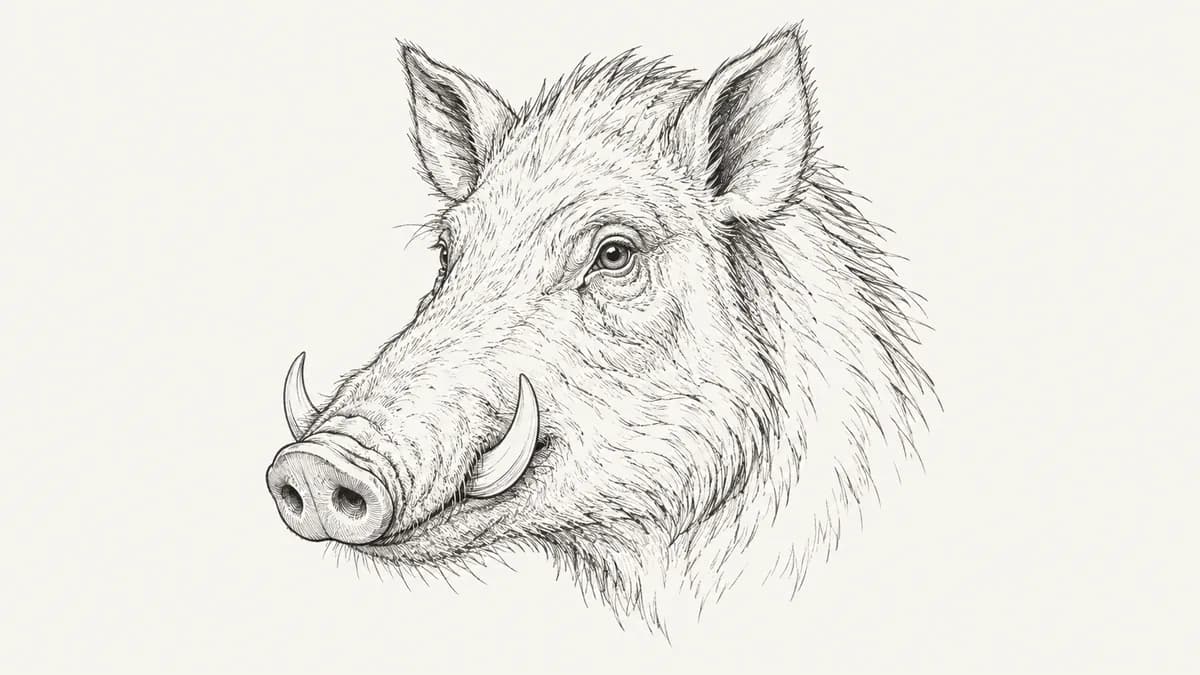
Wild pigs (Sus scrofa) in New Zealand are known affectionately as Captain Cookers, in reference to the pigs released by Captain James Cook and other early European visitors in the 1770s. They are widespread on both islands and across many offshore islands and remain one of the most popular hunting species in the country. Pig hunting has a distinctive New Zealand culture — often involving trained dogs, multi-day trips into rough country, and a strong tradition passed down through families.
Origins & Herd History
Captain Cook released pigs at several New Zealand landing sites on his second and third voyages in the 1770s — including at Queen Charlotte Sound, Dusky Sound, and Hauraki Gulf — as a future food source for visiting ships and as a gift to local Māori communities. Sealers, whalers, and missionaries supplemented these releases through the late 1700s and 1800s with farm and feral stock from a variety of origins.
The modern New Zealand wild pig is a genetic mix of those original Captain Cooker animals (predominantly old English landrace types) and subsequent escapes from farm pig populations across two centuries. Distinct regional types are still recognisable — the slender, long-snouted "Captain Cooker" type persists in remote bush country, while heavier-bodied pigs are common in fertile farmland edges.
Where to Find Them
Wild pigs occupy almost every habitat type in New Zealand other than the high alpine zone. They favour mosaic country with bush, scrub, and pasture, and follow seasonal food — acorns, fern root, worms, lambs, carrion, and grass. Numbers are highest in the warmer, lower country of the North Island, with strong herds also through Marlborough, the West Coast, and the southern South Island.
- East Coast & Hawke's Bay — North Island stronghold; deep dog-hunting tradition
- Wellington & Wairarapa — accessible to Wellington-region hunters
- Central North Island — Volcanic Plateau, East Cape hill country
- Northland — warm, productive pig country
- West Coast — bush pigs in dense rainforest
- Nelson & Marlborough — coastal and inland ranges
- Southland and Otago — southern pig herds, often run in mosaic farmland
- Stewart Island — feral pigs from early releases; remote
Public land you can hunt now
Hundreds of DOC hunting blocks around the country hold pigs — browse every public block with wild pigs, with terrain, hut and 1080 data for each. Well-known starting points include the Kaweka Forest Park foothills in Hawke's Bay, Kahurangi National Park at the top of the South Island, and the Mt Richmond Forest Park country between Nelson and Marlborough.
Behaviour & Habitat
Pigs are highly intelligent, mobile, and adaptive. Mobs are matriarchal — a sow with juveniles forms a group of 5 to 15 animals; mature boars live solitary outside the rut. Pigs feed at dawn and dusk and through the night in warm weather, bedding in cover during the heat of the day. They use wallows for cooling and parasite control and follow well-established trails through bush and scrub.
Diet is wholly opportunistic: fern root, beech mast, acorns, worms, grass, broadleaf, lambs and carrion, fungi, and amphibians. Sign — rooted ground, fresh wallows, rubbing trees, slot tracks — is the primary way of locating pigs on a hunt. A productive piece of pig country shows fresh sign daily.
Hunting Wild Pigs
Pigs can be hunted year-round. There are two distinct traditions: stalking solo or with a partner, using sign, wallows, and rooted ground to locate animals; and hunting with dogs — typically a combination of finders (dogs that locate and bay pigs) and holders (dogs that catch and hold). Dog hunting requires specific training, equipment, and an understanding of welfare and access rules, and is regulated separately on some public conservation land.
DOC permits cover public conservation land. Dog use on conservation land is controlled and may be restricted in kiwi habitat or other sensitive areas — hunters must hold a current Kiwi Aversion Training certificate for any dog used on DOC land where the requirement applies. Many landowners welcome pig hunters because of the damage pigs do to pasture, fences, and lambs.
Seasons & Timing
| Period | What's happening | Notes |
|---|---|---|
| Year-round | No seasonal breeding window | Hunt opportunistically; sign-led |
| Mar–May | Autumn — pigs feeding hard on acorns and beech mast | Trophy boars active |
| Jun–Aug | Winter — pigs lower, mobs visible | Strong dog-hunting period |
| Sep–Nov | Spring — sows farrowing, boars wandering | Lambing season — pasture-edge pigs |
| Dec–Feb | Summer — pigs active dawn and dusk | Dogs work poorly in heat |
Trophy Notes
A mature boar carries large, curved tusks growing throughout his life — the lower canines (cutters) and upper grinders sharpen against each other and can reach impressive lengths on an old boar. Trophy tusks are typically measured in inches of length out of the gum line. Capes and tushes are commonly kept.
Body weight on a big boar ranges from 80 kilograms to occasionally 150 kilograms-plus; sows are smaller and provide the best meat. Colouration in feral New Zealand pigs varies widely — black, ginger, white, piebald, and tan-brown coats are all common. Old boars develop a thick shoulder shield of cartilaginous tissue that protects them from rivals — and from poorly-placed shots.
Related Species
- Wild goat — commonly hunted on the same trips, especially in the North Island hill country.
- Red deer — overlap with pigs in most bush-edge country.
- Wallaby — companion pest species in the South Canterbury foothills.
Regulations & Permits
A free DOC permit is required for pig hunting on public conservation land. Dog hunting on conservation land has specific rules: dogs must be controlled and registered, and Kiwi Aversion Training (KAT) certification is required for any dog used in kiwi habitat or where DOC requires it for the area. Spotlighting is not permitted on conservation land. Movement of live pigs is prohibited under the National Pest Management Plan.
Many forestry blocks operate paid pig-hunting permits through the relevant forestry company, separate from DOC arrangements. Private-land pig hunting is widespread and at the landowner's discretion. Pigs are formally classed as a pest under the National Pest Management Plan.
FAQ
Do I need a permit to hunt pigs in New Zealand? Yes — a free DOC permit is required for any public conservation land. Private and forestry land needs the landowner or forestry company's permission separately.
Is dog hunting for pigs legal in New Zealand? Yes, subject to dog-control rules. On conservation land, dogs must be registered and the handler must hold current Kiwi Aversion Training (KAT) certification where DOC requires it.
Where are the best pig hunting regions in NZ? The East Coast, Hawke's Bay, and the Wairarapa are the North Island strongholds. In the South Island, the West Coast, Marlborough, and Southland all carry strong populations.
Are pigs a pest in New Zealand? Yes — formally classed as a pest under the National Pest Management Plan because of their damage to native vegetation, pasture, and stock.
What's the biggest pig you can shoot in New Zealand? Boars over 150 kilograms (300 lb) are taken occasionally; 100 kg is a normal mature boar. Sows are smaller — typically 50–80 kg.
Can I move live pigs between regions? No — live movement of feral pigs is prohibited under the National Pest Management Plan.
What rifle is best for pigs? For stalking: a medium calibre rifle (.308, 6.5mm, or similar) is plenty. For dog hunters: a short, fast-handling rifle or a heavy handgun for backup at close range.