Cervus elaphus scoticus
Red Deer
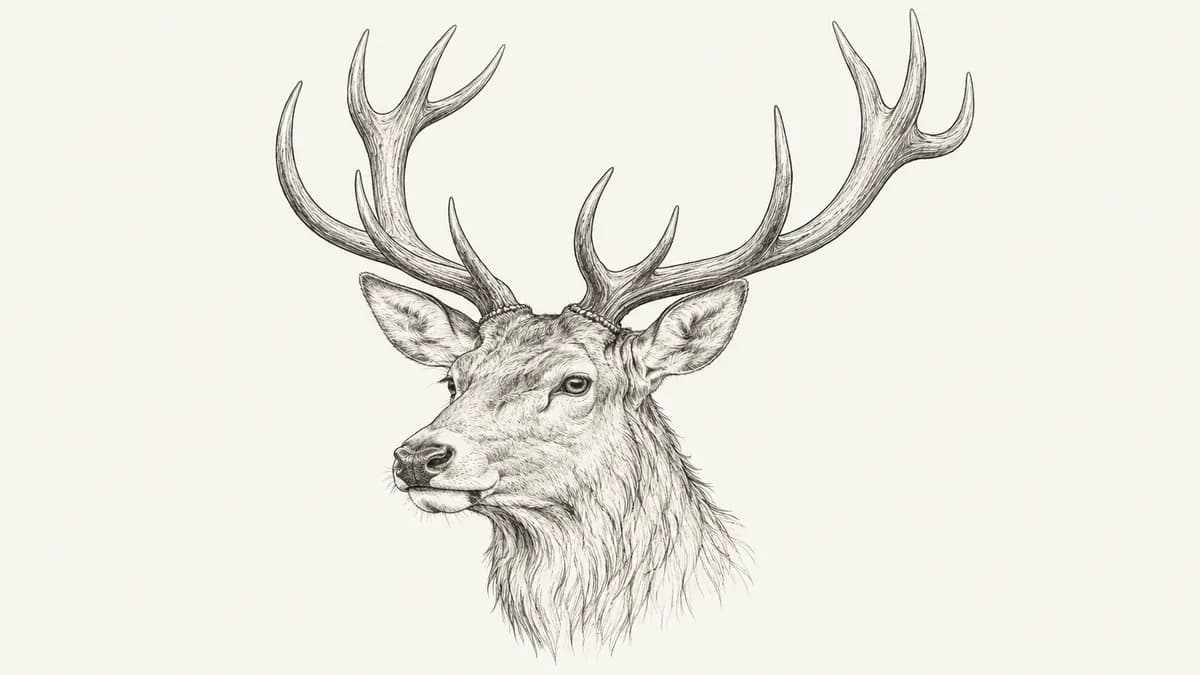
See Red Deer range on the map
View where Red Deer are found across New Zealand
Plan a guided red stag hunt
Outfitters, packages, and pricing for guided Red Deer hunts
Overview
Red deer (Cervus elaphus scoticus) are the most widespread and most heavily hunted big-game animal in New Zealand. They occupy almost every type of country — from beech forest and tussock tops to scrubby river flats and pine plantations — and are present in every major hunting region in the country. For most New Zealand hunters, "deer hunting" effectively means red deer.
Origins & Herd History
The first liberations took place in Nelson in 1851 using stock gifted by Lord Petre from his estate at Thorndon, Essex — animals of Scottish and English park origin. Further releases through the late 1800s introduced animals to Otago, the Wairarapa, and the central North Island, again drawing on park stock from the United Kingdom and supplemented later with smaller releases from continental Europe. Free of natural predators and helped by ideal habitat, red deer spread rapidly through both islands.
Most New Zealand free-range herds therefore have a Scottish or English park base, but several herds carry detectable Eastern European or wapiti influence:
- Fiordland herd — strong wapiti × red hybridisation at the margins of the wapiti area
- Otago and Canterbury high country — generally clean Scottish base, occasional historic Eastern European supplementation
- Central North Island herds — Scottish/English base with some sika hybridisation at the eastern edge of the Kaimanawa
- East Coast and Northland — Scottish base; lower densities and slower historical spread
Where to Find Them
Red deer are genuinely nationwide on public conservation land, but density and quality vary widely. The strongest free-range trophy potential remains in the South Island high country and Fiordland; the highest meat-hunting densities are on the West Coast and through the central North Island bush.
- Fiordland — remote wilderness, big-bodied stags, demanding access
- Otago and Southland — accessible high-country river systems and tussock basins
- Canterbury — front-country tops, mix of public and private land
- West Coast — dense bush, very high deer numbers, challenging stalking
- Central North Island — Kaimanawa, Kaweka, and Ruahine ranges
- Nelson & Marlborough — Kahurangi, Nelson Lakes, Inland Kaikoura
- East Coast & Hawke's Bay — Urewera, Raukumara, eastern Kaweka
- Wellington & Wairarapa — Tararua, Rimutaka, Aorangi
- Northland — low-density lowland populations
Behaviour & Habitat
Red deer are mixed bush–open-country animals. Hinds and yearlings form maternal mobs that range over relatively small home areas through most of the year; stags live separately in bachelor groups until the roar. Daily movement is typically dawn and dusk feeding on faces, river flats, or bush clearings, with bedding in cover through the heat of the day. In poor weather they push deeper into bush; in cold snaps they drop in altitude.
Diet is generalist: grass and tussock on the tops, broadleaf and beech foliage in the bush, fern, fungi, and supplejack throughout. Stags drop their antlers in spring (September–October), regrow them through summer in velvet, and clean them in February ready for the roar.
Hunting Red Deer
The roar — late March through April — is the signature hunting period in New Zealand. Stags become highly vocal as they hold hinds, and a hunter who knows the country can roar a stag into close range. Weather and barometric pressure strongly influence vocal activity; the best mornings tend to be cool, still, and clear after a frost.
Outside the roar, red deer are hunted year-round on public conservation land with a free DOC permit. Spring and early summer offer good velvet stags and active feeding patterns on new growth. Winter snowline hunting on the tops can be excellent when deer are pushed lower by storms. Most hunters glass open faces at first and last light, then slip into the bush edge for a stalk.
Seasons & Timing
| Period | What's happening | Where it matters most |
|---|---|---|
| Mar–Apr | The roar — peak hunting | Whole country; strongest in Fiordland, Otago, CNI |
| May–Aug | Winter — meat hunting, snowline | All regions; deer feeding lower |
| Sep–Nov | Spring — velvet, fawns drop | Tops accessible; stags regrowing antlers |
| Dec–Feb | Summer — dawn/dusk only | Bush stalking; tops glassing in cool weather |
Trophy Notes
A mature New Zealand red stag typically carries 10 to 12 points, with the better free-range animals running through 14 and occasionally beyond. Beam length, top weight, and symmetry are the main trophy attributes. Fiordland and high-country Otago consistently produce the heaviest free-range heads, while pure Eastern European-genetics stags on game-estate properties can carry exceptional numbers of points but are scored separately from free-range. Hybridisation with wapiti occurs on the fringes of the Fiordland wapiti area and is visible in larger body size and longer tines.
Pure Scottish-type heads are slimmer and often score lower on point count but carry better top weight and traditional symmetry — many older trophy hunters rate a clean 12-point Otago stag above a heavier hybrid head.
Related Species
- Fallow deer — frequently hunted on the same trips in Otago, Southland, and East Coast pockets.
- Sika deer — overlap with red in the Kaimanawa, Kaweka, and Ruahine; hybridisation occurs at the edges.
- Wapiti — Fiordland-only, with red × wapiti hybrids common around the wapiti area.
Regulations & Permits
A free DOC permit is required to hunt red deer on public conservation land. There is no bag limit in most areas, but some forest parks have block-ballot systems during the roar (notably parts of the Kaimanawa and Fiordland wapiti area). Spotlighting is not permitted on conservation land. Helicopter access is permitted but subject to current DOC concessions and operational rules. Always check the current pesticide-operation status before any trip — large 1080 operations can close access for days at a time.
For private and forestry-block hunting, permission is required directly from the landowner or forestry company. Many high-country stations carry public-access easements via the Walking Access Commission — check the map before crossing leasehold country.
FAQ
When is the red deer roar in New Zealand? Late March through April. The peak in most of the country is the first two weeks of April. The South Island high country tends to peak slightly later than the central North Island bush.
Do I need a permit to hunt red deer? Yes — a free DOC permit is required for any hunting on public conservation land. Permits are issued by district and you'll need a separate permit for each block you intend to hunt.
Where are the biggest red stags in NZ? Fiordland and the high-country catchments of Otago consistently produce the heaviest free-range heads. Eastern European-genetics stags on private game estates can carry more points but are scored separately.
What calibre rifle is best for red deer in New Zealand? Anything from 6.5mm Creedmoor through .30-06 will do everything you need on red deer. Most hunters land in the 6.5mm to .308 range. Heavier setups are common for tahr and wapiti.
Are red deer a pest in New Zealand? They are an introduced species and DOC actively manages them in some catchments, but they are not classed as a pest in the same way as goats, pigs, or wallabies. Recreational hunting is encouraged.
Can I hunt red deer at night? Spotlighting is not permitted on public conservation land. Private land rules vary and depend on landowner permission.
Is the West Coast or Fiordland better for red deer? The West Coast has higher densities and is the strongest meat-hunting destination. Fiordland produces heavier free-range trophy bodies but the country is much harder to access.