Hunting in Taranaki
Overview
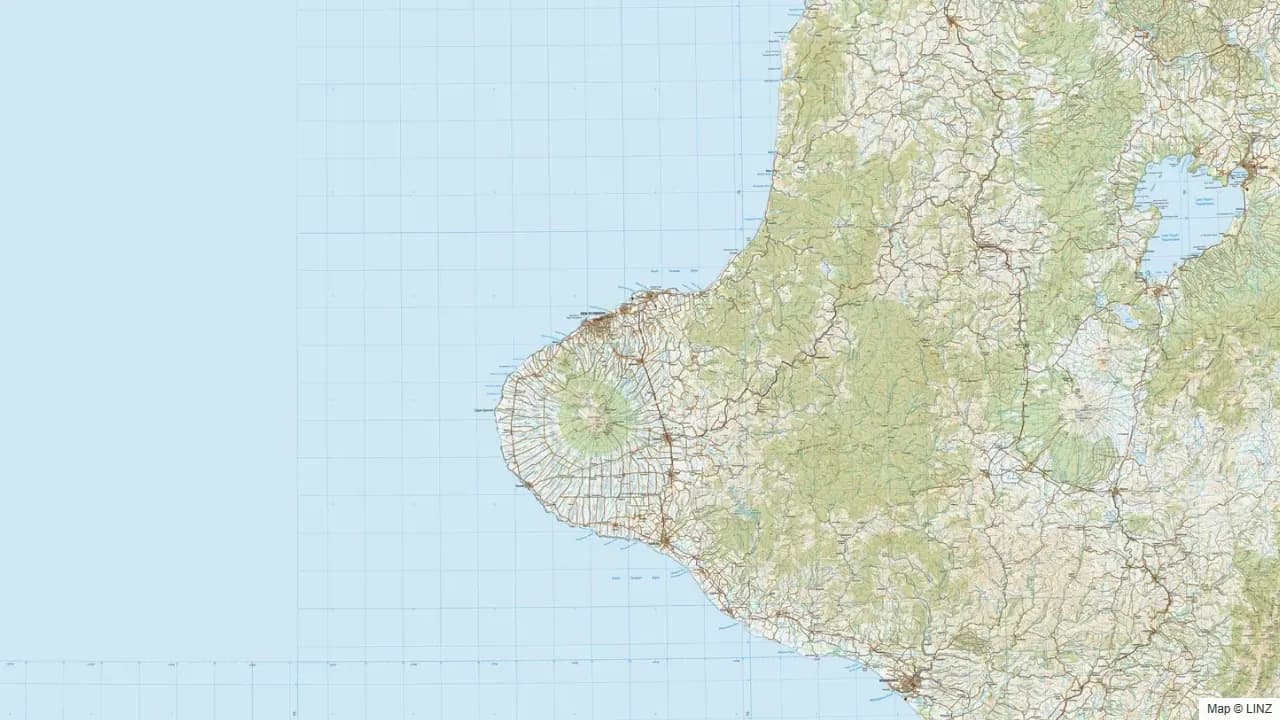
Taranaki is dominated by the perfect volcanic cone of Mt Taranaki — Egmont National Park rings its flanks and accounts for the region's largest single hunting block at 34,000 hectares. Beyond the mountain, a belt of conservation forests and scenic reserves fans out to the south, east, and north, covering the river valleys and hill country that back the coastal farming plain. The Waitotara and Kapara blocks to the south are the region's best deer country; the north coast Mohakatino block is one of the quieter and more productive pig and fallow hunting areas in the western North Island.
Taranaki is not a high-profile hunting destination in the way that Canterbury or the Central North Island are, which means hunting pressure is relatively low for the quality of country. For New Plymouth and Hāwera-based hunters, the forests are on the doorstep.
What You Can Hunt
- Red deer — present through Egmont National Park, the Waitotara, Kapara, and the larger forest blocks. Densities are moderate; the bush is productive for patient hunters working the edges and ridges.
- Fallow deer — established through the Waitotara, Kapara, Mohakatino, and several of the smaller south and east Taranaki blocks. The fallow rut in April brings them into open edges.
- Wild pig — widespread and abundant, particularly through the coastal forest blocks and the river-flat margins. Among the better pig country in the lower North Island.
- Wild goat — present throughout, with good numbers on the rocky and slip-face country of the forest margins and the Egmont bush edge.
Where to Hunt
- Egmont National Park — the 34,000 ha park surrounding Mt Taranaki from the summit down to the bush edge at roughly 900 m. Red deer and goat on the lower flanks; goat common on the broken lava faces. Access from the three main roads (North Egmont, East Egmont, Dawson Falls) and several minor entry tracks. The park is circular — good coverage from any side.
- Waitotara Conservation Area — 27,750 ha of beech-podocarp forest in the south Taranaki/Whanganui hinterland, east of Hāwera. Red deer, fallow, pig, and goat. One of the most productive multi-species blocks in the region; accessed via Whanganui Forests roads.
- Kapara Conservation Area — 12,200 ha adjoining the Whanganui Forests to the south-east. Red deer, fallow, pig, and goat; a quieter block with reasonable access.
- Mohakatino Conservation Area — 13,200 ha on the north Taranaki coast, inland from Mokau. Red deer, fallow, pig, and goat. Remote by North Island standards and lightly hunted. Access via back roads off SH 3 north.
- Hutiwai Conservation Area — 10,750 ha of mostly bush country on the inland Taranaki/Whanganui boundary. Pig and goat throughout; less deer pressure than the coastal blocks.
- Smaller Taranaki Forests blocks — a collection of reserves and conservation areas scattered around the mountain's flanks and the south Taranaki hill country. Each is modest in size but together they add up to worthwhile day-trip country for local hunters.
Getting In
- Road — SH 3 (New Plymouth to Whanganui) frames the east side; the coastal road (SH 45, the Surf Highway) runs the west and south. Ring roads around Egmont National Park provide multiple entry points. Forest roads off SH 3 serve the south and east blocks.
- Foot — all park and conservation-area hunting is foot access from the road end. Egmont has developed tracks to several good hunting elevations; the Waitotara and Mohakatino require longer walk-ins.
- Air — limited. Occasional helicopter use into the Waitotara and Mohakatino back country, subject to current DOC rules. Not commonly needed.
Seasons & Weather
Taranaki has a mild maritime climate — warm and often wet on the coast, cooler and snow-prone on the upper mountain.
| Period | What's happening | Notes |
|---|---|---|
| Mar–Apr | Red roar, fallow rut | Red deer roar reliable through Waitotara, Kapara, and Egmont. Fallow rut peaks early April. |
| Jun–Aug | Winter | Snow on Egmont above 800 m; lower bush good hunting. Deer feeding actively. |
| Sep–Nov | Spring | Pigs strong as ground firms. Goat on open faces. |
| Dec–Feb | Summer | Warm; bush-edge hunting at dawn and dusk. Egmont summit accessible. |
The mountain generates its own weather — cloud can descend rapidly on the upper Egmont flanks, and rain falls on most days somewhere around the park. The south and east Taranaki forests see less rainfall than the northern coastal blocks.
Gear & Conditions
Taranaki forest hunting is dense podocarp and beech bush — short sightlines and close-range shooting. A compact, moderate-calibre rifle (.243 through .308) is ideal; there is little call for long-range gear here. Goat hunting on the Egmont faces can involve more open country with slightly longer shots. Gaiters and waterproofs are necessary year-round; the Egmont bush edge is perpetually wet. Pig hunters working dogs in the south Taranaki forests and Waitotara will need full dog first-aid kits and good bush navigation.
Permits & Regulations
A free DOC hunting permit is required for Egmont National Park and all conservation land in the region. Egmont National Park has specific rules around hunting — check current conditions and permitted hunting zones before travel. The Waitotara, Kapara, and south Taranaki blocks fall under the Whanganui Forests or Taranaki Forests permit areas. Pig dog hunting is permitted on conservation land subject to dog-control conditions and current 1080 status. Spotlight hunting is not permitted on conservation land. Some Egmont blocks border Māori land — check boundaries carefully.
Open the Map
Open Taranaki in the full hunting map →
Egmont National Park, Waitotara, Mohakatino, and the Taranaki forest blocks — hunting areas, access roads, tracks, and current pesticide operations.
Useful Links
Game animals in Taranaki
Hunting areas in Taranaki
33 DOC hunting blocks — species, huts, access and an interactive map for each.
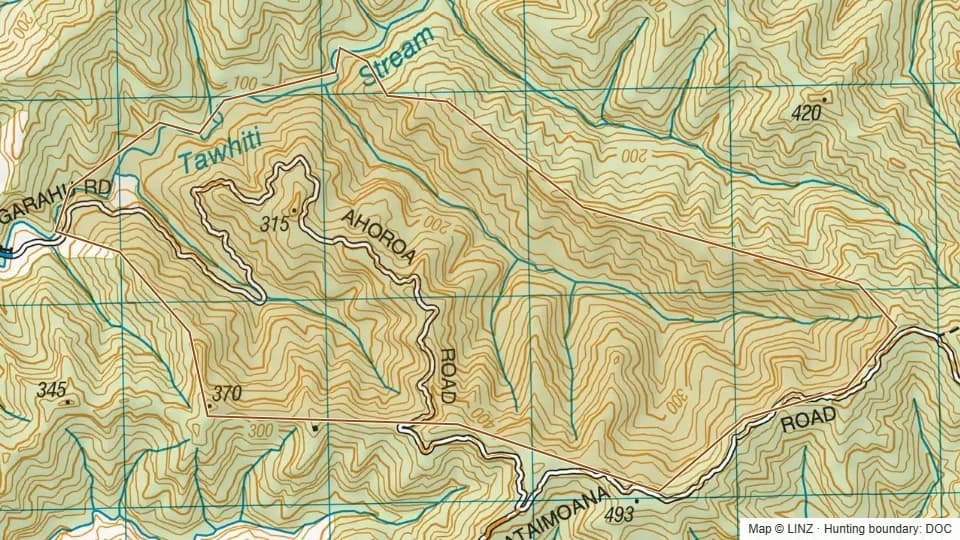 Ahoroa Scenic Reserve459 ha
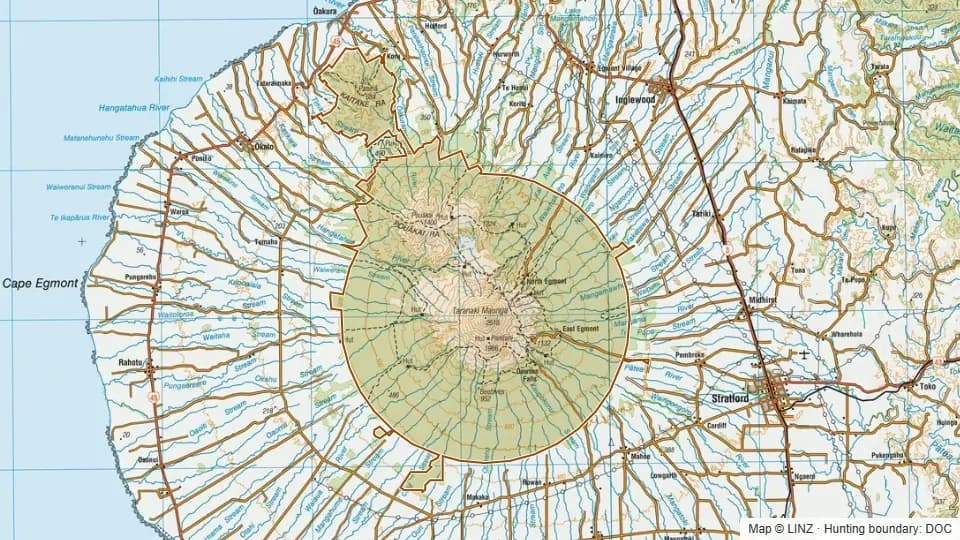 Egmont National Park34,251 ha
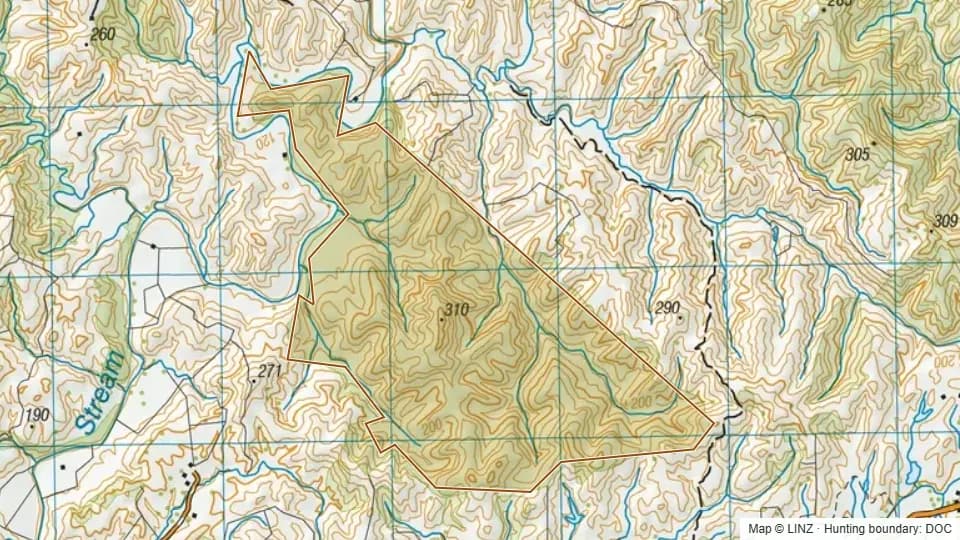 Huiroa Conservation Area307 ha
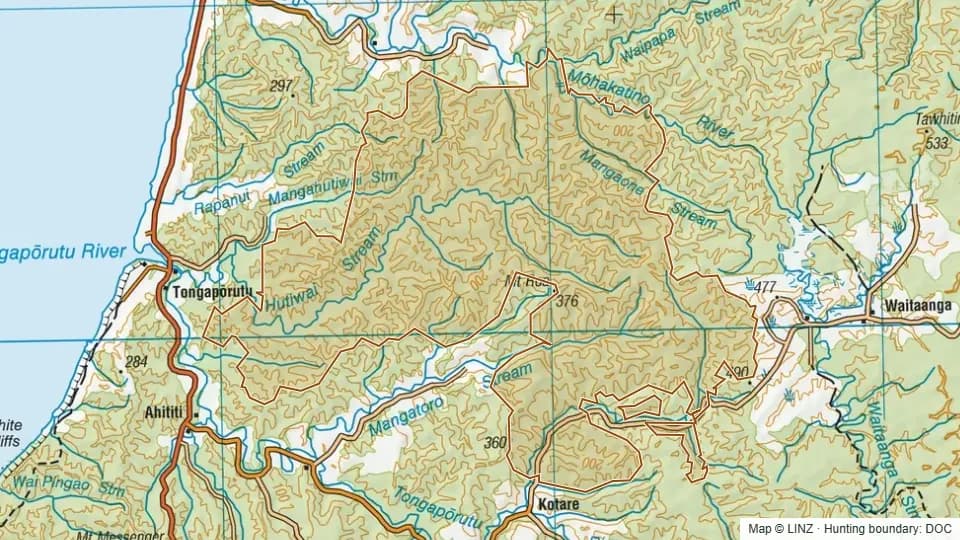 Hutiwai Conservation Area10,746 ha
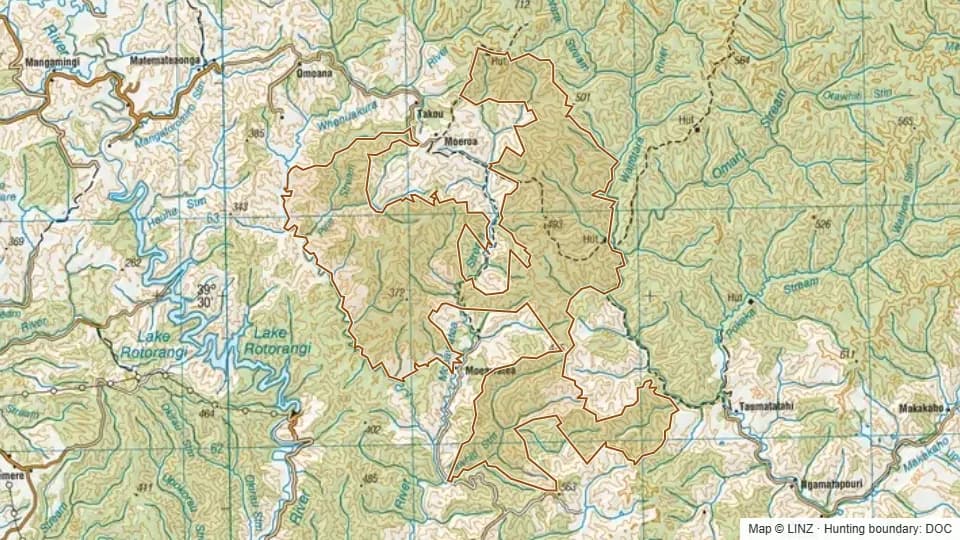 Kapara Conservation Area12,219 ha
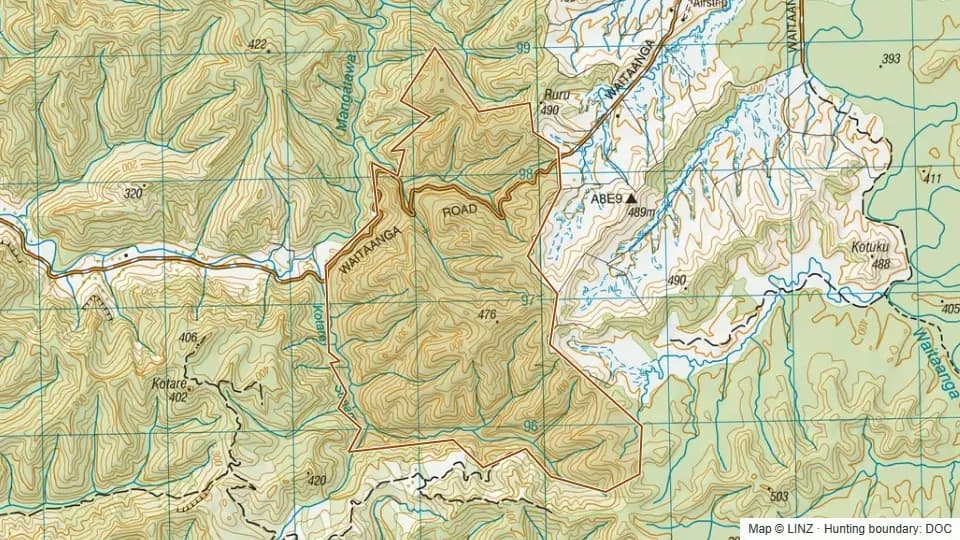 Kotare Scenic Reserve483 ha
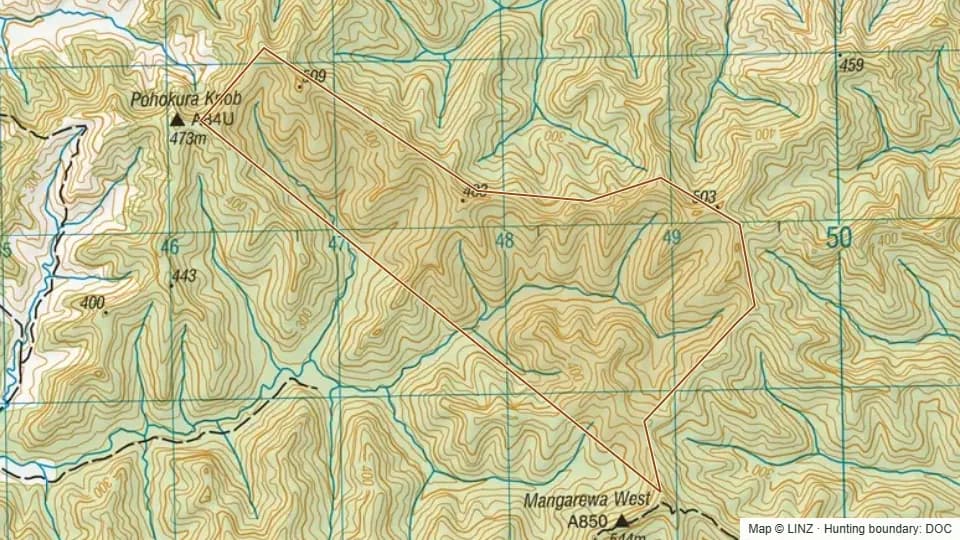 Mahoe Growth & Preservation of Timber Reser315 ha
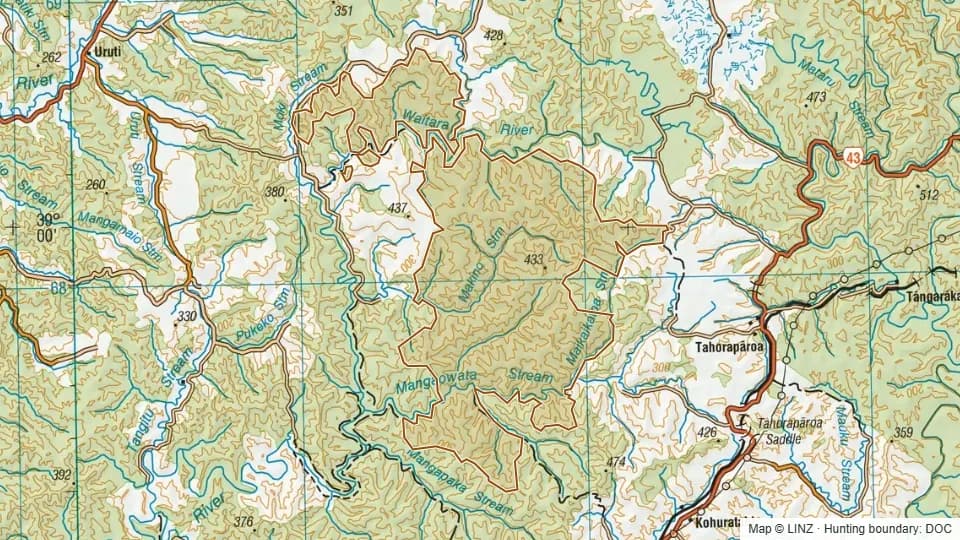 Makino Conservation Area7,221 ha
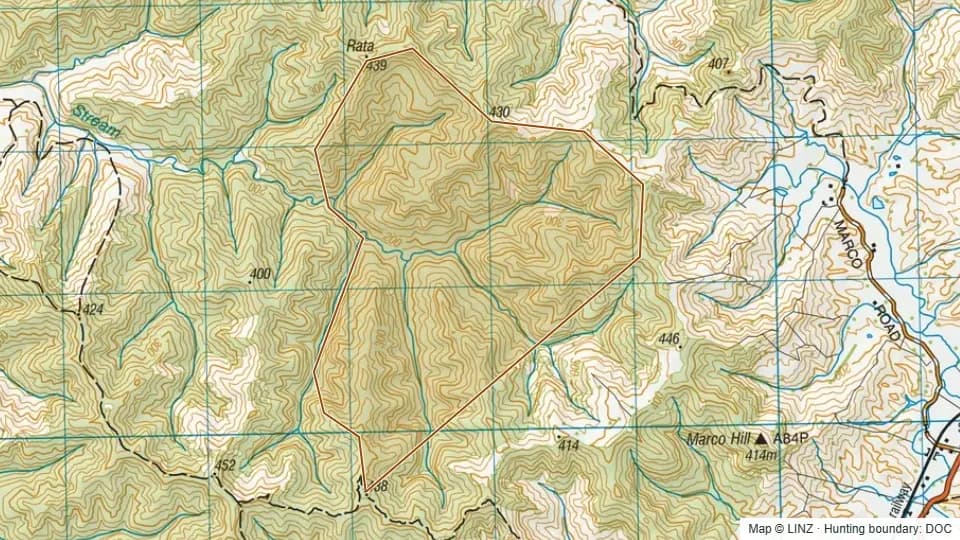 Mangapaka Scenic Reserve408 ha
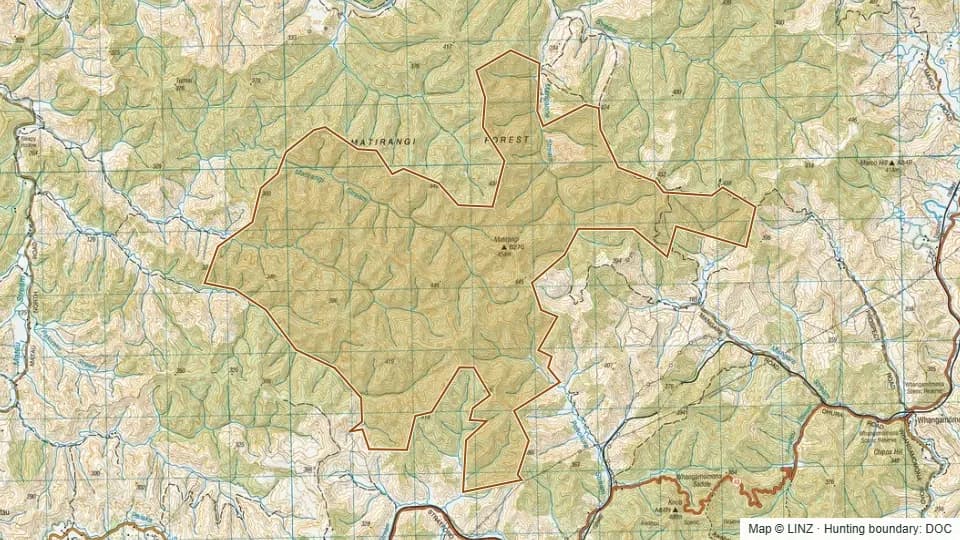 Matirangi Conservation Area2,431 ha
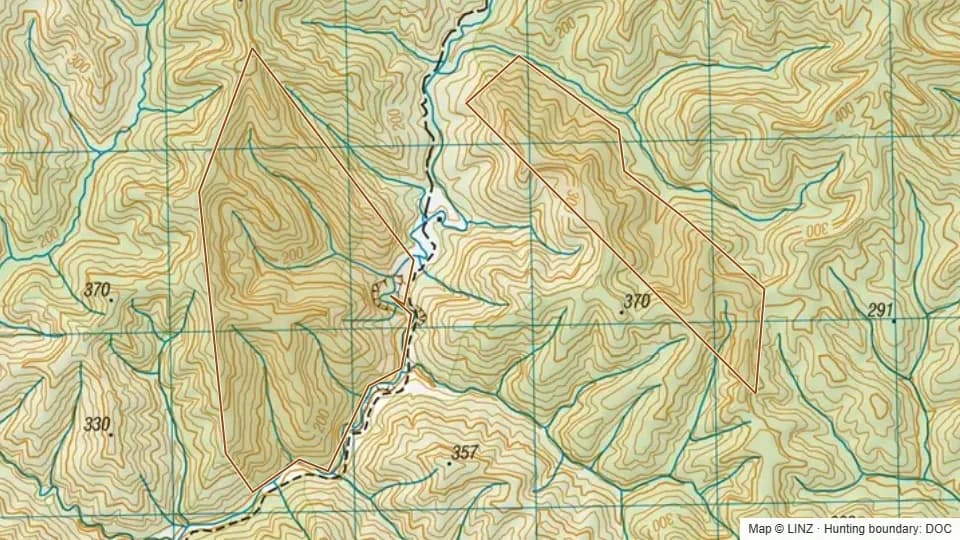 Moeawatea Scenic Reserve275 ha
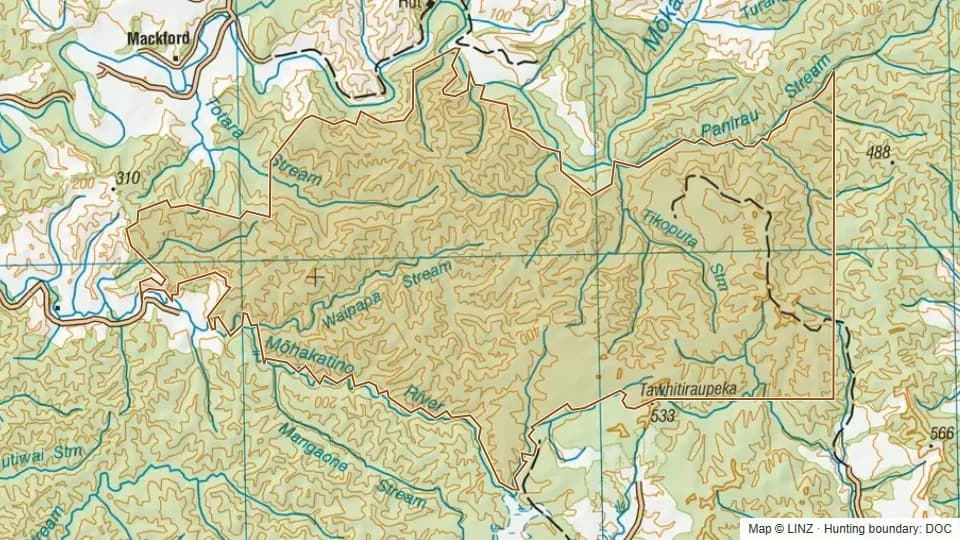 Mohakatino Conservation Area13,158 ha
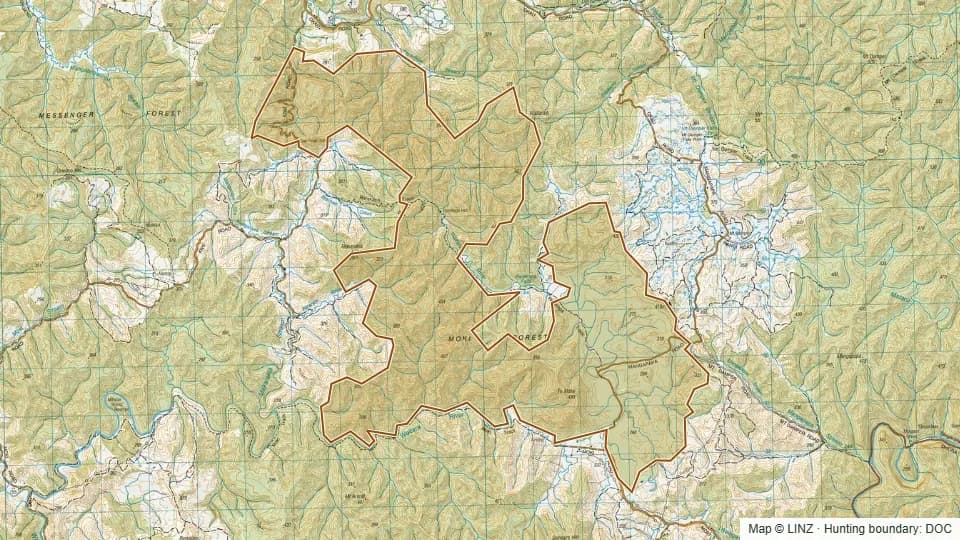 Moki Conservation Area3,604 ha
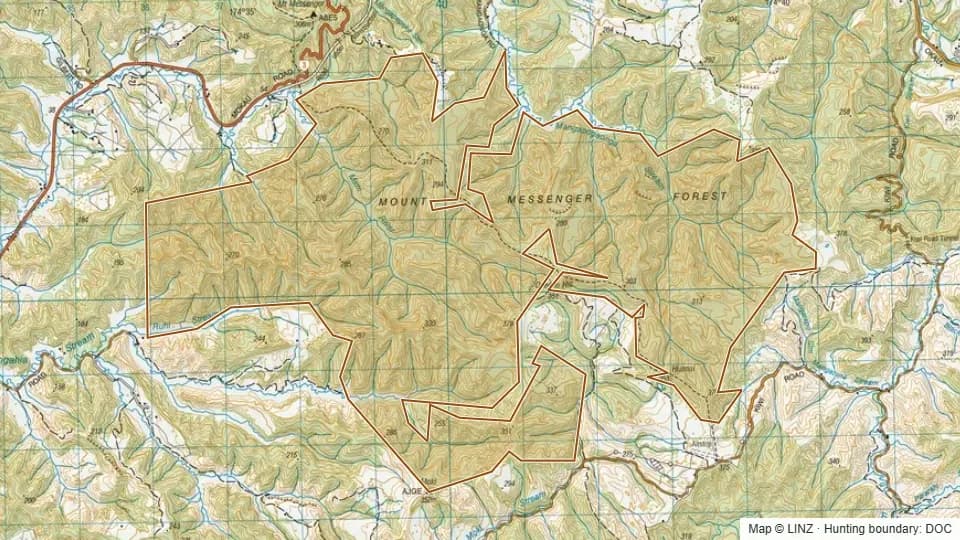 Mt Messenger Conservation Area2,739 ha
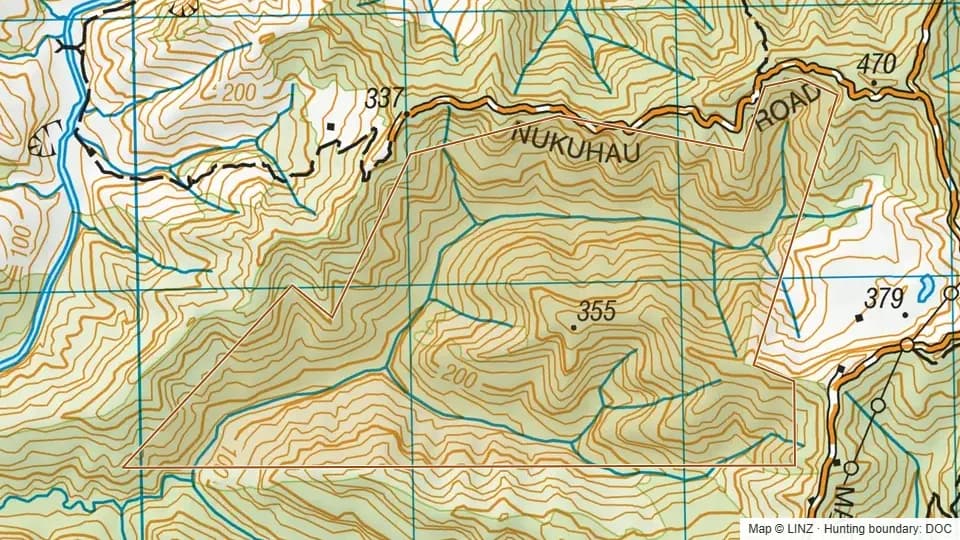 Nukuhau Conservation Area229 ha
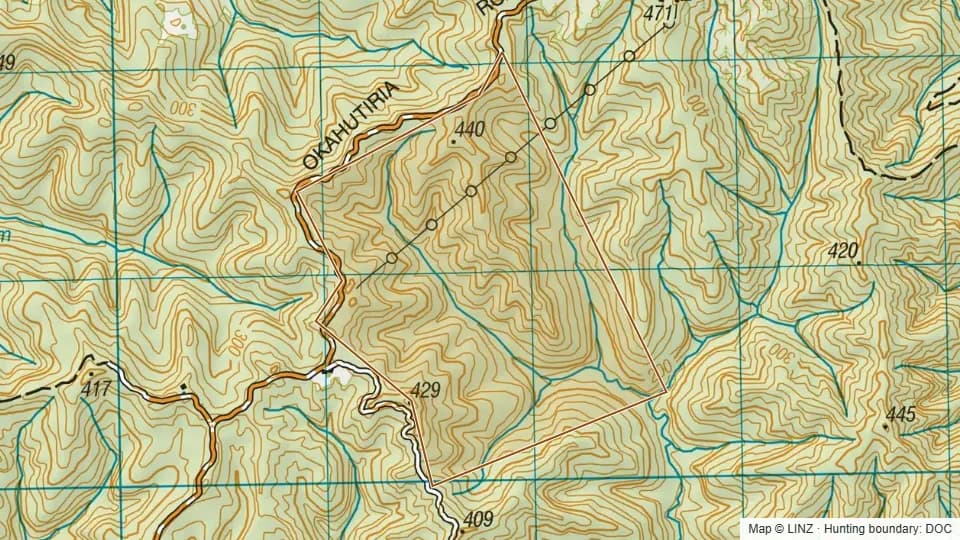 Okahutiria Conservation Area209 ha
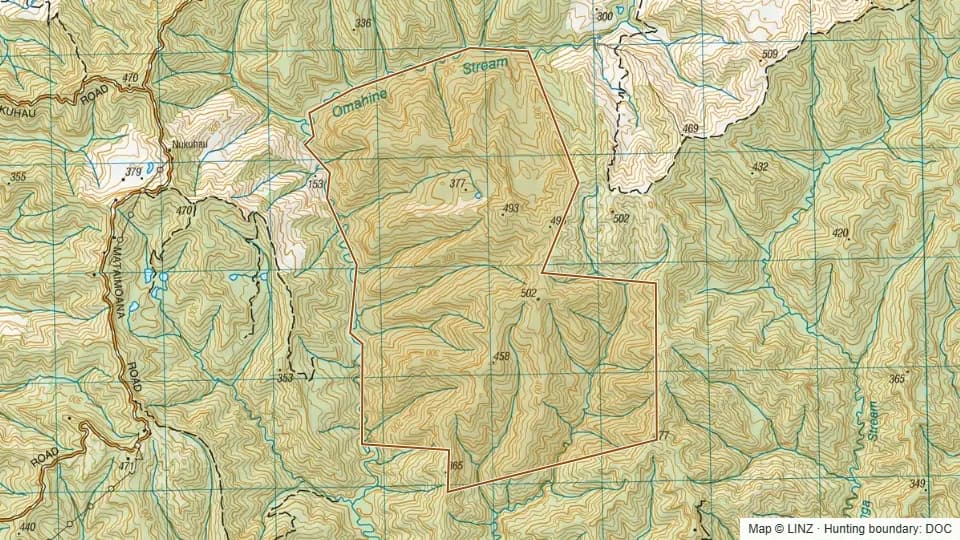 Omahine Conservation Area864 ha
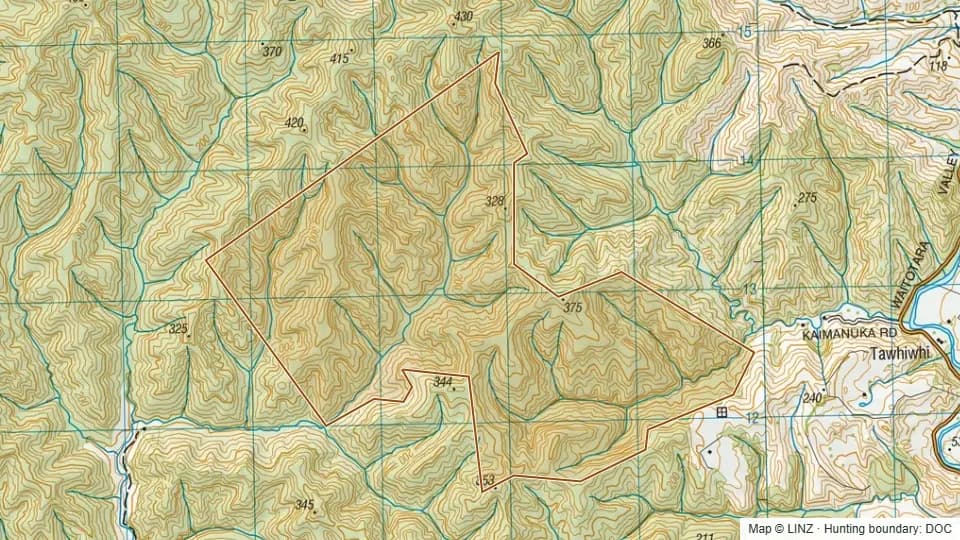 Patukino Scenic Reserve646 ha
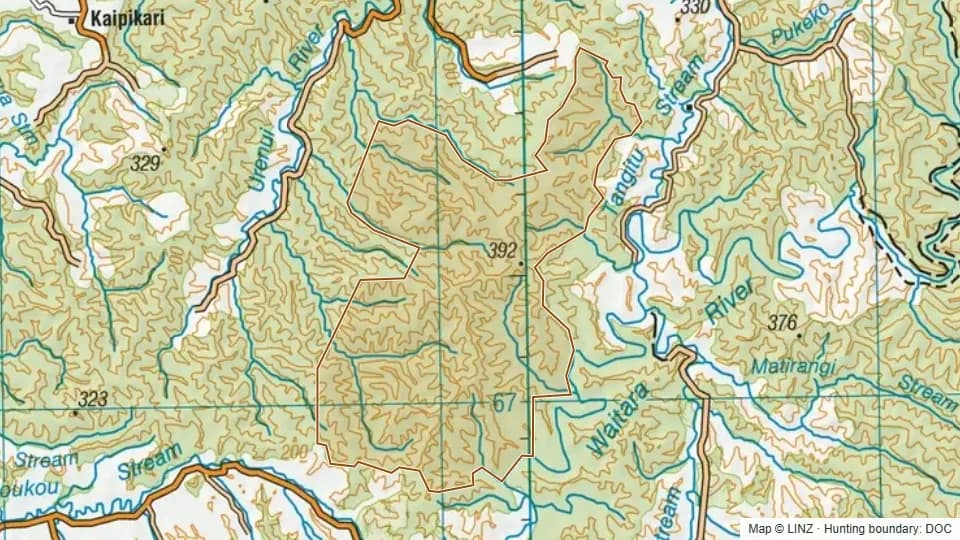 Pouiatoa Conservation Area3,902 ha
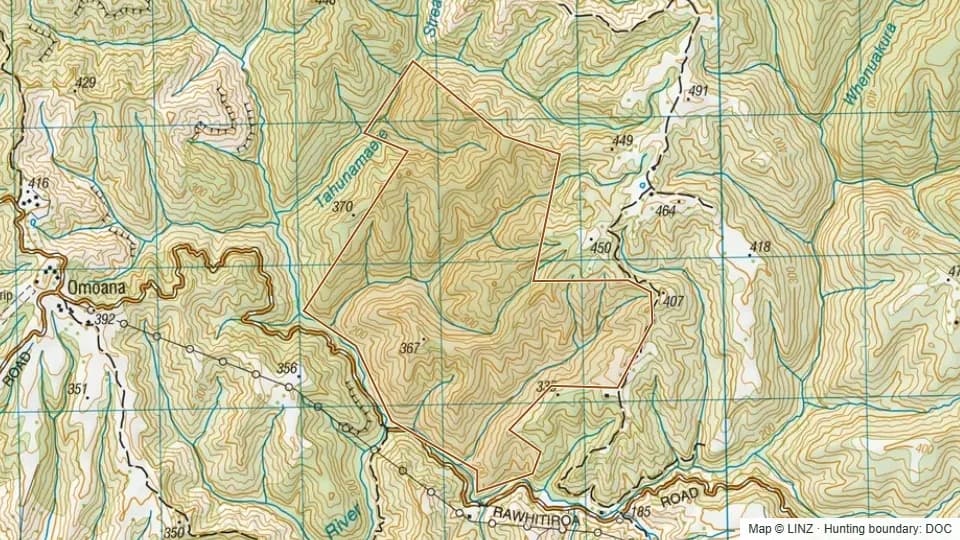 Rawhitiroa Road Conservation Area359 ha
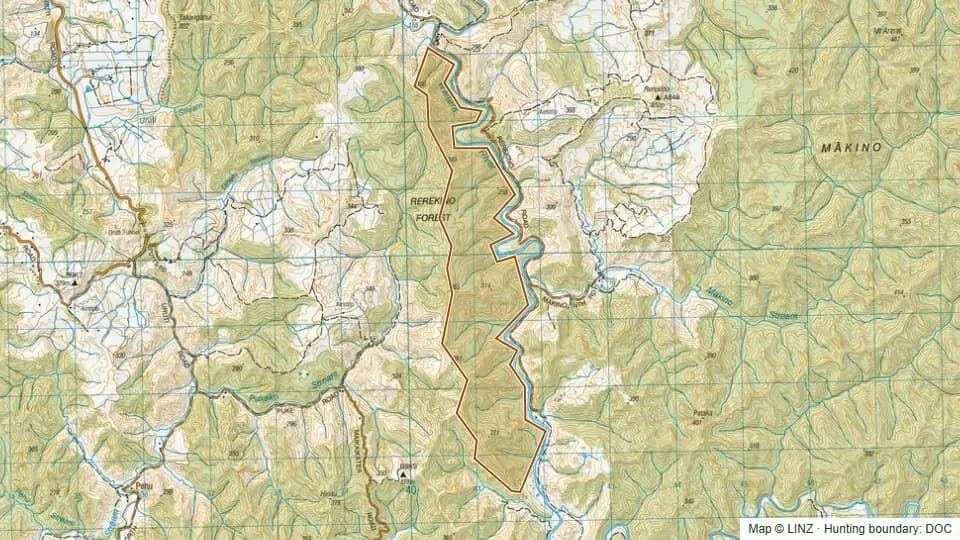 Rerekino Conservation Area521 ha
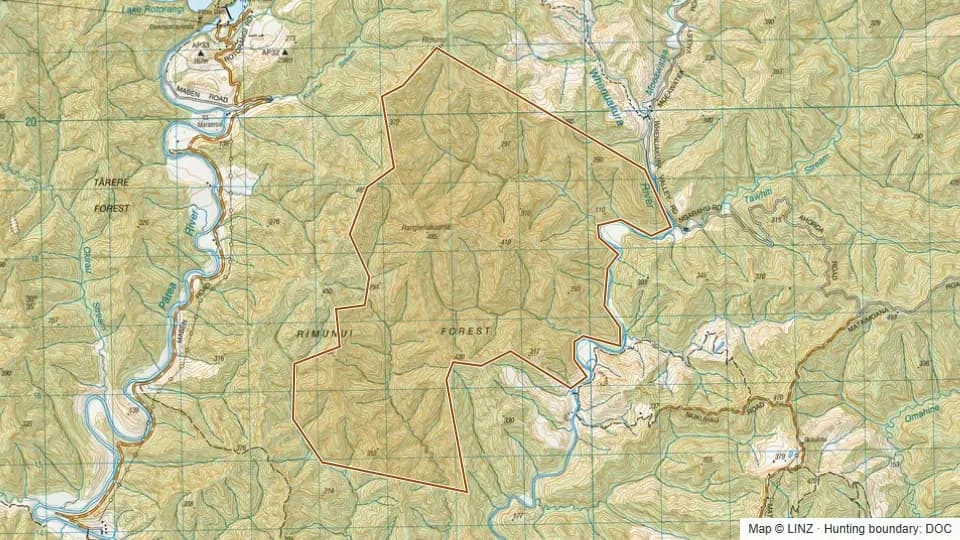 Rimunui Conservation Area1,855 ha
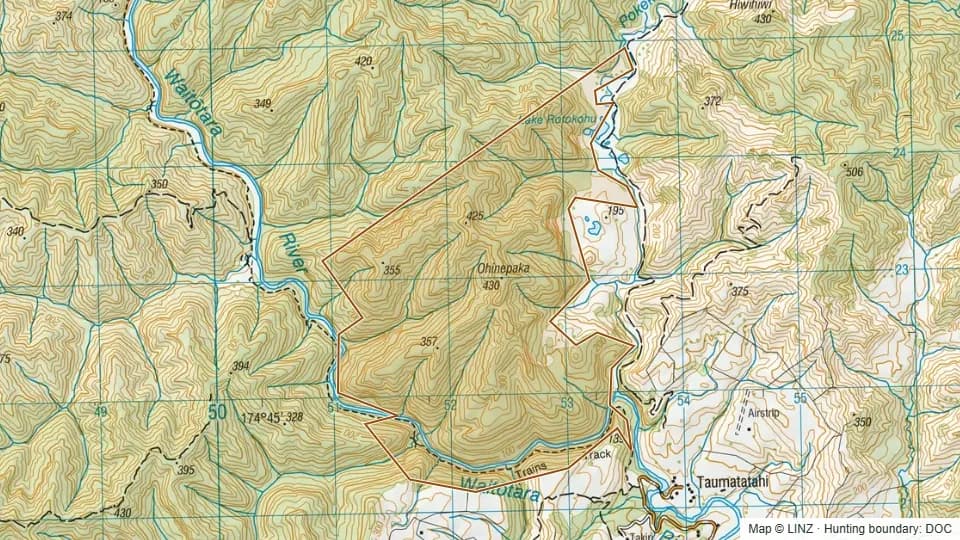 Rotokohu Scenic Reserve580 ha
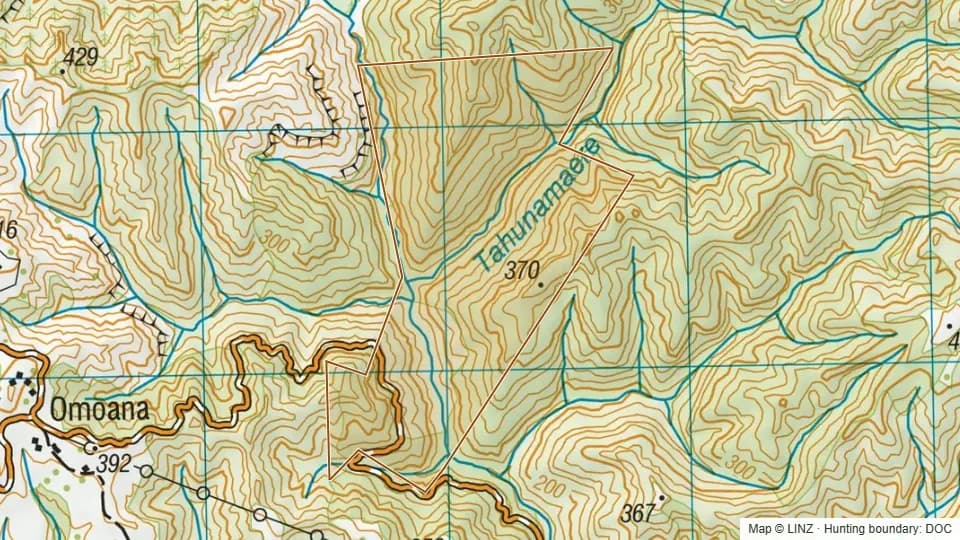 Tahunamaere Scenic Reserve131 ha
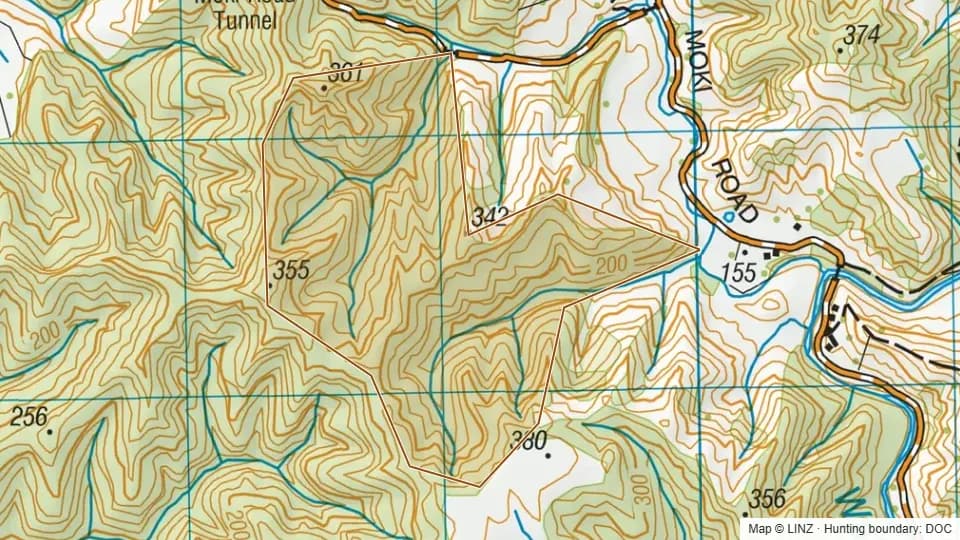 Tangitu Conservation Area140 ha
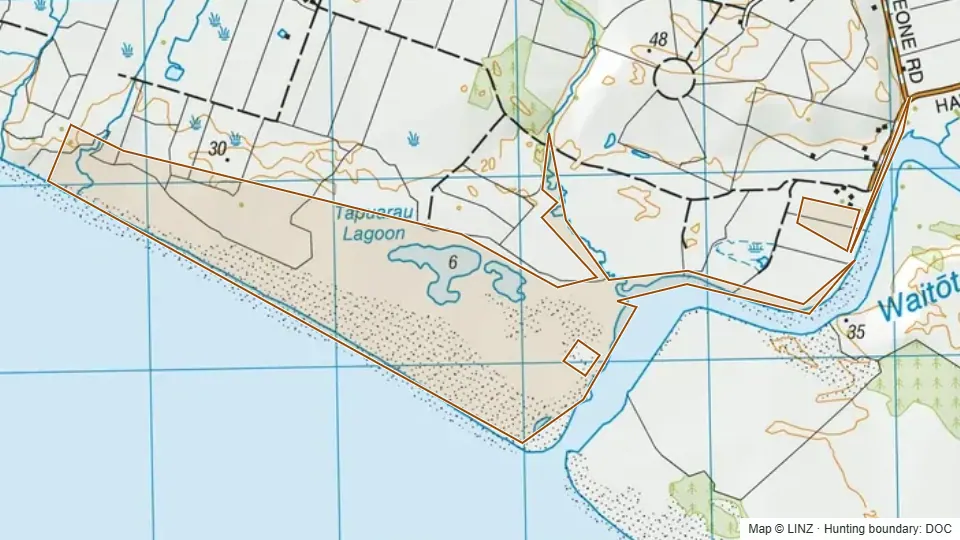 Tapuarau Lagoon Conservation Area218 ha
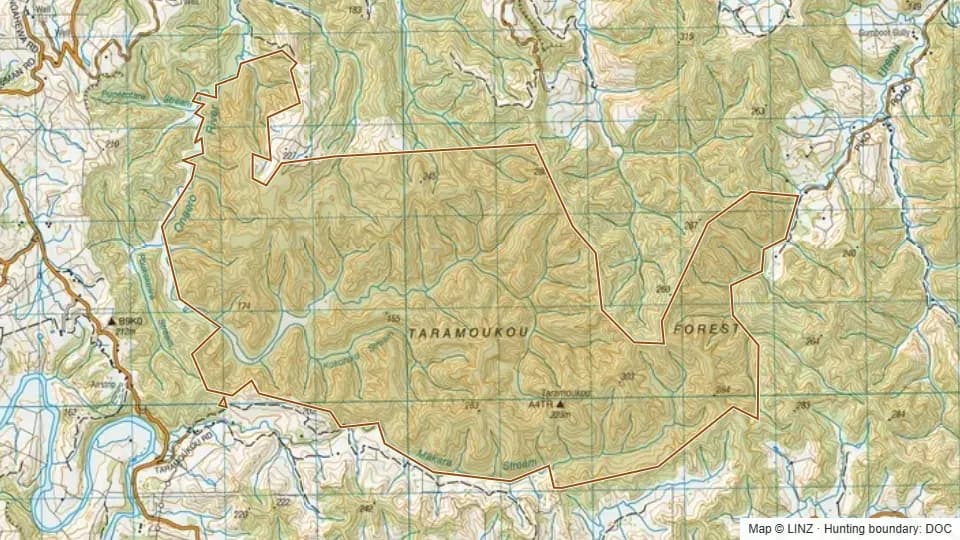 Taramoukou Conservation Area1,754 ha
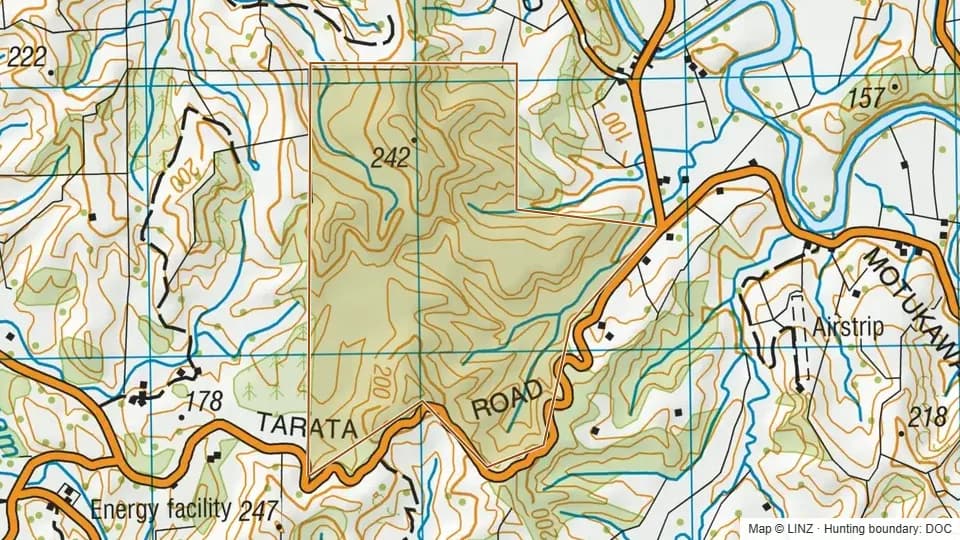 Tarata Conservation Area134 ha
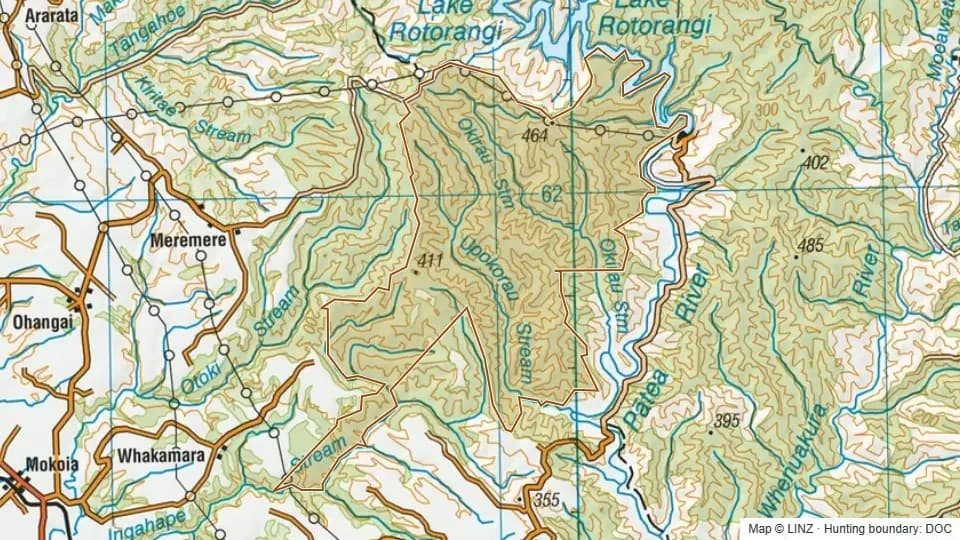 Tarere Conservation Area4,773 ha
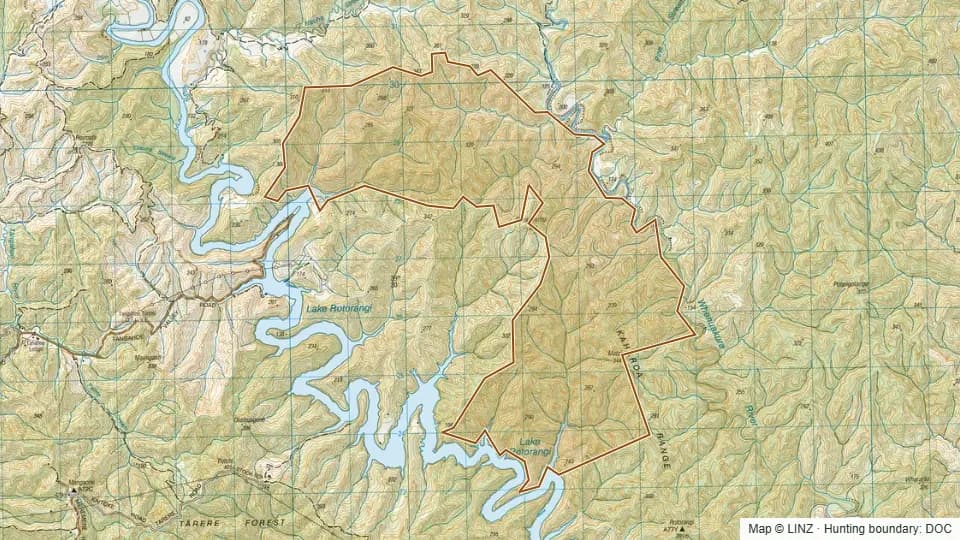 Tarere Conservation Area2,147 ha
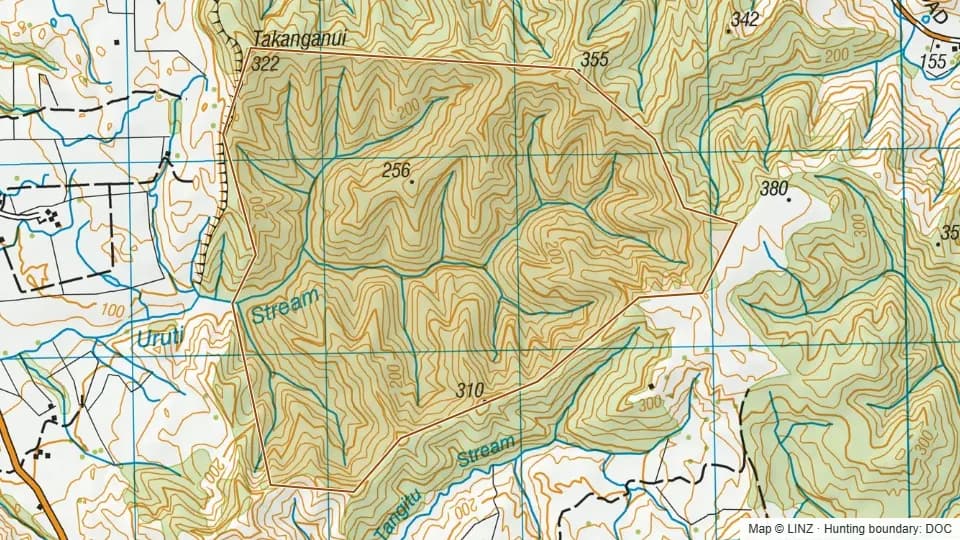 Uruti Scenic Reserve393 ha
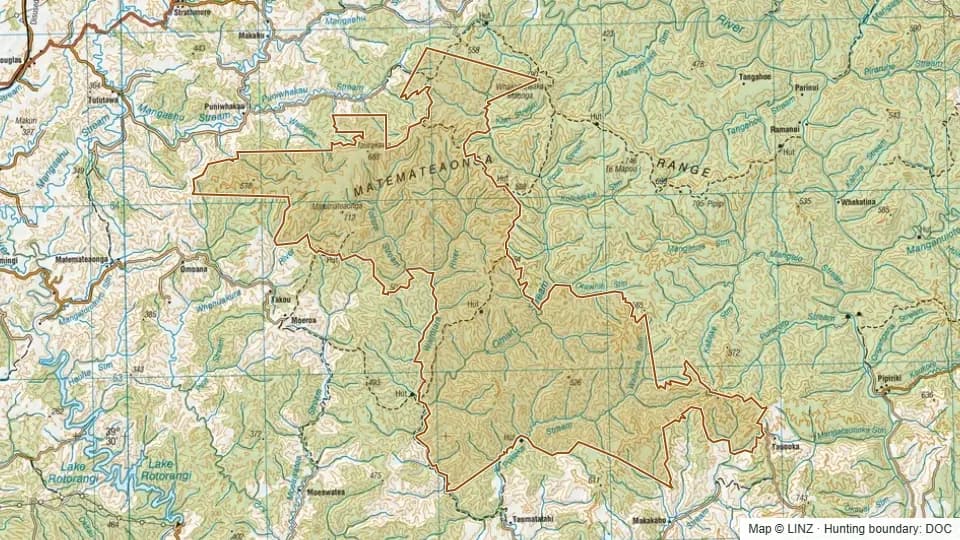 Waitotara Conservation Area27,754 ha
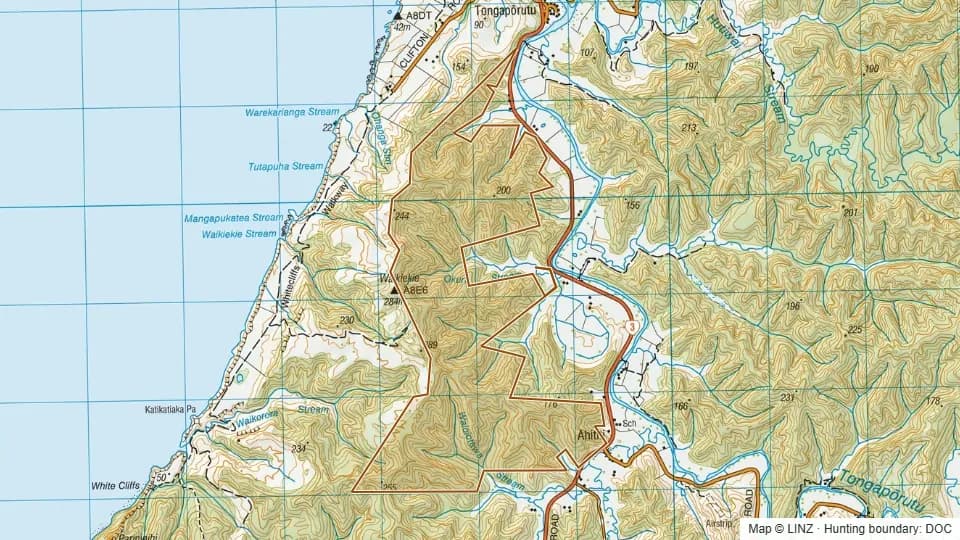 Whitecliffs Conservation Area509 ha