Hunting in Nelson & Marlborough
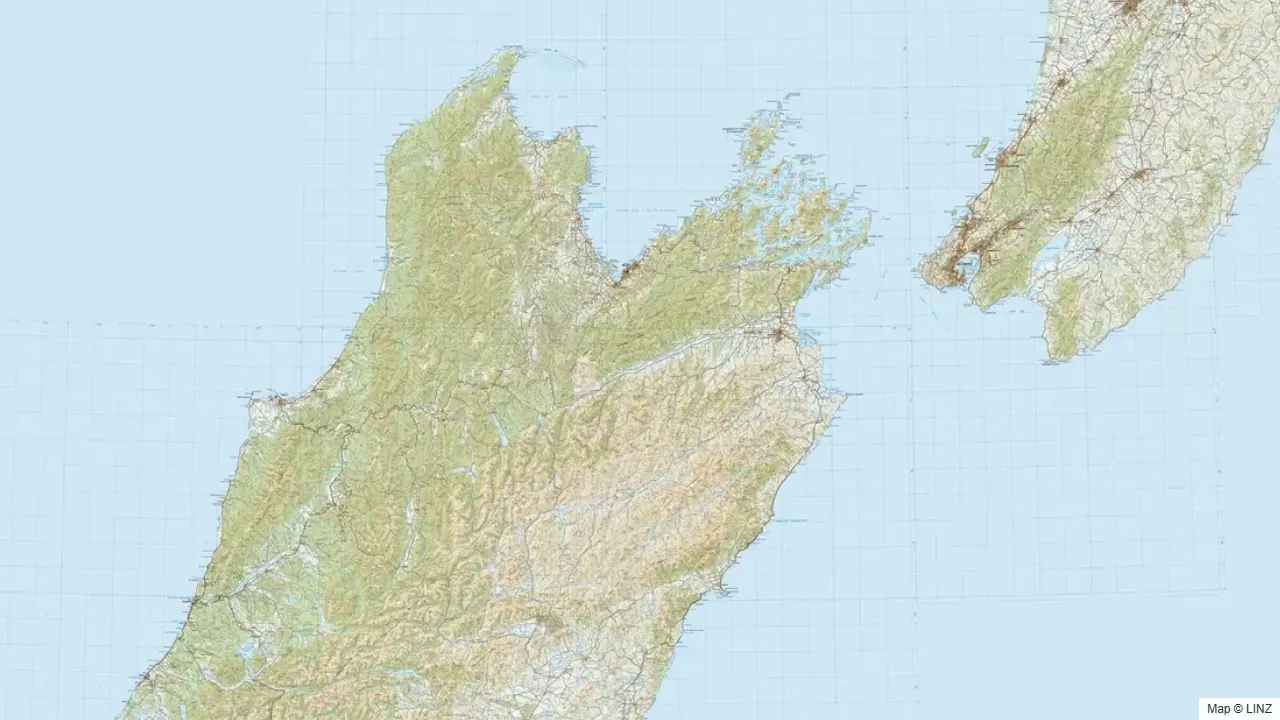
Overview
The top of the South Island spans three national parks and two major forest parks within a half-day of Nelson. Kahurangi at 375,000 ha is New Zealand's second-largest national park; Nelson Lakes is the classic mid-South-Island beech destination; Abel Tasman adds a coastal hunting option that gets used by very few hunters relative to how well it is known. Mt Richmond Forest Park runs south from Nelson along the main range, and the Marlborough Sounds bush blocks extend into the sea at the other end.
Together these six blocks cover over 800,000 ha of public conservation land with nearly 200 DOC huts between them — one of the most hut-rich concentrations in the country. The character varies dramatically, from West Coast-style beech country in Kahurangi's Karamea headwaters to the tidy alpine tops of Nelson Lakes to the salt-spray coastal bush of the Sounds and Abel Tasman. Red deer are strong everywhere; fallow deer are present in four of the six blocks.
For Inland Kaikōura (the Molesworth roar blocks and South Marlborough country) see the dedicated Inland Kaikōura page. For the Big Bush and Howard Forest around Murchison, see Murchison & St Arnaud.
What You Can Hunt
- Red deer — strong through every block. Kahurangi, Nelson Lakes, and Richmond carry the highest densities; Abel Tasman and the Sounds are lighter but rarely hunted.
- Fallow deer — established in Kahurangi, Richmond Forest Park, Southern Abel Tasman, and the Marlborough Sounds. The Kahurangi and Richmond fallow populations are the most accessible on the South Island's west side.
- Chamois — Nelson Lakes and the Spenser Mountains at the park's southern end; Richmond at altitude; small numbers in parts of Kahurangi.
- Wild pig — widespread through lower Kahurangi, Richmond, the Marlborough Sounds, and the coastal margins of Abel Tasman.
- Wild goat — present in Kahurangi coastal country, Abel Tasman, Richmond, and the Sounds bush blocks.
Where to Hunt
- Kahurangi National Park — 375,000 ha with 78 huts: the Cobb, Wangapeka, Karamea, and Anatoki catchments are the core hunting country. Red deer in every catchment; fallow in several; chamois on the higher ranges near the main divide. One of the few genuinely remote mainland hunting destinations within reach of Nelson by road.
- Nelson Lakes National Park — 94,000 ha around Lake Rotoroa and Lake Rotoiti, 31 huts including Angelus, John Tait, Upper Travers, West Sabine, and Blue Lake. Red deer throughout; chamois on the higher ranges; goat and pig in the lower country. Helicopter access is permitted with conditions.
- Mt Richmond Forest Park — 170,000 ha of beech ridges running south from Nelson, 37 huts. Red deer dominate; fallow in several catchments; chamois on the high ridges; pig and goat in the lower bush. No air access permitted — all foot access from the road ends.
- Abel Tasman National Park — Northern and Southern blocks cover 24,000 ha of coastal beech and regenerating bush, 9 huts. Red deer, goat, and pig; not alpine country, but genuinely productive and lightly hunted. Access by foot from the coastal tracks or by water.
- Marlborough Sounds Reserves — 143,000 ha of coastal bush and headland. Pig and goat in the main blocks; fallow and red deer present at lower density. Access largely by boat or kayak from the Sounds.
Getting In
- Road — State Highways 6, 60, 63, and 1 frame the region. All major park edges are accessible by sealed or gravel road.
- Foot — all public conservation land hunting is foot access from the road end. Hut networks are excellent in Kahurangi, Nelson Lakes, and Richmond; sparse in Abel Tasman; absent in most Sounds blocks.
- Air — helicopter access into Kahurangi and parts of Nelson Lakes, subject to current DOC concession rules. Mt Richmond is air-access prohibited.
- Water — significant in the Marlborough Sounds for pig and goat. Lake Rotoroa and Lake Rotoiti provide water access into parts of Nelson Lakes. Abel Tasman is accessible by water taxi from Marahau or Kaiteriteri.
Seasons & Weather
The top of the South Island sits between the wet West Coast and the dry east — more workable than Fiordland, wetter than Otago, with reliable winter snow on the higher tops.
| Period | What's happening | Notes |
|---|---|---|
| Mar–Apr | Red roar | Excellent in Kahurangi, Nelson Lakes, and Richmond. |
| Mar–Apr | Fallow rut | Kahurangi and Richmond fallow peak early–mid April. |
| May–Jul | Chamois rut | Nelson Lakes and the Spenser Mountains. |
| Jun–Aug | Winter | Snow on the tops; lower-altitude hunting workable; Nelson Lakes hut trips popular. |
| Sep–Nov | Spring | Velvet stags; pig activity increases through the coastal country. |
| Dec–Feb | Summer | Hot in the lower valleys; tops accessible; sandflies heavy at sea level. |
Gear & Conditions
Country ranges from sea-level coastal bush to proper alpine tops. A medium-calibre rifle in 6.5mm through .30 covers everything. Nelson Lakes alpine work calls for ice axe and crampons in winter; the Kahurangi and Richmond bush demands gaiters and quality waterproofs. The Marlborough Sounds and Abel Tasman are sea-level terrain — boat and tidal logistics matter more than alpine gear. In the bush, shots are typically 50–150 metres; on the Nelson Lakes tops, 200–300 metres.
Permits & Regulations
A free DOC permit covers all six blocks. Key points:
- Nelson Lakes — national park rules apply; air access is permitted with conditions; dog access is restricted in most of the park. Confirm before taking dogs.
- Kahurangi — some catchments have periodic operational restrictions; check current status for the specific area before travelling.
- Marlborough Sounds — includes some private blocks and Māori-trust land; confirm boundaries before hunting any sea-accessed country.
- Pig dog hunting is permitted on conservation land subject to current dog-control conditions and 1080 operational status.
Open the Map
Open Nelson & Marlborough in the full hunting map →
Kahurangi, Nelson Lakes, Abel Tasman, Richmond, and the Marlborough Sounds — hunting blocks, huts, tracks, and current pesticide operations.
Useful Links
Game animals in Nelson & Marlborough
Hunting areas in Nelson & Marlborough
6 DOC hunting blocks — species, huts, access and an interactive map for each.
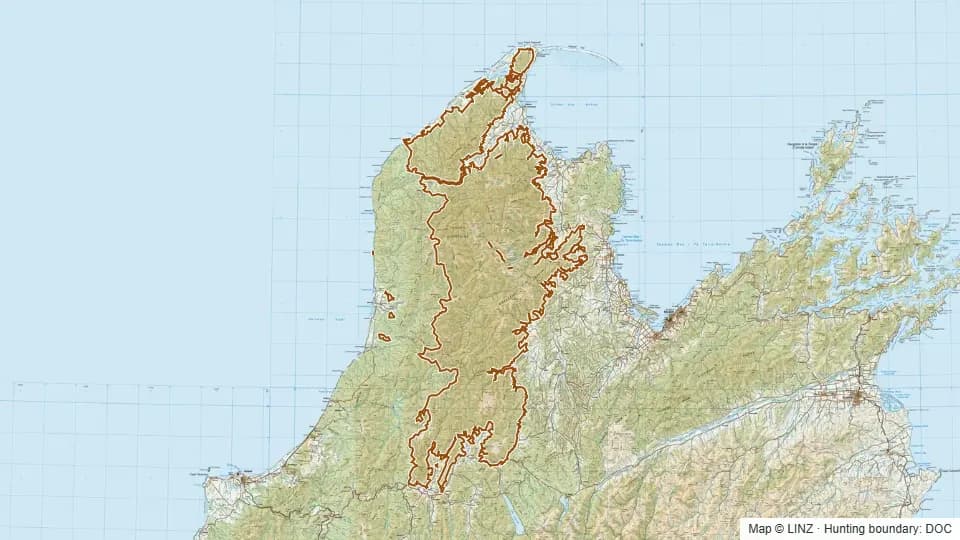 Kahurangi National Park (includes adjacent Public Conservation land)375,558 ha
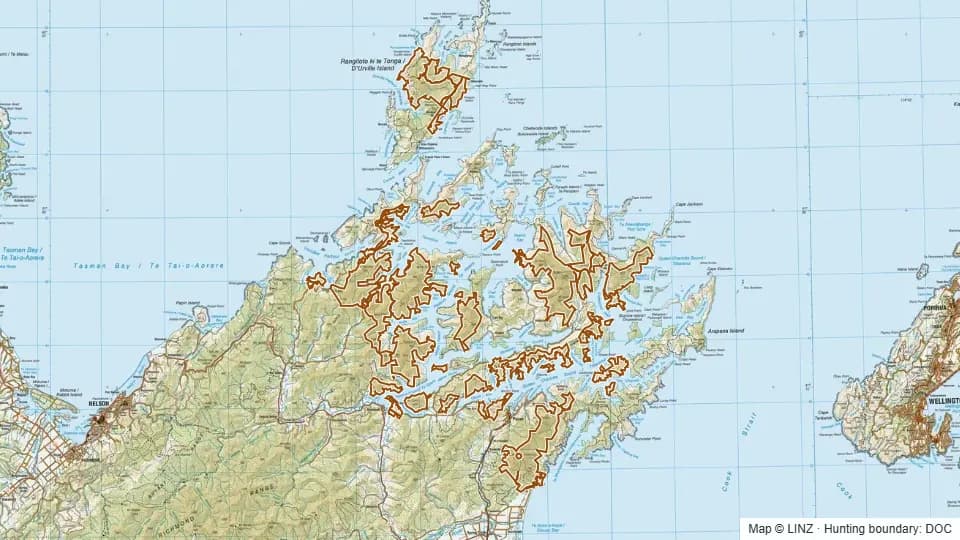 Marlborough Sounds Reserves143,311 ha
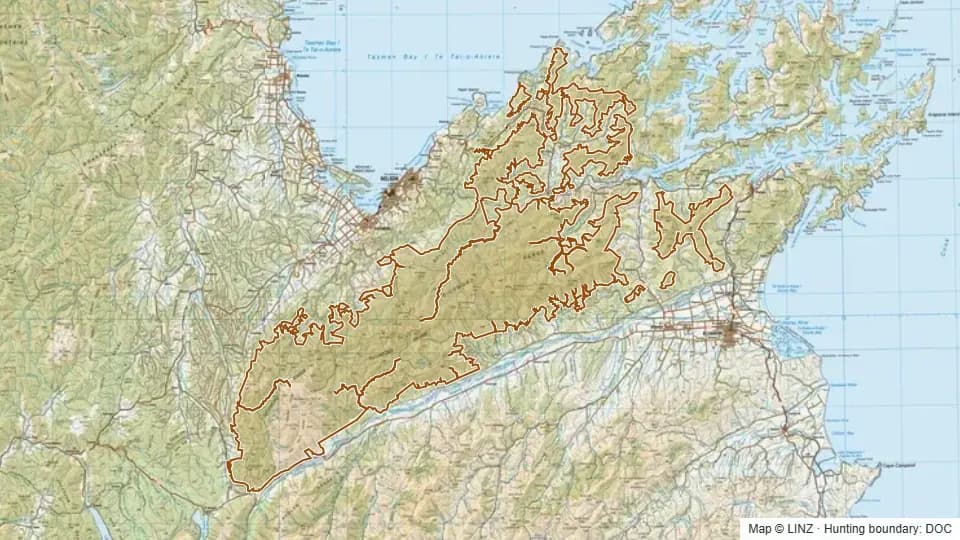 Mt Richmond Forest Park (includes adjacent Public Conservation Land)170,502 ha
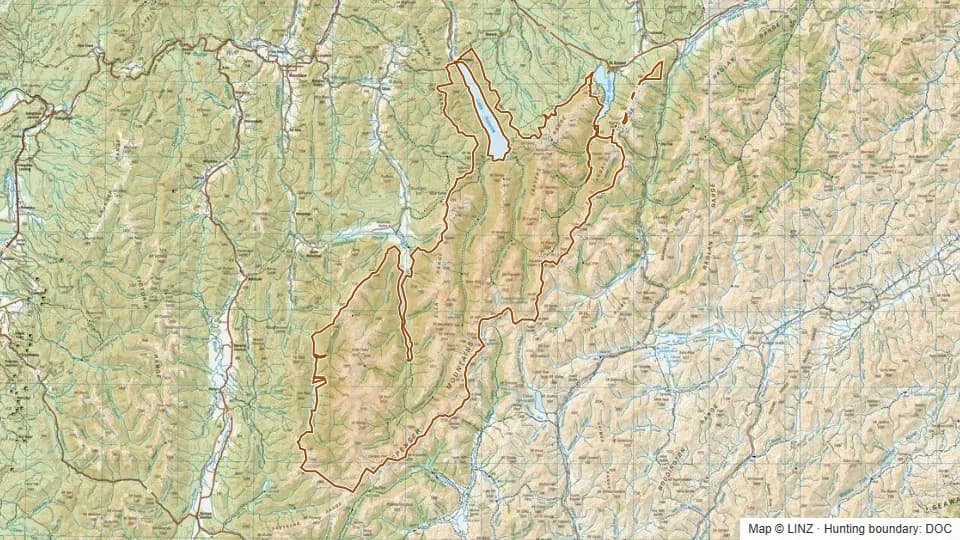 Nelson Lakes National Park93,938 ha
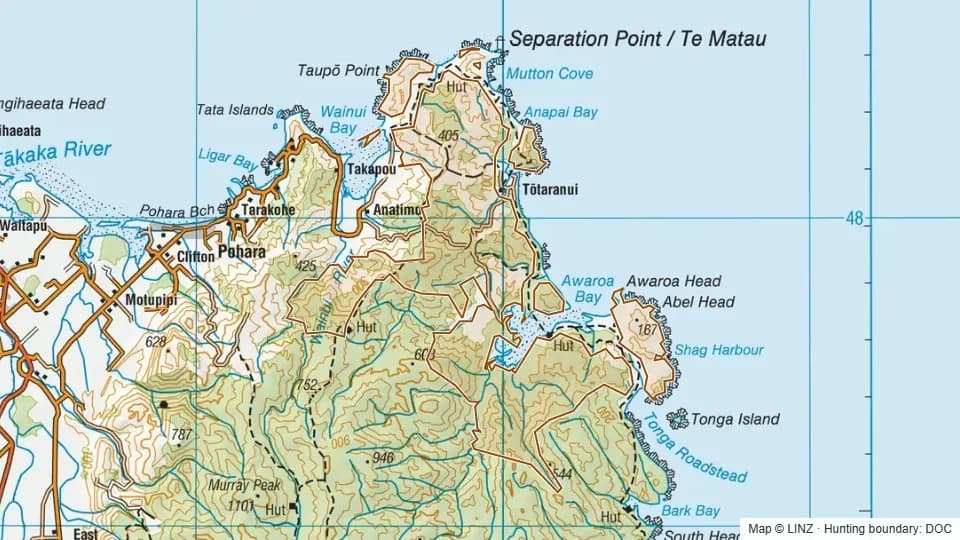 Northern Abel Tasman National Park5,740 ha
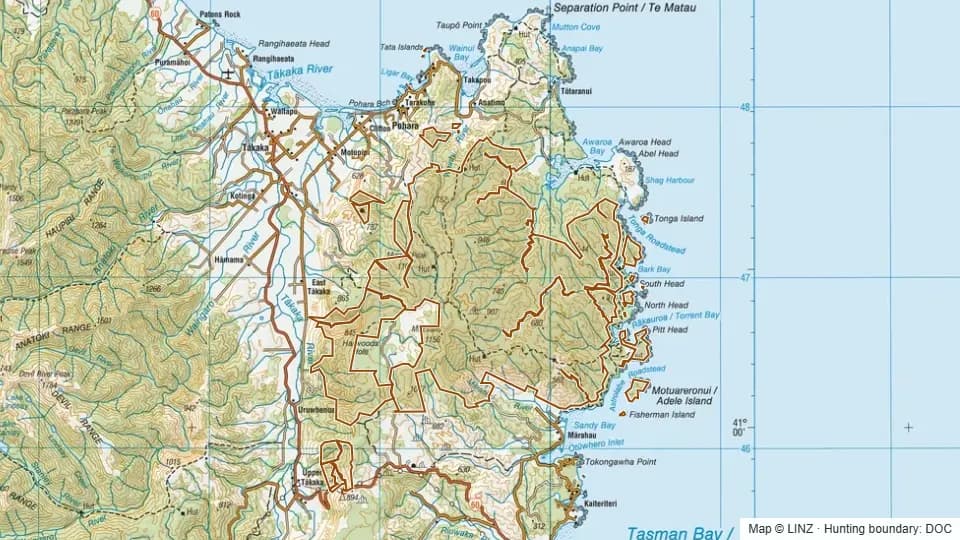 Southern Abel Tasman National Park18,453 ha