Rupicapra rupicapra
Chamois
See Chamois range on the map
View where Chamois are found across New Zealand
Plan a guided chamois hunt
Outfitters, packages, and pricing for guided Chamois hunts
Overview
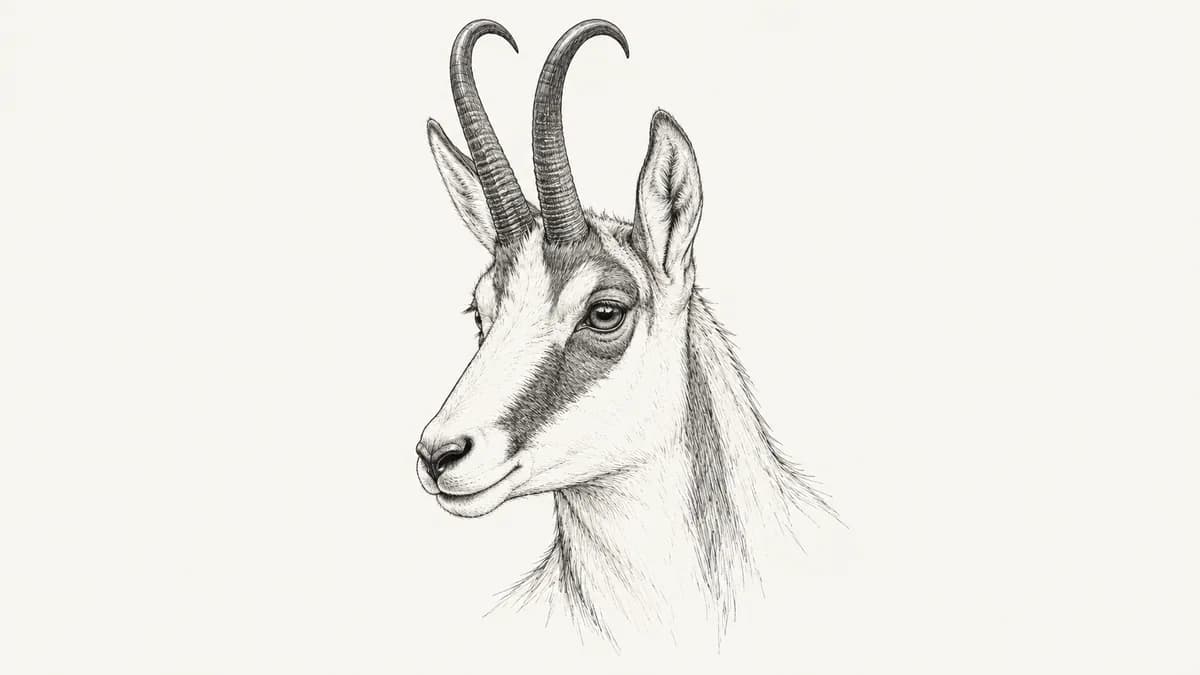
European chamois (Rupicapra rupicapra) are smaller and lighter than tahr, with very different behaviour: they live in smaller groups, range over much wider country, and habitually sit out on bluffs and snow grass faces where they are visible at long range. Both sexes carry horns, which makes identification straightforward and trophy assessment more about quality than sex. Chamois are widespread through the South Island's alpine country and are one of the most accessible alpine trophies in New Zealand.
Origins & Herd History
Chamois were liberated near Aoraki/Mount Cook in 1907 from a gift from the Austrian Emperor Franz Joseph I — eight animals captured in the Austrian Alps. They have spread far more widely than tahr and now occupy almost all of the South Island's alpine country, from Nelson Lakes through to Fiordland. The original Aoraki release country is still occupied; secondary expansion has been steady rather than explosive, with chamois pushing into new alpine basins as access opened up.
Unlike tahr, chamois have no formal control plan and there is no recognised "feral range" boundary. DOC controls chamois in some priority conservation areas but the population is managed mainly through recreational hunting.
Where to Find Them
Chamois occupy almost all suitable alpine and sub-alpine country in the South Island. Densities vary, but in most ranges hunters can expect to glass animals on the open tops on a fine day.
- Canterbury high country — front-range and headwaters of the Rakaia, Rangitata, and Waitaki
- West Coast catchments — bush approach to alpine basins, Hokitika to Haast
- Otago and Southland — drier eastern tops; Hāwea, Wānaka, Takitimu
- Fiordland — chamois share Fiordland country with red deer and wapiti
- Nelson Lakes / Inland Kaikoura — northern South Island alpine country
- Marlborough Sounds-adjacent ranges — patchy populations
Public land you can hunt now
Chamois are on more than 300 DOC hunting blocks — browse every public block with chamois, ranked by size, with elevation and bushline data for each. The West Coast catchments carry some of the most reliable numbers: the South Westland/Weheka and Hokitika permit areas both combine bush-valley approaches with big alpine heads, and Kahurangi National Park holds the northern end of the range.
Behaviour & Habitat
Chamois are open-country alpine animals. They use snow-grass slips, scree, and rocky bluffs from roughly 1200 metres up to permanent snow line, with sub-alpine scrub at the lower margin. Groups are smaller than tahr — a typical mob is five to ten animals — and bucks join nannies only during the autumn rut. Daily movement is dawn and dusk on south-facing snow grass; bedding in cover or above the rock line through the day.
Diet is alpine grass, herbs, snow tussock, and broadleaf scrub. Chamois are extremely visually alert and routinely sit out at long range scanning for movement. A chamois that has detected a hunter usually moves out of sight rather than running — a stalk can be repeated several times in the same drainage with patience.
Hunting Chamois
The chamois rut runs from late April into May, overlapping the red roar at the front end and ending before the tahr rut starts. Bucks chase nannies hard during the rut and become careless about ridgelines and skylines, providing some of the best stalking opportunities of the year. Outside the rut, chamois are best hunted by glassing from a height and then making a stalk down or across — they expect danger from below, so working a ridge from the top down is often effective.
A free DOC permit covers public conservation land. Many chamois are taken as an opportunistic second animal during red-deer or tahr hunts, but a dedicated chamois trip pays off in the country's drier ranges where the animals sit out longer in good weather. DOC does not run dedicated chamois control programmes, but management of tahr can incidentally affect populations in shared range.
Seasons & Timing
| Period | What's happening | Where it matters most |
|---|---|---|
| Late Apr–May | Peak rut — bucks careless | Whole alpine range |
| Jun–Aug | Winter — heavy coats, deep snow | Lower-altitude work, glassing south faces |
| Sep–Nov | Spring — kids dropping, lighter coats | Tops accessible |
| Dec–Feb | Summer — bucks high, settled | Long glassing, careful stalks |
| Mar–Apr | Pre-rut — bucks moving onto nannies | Trophy hunting window |
Trophy Notes
A mature chamois carries vertical horns with a forward hook at the tip, scored on length, base, and the depth of the hook. Bucks typically run 9 to 10 inches; an 11-inch buck is exceptional. Bucks and nannies look very similar in summer coat — the buck's horns are heavier through the base and the hook is more pronounced. Winter coat is striking: deep chocolate body, pale legs, and a black stripe down the face. Body weight is 25 to 40 kilograms, so packouts are straightforward.
Many trophy hunters target chamois in late autumn or winter when the full winter cape is on the animal — a buck taken in May or June carries a coat that makes a far better mount than a summer animal.
Related Species
- Tahr — share alpine country throughout the central Southern Alps; commonly hunted on the same trips.
- Red deer — present in the bush valleys below chamois country.
- Wapiti — Fiordland-only; chamois are commonly the second animal on a wapiti bugle trip.
Regulations & Permits
A free DOC permit is required for chamois hunting on public conservation land. There is no bag limit, no ballot system, and no formal control plan specific to chamois. Helicopter access is permitted but subject to current DOC concessions and operational rules. Spotlighting is not permitted on conservation land.
Chamois are present in Mount Aspiring, Westland Tai Poutini, Aoraki/Mount Cook, Arthur's Pass, Nelson Lakes, and Fiordland national parks, and across most of the country's larger forest parks. Always check the current pesticide-operations status for any catchment before travel — 1080 operations can close access for days at a time.
FAQ
When is the chamois rut in New Zealand? Late April through May, peaking the first half of May. Slightly later than the red roar and ending before the tahr rut starts.
Where can I hunt chamois in New Zealand? Throughout the South Island's alpine country — from Nelson Lakes in the north through Canterbury, the West Coast, and Otago, into Fiordland and Southland in the south.
Are chamois harder to hunt than tahr? Most hunters find chamois harder to stalk — they are smaller, range more widely, and are more visually alert. The country is similar.
What rifle is best for chamois? A flat-shooting medium calibre — 6.5mm Creedmoor, .270, or .308 — covers it. Shots are often long, so optics matter.
How long are good chamois horns? A mature buck typically carries 9 to 10 inch horns. An 11-inch buck is exceptional. Base mass and hook depth matter as much as length.
Can I hunt both chamois and tahr on one trip? Yes — they share much of the same country in Canterbury, the West Coast, and south Westland. Many trophy trips target both.
Are chamois present in the North Island? No — chamois are South Island only. They have never been released or established in the North Island.