Cervus nippon
Sika Deer
See Sika Deer range on the map
View where Sika Deer are found across New Zealand
Plan a guided sika deer hunt
Outfitters, packages, and pricing for guided Sika Deer hunts
Overview
Sika deer (Cervus nippon) are smaller than red deer, far more secretive, and prefer dense beech and podocarp forest over open tops. Many hunters consider them the country's most challenging public-land deer — a sika stag stalked and shot in his own bush is a meaningful achievement. The Kaimanawa–Kaweka population is the largest sika population on the planet outside Japan, and the country between Lake Taupō and the Manawatū Gorge is the densest deer hunting country in New Zealand.
Origins & Herd History
Sika were liberated in 1905 near Lake Taupō from a small group gifted to Sir Walter Buchanan by the Duke of Bedford from his Woburn Abbey estate. The original stock was Cervus nippon — the Japanese form — and from that single release point sika have spread through the rugged bush country of the central North Island. The spread has been steady rather than explosive; sika are now established south through the Ruahine, north into the Ahimanawa, and east into the Kaweka and beyond.
Sika and red deer share much of their range and hybridise where they meet. The hybrid zone runs roughly along the western Kaimanawa boundary into the western Kaweka and shows in heavier body size and slightly larger antlers — sika genetics dominate visibly in the central blocks, red deer at the edges.
Where to Find Them
The pure sika range is centred on Kaimanawa Forest Park and Kaweka Forest Park, with steady expansion outward into the Ahimanawa, Ruahine, and the southern Tongariro country. Sika have moved into the northern Tararua over the past few decades and are now established as far south as the southern Tararua.
- Kaimanawa Forest Park — classic sika range, accessible from Taupō and Tūrangi
- Kaweka Forest Park — steeper, scrubbier, often more weather-exposed
- Ahimanawa Range — quieter sika hunting
- Ruahine Forest Park (northern half) — sika expanding south through the range
- Tongariro and Volcanic Plateau fringes — newer, lower-density sika country
- Northern Tararua — established sika population, expanding south
- Eastern Kaweka and the Wairoa hill country — overflow into the East Coast region
Behaviour & Habitat
Sika are bush deer. They favour dense beech, podocarp, and broadleaf forest, with small clearings, tiny grass openings, and slip faces where they can feed unseen. They move much less per day than red deer, often holding within a small area for weeks at a time. Stags are particularly secretive and many mature animals are taken on ground 200 metres from where they have lived for years.
Diet is mixed browse: fern, broadleaf, hangehange, grass, and seasonally on beech mast and seeds. They feed at dawn and dusk and rest through the heat of the day under cover. Sika are notoriously sensitive to scent and movement — hunters who succeed work into the wind, move slowly, and shoot quickly when an animal is sighted.
Hunting Sika
Sika rut from mid-April into May. Unlike the deep roar of a red stag, a rutting sika stag produces a high, drawn-out whistle followed by a series of grunts and clucks. The call carries through bush but is easily missed by hunters used to red-deer vocalisations. Sika hold small territories and respond well to a careful caller — patience matters more than ground covered.
Outside the rut, sika are bush hunters' deer. They feed on fern, broadleaf, and grass, often in tiny clearings only metres across. Shots are usually short range and snap. Wet, still mornings after a frost are the prime conditions. A free DOC permit is required for public conservation land, and the Kaimanawa-Kaweka area has well-developed hut networks and ballot blocks during the rut — book well in advance.
Seasons & Timing
| Period | What's happening | Where it matters most |
|---|---|---|
| Mid Apr–mid May | The whistle — peak sika rut | Kaimanawa, Kaweka, Ruahine |
| May–Aug | Winter — bush hunting, deer feeding low | All sika country |
| Sep–Nov | Antler drop, velvet growth | Bachelors moving |
| Dec–Feb | Hard antler clean | Bush stalking dawn/dusk |
| Mar–early Apr | Pre-rut sparring | Stags establishing territory |
Trophy Notes
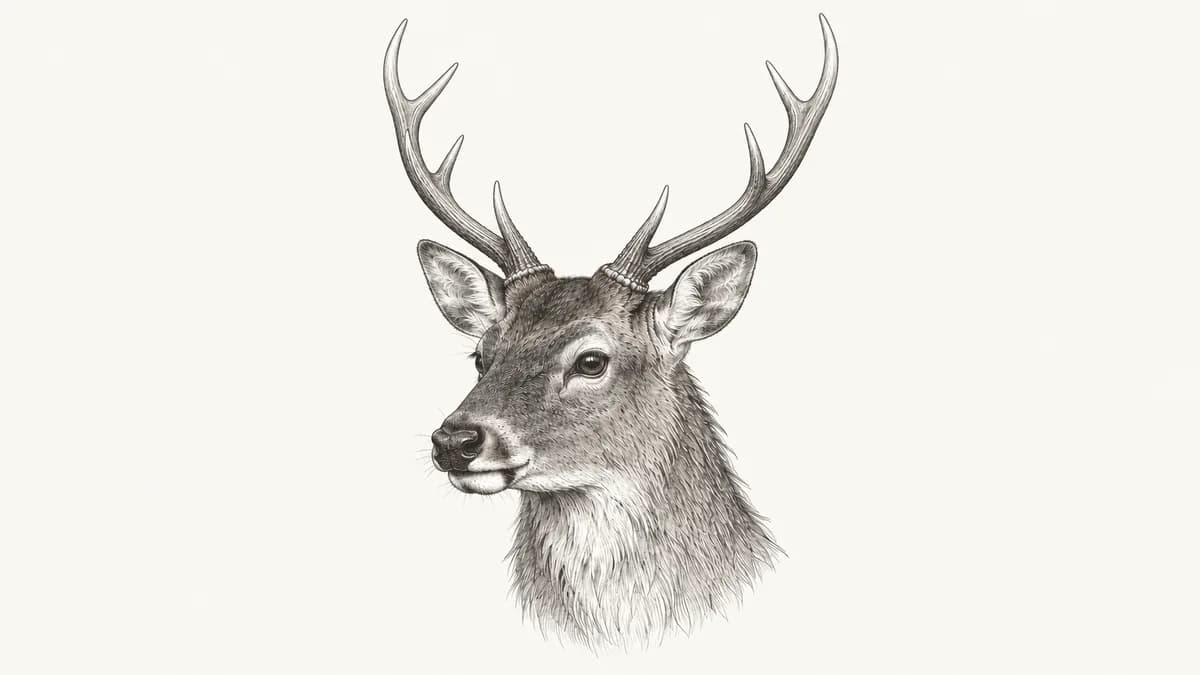
A mature sika stag typically carries a clean 8-point head — four points on each beam — with length, beam, and even matching of the tops more important than total point count. Antler length on a good free-range head runs 24 to 28 inches; exceptional animals push into the low 30s. Body weight is roughly two-thirds of a red stag, so a packout is manageable solo.
Pure sika carry a darker, more compact body with characteristic spotting on the summer coat and a heart-shaped white rump patch. Hybrid sika × red animals are heavier, taller, with broader antlers but lose the classic sika "clean 8" symmetry. Many trophy hunters prefer a smaller, clean pure sika to a bigger hybrid.
Related Species
- Red deer — overlap with sika throughout the central North Island; both are present in most blocks.
- Fallow deer — pockets through Wanganui, Mamaku, and the Bay of Plenty.
- Sambar — the only other large deer in the lower North Island, in the Manawatū and Wellington/Wairarapa.
Regulations & Permits
A free DOC permit is required for sika hunting on public conservation land. Several blocks in Kaimanawa and Kaweka operate ballot systems during the peak rut — applications open well in advance. Helicopter access into Kaimanawa is restricted in parts of the park under DOC's sika management framework; check current rules before booking flights. Spotlighting is not permitted on conservation land. Pig dogs on sika country must comply with current dog-control conditions.
DOC actively manages sika numbers in some priority areas, including by aerial control. Recreational hunting is a recognised part of the sika management programme — hunter take is significant in achieving population targets.
FAQ
When is the sika rut? Mid-April to mid-May, peaking the last week of April. Sika rut roughly three weeks after the red roar.
What does a sika stag sound like? A high, drawn-out whistle followed by a series of grunts and clucks. It carries through bush but is easily missed by hunters used to red deer.
Where are the best sika hunting blocks? Kaimanawa and Kaweka are the historic strongholds — Oamaru, Kaipo, Tongariro, and Te Iringa rivers in Kaimanawa, and the upper Ngaruroro and Tutaekuri in Kaweka.
Are sika harder to hunt than red deer? Most experienced hunters say yes. Sika are smaller, hold tighter to thick cover, and are more scent- and movement-aware than red deer.
Do I need to apply for a ballot to hunt sika? Some blocks in Kaimanawa and Kaweka are ballot-allocated during the peak rut. Outside ballot weeks, a normal free DOC permit covers the same country.
What rifle suits sika in the bush? A short, fast-handling rifle in 6.5mm Creedmoor or .308 covers it. Shots are typically inside 80 metres in dense cover; speed matters more than long-range capability.
Can sika and red deer hybridise? Yes — and they do in the western Kaimanawa and Kaweka. Hybrids are larger-bodied with broader antlers but lose the clean sika symmetry.