Cervus unicolor unicolor
Sambar Deer
See Sambar Deer range on the map
View where Sambar Deer are found across New Zealand
Plan a guided sambar hunt
Outfitters, packages, and pricing for guided Sambar Deer hunts
Overview
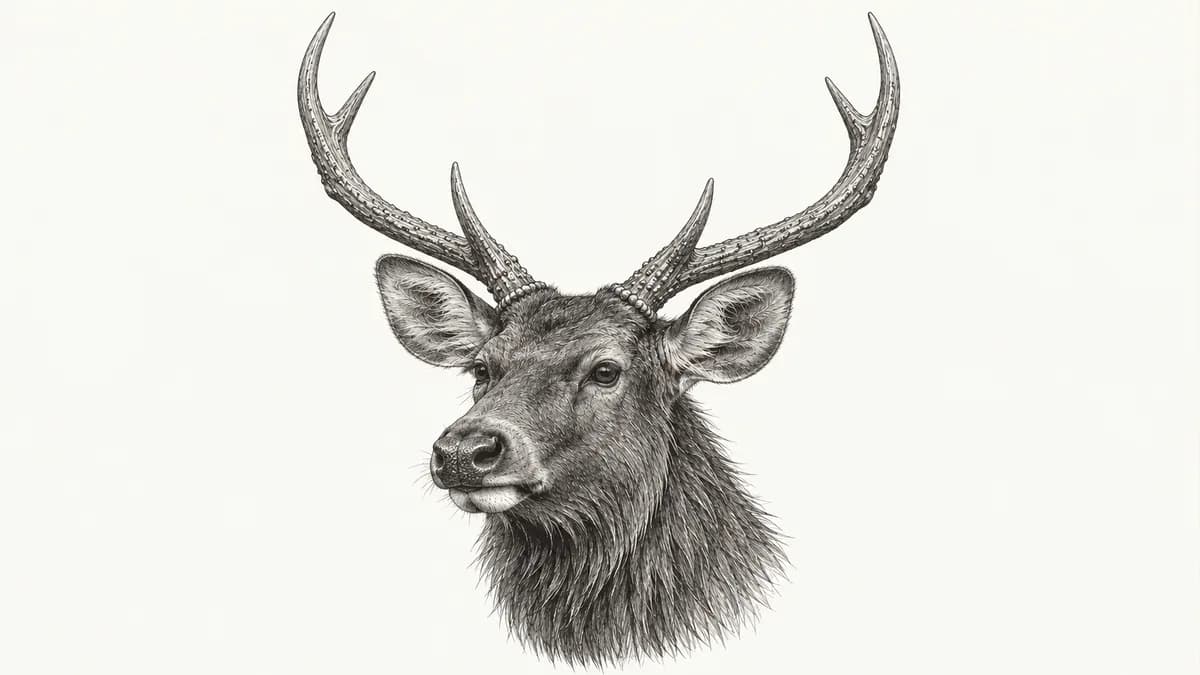
Sambar (Cervus unicolor unicolor) are the largest of New Zealand's introduced deer — a mature stag can weigh well over 250 kilograms — and carry a distinctive three-tined antler structure with heavy beams and large pearling around the burrs. Sambar are a niche but iconic hunt in New Zealand: limited range, limited access, and a very different quarry from the country's more familiar red and fallow.
Origins & Herd History
Sambar were released in the Manawatū in 1875 from a single shipment of Sri Lankan stock — the original animals were a gift from the Government of Sri Lanka (then Ceylon) and were released near Foxton on the lower Manawatū. From that single release the herd has expanded slowly into surrounding country but never spread across the country the way red deer did.
A second, smaller liberation took place in the Horowhenua a few decades later. The Manawatū population has gradually expanded south into Horowhenua and the Wairarapa coast and north into southern Wanganui, with isolated reports as far away as the eastern Tararua. Sambar remain numerically scarce — the total free-range population is estimated in the low thousands.
Where to Find Them
The sambar range is geographically small and centred on the lower North Island. Most of the herd's core range is on private farmland, forestry blocks, and Iwi-administered land rather than DOC conservation land, so access is generally arranged through landowners, forestry-block permits, or guided hunts.
- Manawatū hill country — the historic centre of the herd
- Horowhenua and Otaki river systems — bush and swamp margins
- Southern Wanganui — expanding sambar country
- Wairarapa coast (Castlepoint area) — established eastern population
- Aorangi Range (Wellington) — low-density but present
- Forestry blocks — pine plantations are key sambar habitat
Behaviour & Habitat
Sambar are nocturnal, intelligent, and use swampy, scrubby country that is hard to glass. They prefer dense cover with access to water — wallows are a defining habitat feature, and a sambar will use the same wallow for years. Daily movement is mostly at night; mature stags are rarely seen in daylight outside the rut. Tracks are very large and easy to recognise — roughly twice the size of a red-deer print.
Diet is varied: pasture, broadleaf, fern, willow, blackberry, and broad-leaved scrub. Sambar are strong swimmers and will cross rivers freely. They have a distinctive alarm call — a single sharp "honk" — and a strong sense of self-preservation: a sambar that has detected a hunter often disappears for days.
Hunting Sambar
Sambar do not rut in a tight, vocal window the way reds and fallow do. Their breeding activity is spread roughly from late winter into spring, and stags advertise with a loud, single bell-like call rather than a sustained roar. Trophy hunters typically target stags in late winter when antlers are hard and bodies are heavy.
The most effective methods are stalking the edges of forestry blocks at first and last light, watching wallows, and following fresh sign in damp ground. Because most country is private, hunters should confirm permission and any block-specific rules well in advance. Most successful sambar hunts run three to seven days — sambar reward time more than ground covered.
Seasons & Timing
| Period | What's happening | Where it matters most |
|---|---|---|
| Aug–Oct | Peak rut (variable) | Manawatū, Wairarapa coast |
| Jul–Sep | Heavy bodies, hard antlers | Trophy hunting window |
| Nov–Feb | Velvet growth | Quiet hunting, low pressure |
| Mar–Jun | Antlers hardening | Pre-rut sparring; bulls becoming active |
Trophy Notes
A mature sambar carries six points total — three tines per beam — with the brow tines often long and the back fork heavily pearled. Length, beam thickness, and symmetry matter much more than point count. Free-range trophies in the Manawatū herd are recognised internationally and are some of the few sambar of their size taken outside India and Sri Lanka. Body weight, mane, and dark winter coat make a mature stag look closer to an elk than a deer.
Antler scoring weights length, beam circumference, and pearling around the burr. A truly mature stag will carry a stocky, low-set rack with deep mass and short, blocky tines — quality over quantity is the rule on sambar.
Related Species
- Red deer — sambar and red deer share parts of the Manawatū and Wairarapa.
- Rusa — the only other tropical-origin deer in New Zealand; similar three-tined antler structure but much smaller.
- Sika — present in the Tararua and northern Wairarapa, sometimes hunted on the same trips.
Regulations & Permits
A free DOC permit covers the small portion of sambar range that sits on public conservation land — primarily parts of the Aorangi (Haurangi) Forest Park. Most sambar country is private or forestry land and access requires a landowner agreement or paid forestry-block permit, separate from DOC arrangements. Spotlighting on private land is at the landowner's discretion; spotlighting on conservation land is not permitted.
Several forestry companies in the Manawatū and Wairarapa run paid-permit hunting on their blocks — terms and waitlists vary. Guided hunts through the limited number of operators who specialise in sambar are an alternative for international hunters.
FAQ
When is the sambar rut in New Zealand? Variable — roughly August through October, peaking in September. Sambar do not have a tight, vocal rut window like red deer.
What is the biggest deer in New Zealand? Sambar — a mature stag weighs 250 kilograms or more, larger than wapiti for body mass on average.
Are sambar on public conservation land? Some — parts of the Aorangi (Haurangi) Forest Park hold sambar — but the bulk of the range is private or forestry land.
How do I hunt sambar in New Zealand? Stalking forestry-block edges at first and last light, watching wallows, and following fresh sign. Most successful trips are 3–7 days. Many hunters use a guide.
Can sambar be called like red deer? No — they do not respond to calling in the same way. Sambar are stalked or watched, not called.
What rifle is best for sambar? Heavier calibres than for red deer — .30-06, .300 Win Mag, and similar are standard. Sambar are large-bodied animals and shots can be at close range in dense cover.
Are sambar dangerous to hunt? A wounded sambar can be dangerous in thick cover and they have been known to charge. They are not aggressive without provocation but should be approached carefully after the shot.