Cervus canadensis nelsoni
Wapiti (Elk)
See Wapiti (Elk) range on the map
View where Wapiti (Elk) are found across New Zealand
Plan a guided wapiti hunt
Outfitters, packages, and pricing for guided Wapiti (Elk) hunts
Overview
Wapiti (Cervus canadensis nelsoni), known overseas as elk, were gifted to New Zealand by US President Theodore Roosevelt in 1905. The original 18 animals were released at George Sound in Fiordland and from that single liberation New Zealand became home to the only free-range wapiti herd in the southern hemisphere. The Fiordland wapiti is now a hybrid herd — pure wapiti genetics persist most strongly in the heads of the named wapiti blocks, with a gradient of red-deer influence toward the herd's margins.
Origins & Herd History
Roosevelt sent 18 wapiti from the United States to New Zealand in 1905 — animals captured in the greater Yellowstone area and shipped via Wellington and then by sea to Fiordland. They were released at George Sound, one of the most remote west-coast inlets of the park. With no natural predators and ideal habitat the herd expanded south and east through adjoining catchments.
By the 1960s wapiti × red deer hybridisation had spread along the eastern margins of the wapiti range. Concerns about the loss of pure wapiti genetics led to the formation of the Fiordland Wapiti Foundation in the 1990s, which now jointly manages the population with the Department of Conservation. The management framework actively removes red deer and hybrid animals from the named blocks during ballot periods, with the aim of restoring wapiti dominance in the herd's core country.
Where to Find Them
Wapiti are functionally a Fiordland-only animal. The herd occupies the river catchments running west from Lake Te Anau to the Tasman Sea, roughly from George Sound south to Doubtful Sound, with the named wapiti blocks managed jointly by the Department of Conservation and the Fiordland Wapiti Foundation.
- Wapiti area (named blocks) — Worsley, Stillwater, Lugar Burn, Glaisnock, Henry Burn, and others
- Surrounding Fiordland catchments — open hunting on hybrid wapiti × red deer, no ballot required
Behaviour & Habitat
Fiordland wapiti use a vertical range from beech bush in the valley floors up to alpine tussock on the tops. Cows and calves form maternal herds; bulls live separately for most of the year, joining the cows for the bugle in autumn. Daily movement is dawn and dusk on the open faces and basins, with bedding in cover or above the bush line through the day.
Diet is grass and tussock on the tops, mountain ribbonwood and broadleaf in the bush, and tussock-grass on river flats. Bulls strip bark and rub trees to mark territory and clean velvet. Pure wapiti tend to range higher and more openly than red deer — a herd of cows feeding on a tussock face at first light is a classic Fiordland sight.
Hunting Wapiti
The bugle runs from late March into mid-April. Bull wapiti produce a rising, multi-note bugle that finishes in a series of grunts — a very different call from a red stag's roar. Hunters typically reach the blocks by float plane, helicopter, or boat from Te Anau, and operate from tent camps or DOC huts for week-long trips.
Access during the bugle is controlled by an annual ballot run by the Fiordland Wapiti Foundation. Each block is allocated to a single party for a defined week, with strict rules on bulls taken (mature bulls only, typically 6 x 6 or better depending on the block), and a strong emphasis on removing red-influenced animals and hinds to protect wapiti genetics. Outside the ballot weeks, wapiti × red hybrids in the wider Fiordland catchments can be hunted on a free DOC permit.
Seasons & Timing
| Period | What's happening | Where it matters most |
|---|---|---|
| Late Mar–mid Apr | The bugle — peak rut | Wapiti area (ballot) |
| May–Aug | Winter — animals dropping in altitude | Lower catchments accessible |
| Sep–Nov | Spring — velvet bulls, calving | General-permit hunting outside the wapiti area |
| Dec–Feb | Summer — bulls on the tops | Block management work, low pressure |
Trophy Notes
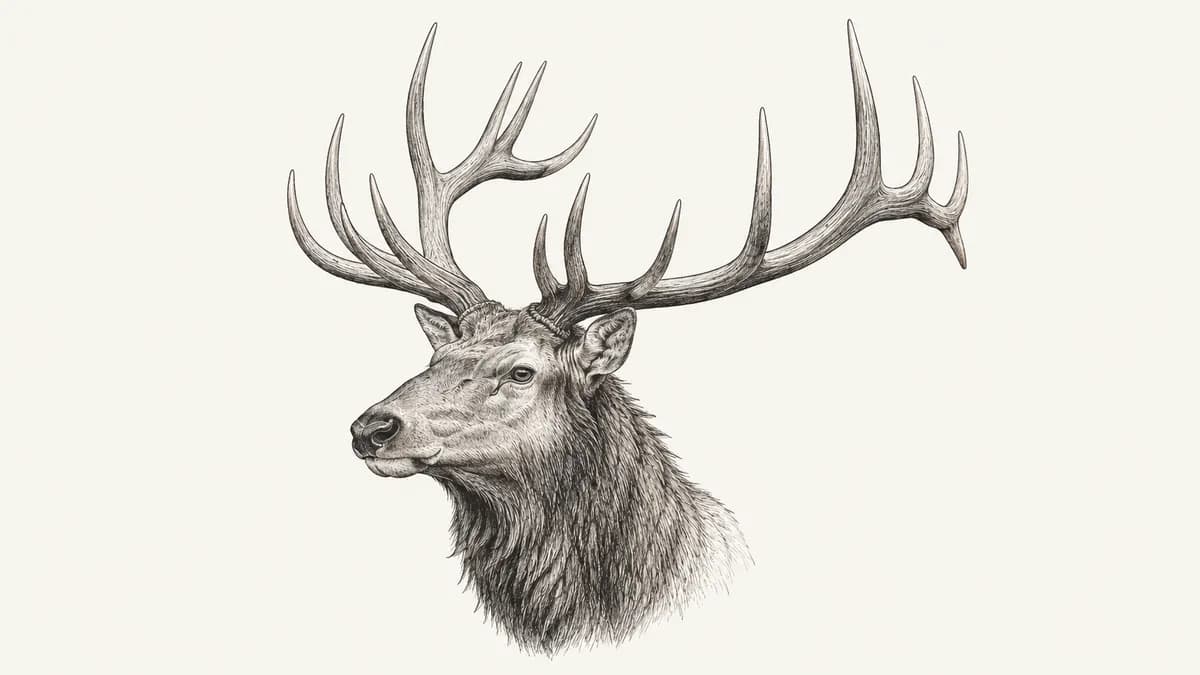
A mature Fiordland bull carries six points per side — three brow tines, a royal, and the back fork — with body weight commonly over 300 kilograms. Long beams and good top development are the marks of a strong bull. Pure wapiti genetics show in lighter body colour, a darker mane, and the high, ringing bugle. Antler size is generally below North American free-range elk but the genuine wilderness setting makes a Fiordland bull one of the most prestigious trophies available anywhere.
The Fiordland Wapiti Foundation maintains scoring records for animals taken under the ballot and recognises trophies that meet block-specific minimum standards. Hybrids — even very large hybrid bulls — are scored separately and managed out of the named blocks where possible.
Related Species
- Red deer — shares the wider Fiordland range; hybridisation is significant.
- Chamois — present on the alpine tops above wapiti country; often hunted as a second animal during bugle trips.
- Sambar — the only larger deer in New Zealand; entirely separate range (lower North Island).
Regulations & Permits
Hunting wapiti during the bugle requires success in the Fiordland Wapiti Foundation ballot. Applications typically open in February each year. Each ballot allocates a named block to a single party for a defined week; rules vary by block but generally limit take to mature bulls of a specified minimum trophy quality, with removal of red-influenced animals encouraged.
Outside the ballot weeks, a free DOC permit covers the wider Fiordland country, including the wapiti area for hybrid wapiti × red deer. Helicopter and float-plane access is permitted but subject to current DOC concessions and operational rules. Always check the current pesticide-operations status before booking flights — 1080 operations are run periodically across Fiordland.
FAQ
When is the wapiti bugle in New Zealand? Late March through mid-April — roughly the last week of March and the first two weeks of April.
How do I apply for the wapiti ballot? Apply through the Fiordland Wapiti Foundation. Applications open in February each year; ballots are run as parties, not individuals.
Are New Zealand wapiti pure or hybrid? The herd is a hybrid population. Pure wapiti genetics persist most strongly in the named blocks, with red-deer influence increasing toward the margins. The Foundation's management programme aims to maintain wapiti dominance in the core blocks.
How big is a Fiordland wapiti bull? A mature bull weighs 300 kilograms or more — larger than any other deer in New Zealand except sambar. Antlers are typically 6 x 6 with long beams.
Can I hunt wapiti outside the ballot? Yes — outside the ballot weeks, hybrid wapiti × red deer in the wider Fiordland area can be hunted on a free DOC permit.
How do I get into wapiti country? Float plane, helicopter, or boat from Te Anau or Manapouri. There is no road access into the wapiti area.
What rifle is appropriate for wapiti? A heavy calibre — .300 Win Mag, .338, or similar — is the standard. Wapiti are large animals and the country is wet, rough, and demanding.