Odocoileus virginianus borealis
White-tailed Deer
See White-tailed Deer range on the map
View where White-tailed Deer are found across New Zealand
Plan a guided whitetail hunt
Outfitters, packages, and pricing for guided White-tailed Deer hunts
Overview
White-tailed deer (Odocoileus virginianus borealis) are small, secretive, and quick — a true bush hunter's deer. While not a "big trophy" animal in the usual sense, a successful free-range white-tail hunt is widely respected as one of the harder achievements in New Zealand hunting. The Stewart Island and Lake Wakatipu herds are the only white-tail populations in New Zealand and, between them, the southernmost free-range white-tail in the world.
Origins & Herd History
White-tail were released in 1905 from US stock — animals shipped from New Hampshire by the New Zealand Tourist Department. Two release sites were chosen: Port Pegasus at the south end of Stewart Island, and the head of Lake Wakatipu near Glenorchy. Both releases were small — approximately nine animals each — and both herds established quickly in their new country.
The two herds have remained discrete and have not spread significantly from their original release areas. Stewart Island has become the larger and more accessible herd; the Wakatipu population has stayed at low density through the Dart, Rees, and Greenstone valleys. Both herds are valued for their genetic purity — neither has experienced significant supplementation from later releases.
Where to Find Them
There are only two distinct herds, both in the lower South Island. Numbers fluctuate with weather and hunting pressure but neither herd has spread significantly from its original range.
- Stewart Island / Rakiura — the main herd; coastal forest, accessible by boat or water taxi
- Lake Wakatipu — the head of the lake and the lower Dart, Rees, and Greenstone valleys
- Surrounding South Westland fringes — occasional sightings but not an established population
Behaviour & Habitat
White-tail are coastal bush deer on Stewart Island and beech-bush river-flat animals around the Wakatipu. They use thick rimu and rata forest with broken sea-edge or river-flat clearings, browsing on broadleaf, fern, and pasture in summer and moving to slightly heavier cover in winter. They are smaller than any other New Zealand deer and use that size to stay in dense cover — most are seen in clearings only briefly.
Diet is broad: broadleaf, fern, mahoe, supplejack, grass, and seasonally on coastal kelp on Stewart Island. The classic alarm signal is the flagged white tail — a high, waving flash as the animal bounds away through bush.
Hunting White-tail
The white-tail rut runs through April into May. Bucks scrape, rub saplings, and make a low grunt rather than a vocal roar, so locating animals depends on sign more than sound. Stewart Island hunting is iconic — short, steep beach approaches into thick rimu and rata forest, often with rain — and hunters typically work from a boat or one of the network of fly-in or boat-in DOC huts.
Wakatipu white-tail are harder, with very low densities through the river flats and bush margins. A free DOC permit is required for public conservation land in both areas, and Stewart Island in particular has its own block system and access logistics — book transport and accommodation well in advance, especially during the rut.
Seasons & Timing
| Period | What's happening | Where it matters most |
|---|---|---|
| Late Apr–May | Peak rut — bucks scraping, grunting | Stewart Island, Wakatipu |
| Jun–Aug | Winter — bush hunting, deer in cover | Stewart Island |
| Sep–Nov | Antler drop, velvet growth | Quiet hunting |
| Dec–Mar | Velvet hardening, summer bush | Beach margins, river flats |
| Apr | Pre-rut — bucks active | Trophy hunting window |
Trophy Notes
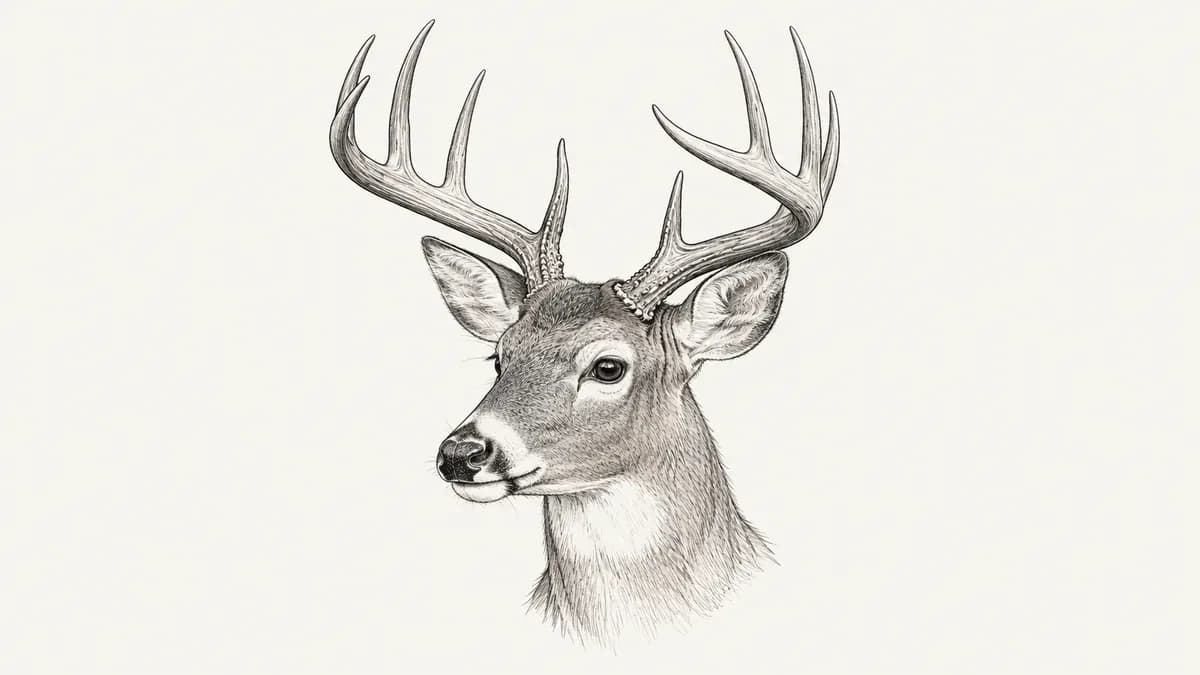
A mature New Zealand white-tail buck weighs 50 to 70 kilograms — roughly half the size of a North American buck of equivalent age. Antlers are correspondingly small but classic in form: a single main beam with tines sweeping forward, typically 3 x 3 or 4 x 4 on a good mature head. Bright white throat patch, raised white tail, and the unmistakable "flag" alarm signal when bouncing away through the bush are diagnostic.
Trophy scoring on New Zealand white-tail recognises that the herd is naturally smaller-bodied than North American white-tail and uses a separate set of expectations. Beam length and matching tines matter more than gross score. Venison from white-tail is excellent and the carcase size suits solo packouts.
Related Species
- Red deer — overlap in the Wakatipu and around the Dart/Rees catchments.
- Fallow deer — both herds are in country adjacent to fallow range (Wakatipu and the Blue Mountains).
- Wild pig — strong populations on Stewart Island; commonly hunted on the same trips.
Regulations & Permits
A free DOC permit is required for white-tail hunting on public conservation land. Stewart Island has block-based access through DOC; the Mt Anglem and Pegasus areas in particular have ballot-style block allocations during the rut. Wakatipu white-tail country is part of Mount Aspiring National Park or adjacent conservation land — standard DOC permit rules apply. Spotlighting is not permitted on conservation land.
Transport to Stewart Island during the rut is a logistics challenge of its own — water taxis, charter boats, and fixed-wing flights all book out months in advance. Plan trips at least a year ahead for rut weeks.
FAQ
When is the white-tail rut in New Zealand? Late April through May, peaking in early May. Slightly later than the red roar and overlapping with the fallow groan.
Where can I hunt white-tail in New Zealand? Stewart Island and the head of Lake Wakatipu. These are the only two white-tail herds in the country.
Is Stewart Island white-tail hunting hard? Yes — the country is thick, often wet, and the deer are small and secretive. Most successful trips run 5–7 days.
Do I need a boat to hunt Stewart Island? Most successful Stewart Island white-tail hunts use a boat, water taxi, or fly-in to a hut. There are some walk-in options from Oban (Halfmoon Bay) but they are far from the best blocks.
How big are New Zealand white-tail? Smaller than North American white-tail. A mature buck weighs 50 to 70 kilograms with antlers typically 3 x 3 or 4 x 4 on a good head.
What rifle is best for white-tail? A light, fast-handling rifle in 6.5mm Creedmoor, .243, or .308 is ideal. Shots are usually inside 80 metres in dense cover.
Are white-tail venison different from red deer? Yes — finer-grained, slightly milder. Carcase size makes it easier to handle whole, which suits Stewart Island bush hunting where packouts can be short and rough.