Cervus timorensis
Rusa Deer
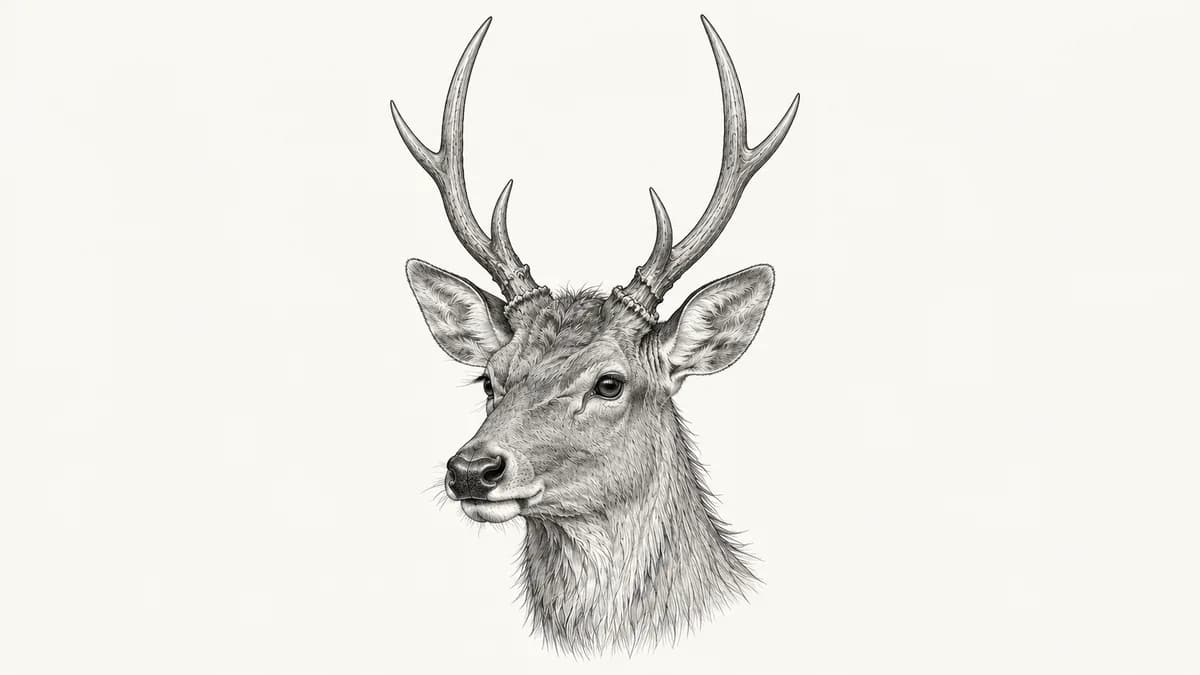
See Rusa Deer range on the map
View where Rusa Deer are found across New Zealand
Plan a guided rusa hunt
Outfitters, packages, and pricing for guided Rusa Deer hunts
Overview
Rusa deer (Cervus timorensis) are the rarest of New Zealand's six deer species. They were released near Galatea in 1907 from Noumea (New Caledonia) stock and have never spread far from that original release point. The total population is small — estimates run in the low thousands — and rusa are tightly tied to the warmer, drier scrub-and-bush country east of Lake Rotorua. A free-range rusa is an unusual and prized animal for hunters working through New Zealand's full species list.
Origins & Herd History
The original New Zealand rusa came from New Caledonia in 1907 — a gift to the Auckland Acclimatisation Society. The animals were released near Galatea in the Bay of Plenty hinterland. The New Caledonian stock was itself descended from Javan rusa introduced to that French territory in the 19th century, which is why the New Zealand herd is occasionally listed under the older name Cervus timorensis russa.
The herd has expanded slowly westward into the Kaingaroa forestry blocks and the western fringes of Whirinaki Te Pua-a-Tāne Conservation Park, and intermittently eastward into the Te Urewera fringes. Population pressure on the original release country has historically been modest because rusa do not compete well with red deer; their range has stayed roughly the same since the 1950s.
Where to Find Them
The rusa range is one of the smallest of any introduced deer in New Zealand, confined to a strip of country between Galatea, Murupara, and the western edge of Whirinaki Te Pua-a-Tāne Conservation Park. The herd uses farmland edges, scrub, and forestry as much as native bush.
- Galatea basin — the historic core of the herd
- Whirinaki Te Pua-a-Tāne Conservation Park (western edge) — public bush hunting
- Murupara and Kaingaroa Forest edges — forestry-block country
- Te Urewera fringe — occasional movement east; not a reliable population
Behaviour & Habitat
Rusa favour warmer, drier country than New Zealand's other deer species — they originate from tropical New Caledonia and retain that climate preference. They use scrub margins, regenerating bush, and forestry edges, and avoid the colder high country and wetter bush blocks that red deer dominate. Mobs are smaller than fallow or sika groups, often three to six animals, with mature stags solitary outside the rut.
Diet is broad: grass, fern, broadleaf browse, blackberry, and pine seedlings. Rusa drop their antlers in summer (January–March), regrow them through autumn, and clean velvet ready for the midwinter rut — almost the opposite cycle to most temperate deer.
Hunting Rusa
Unlike most NZ deer, rusa rut in midwinter — July and August — driven by tropical ancestry. Stags become highly vocal in this window, producing a harsh, single-note honk that is unmistakable in rusa country. Outside the rut, rusa are very secretive and use thick cover during the day, browsing scrub-pasture edges at first and last light.
Most public-land rusa hunting takes place on the western edge of Whirinaki and in adjacent forestry blocks where access is by permit. Densities are low and a successful free-range rusa hunt typically requires multiple trips, good local knowledge, and patience to learn the herd's movements. A DOC permit is required for conservation land, and separate permission is required for forestry and private blocks.
Seasons & Timing
| Period | What's happening | Where it matters most |
|---|---|---|
| Jul–Aug | Peak rut — stags vocal | Galatea, western Whirinaki |
| Sep–Dec | Hard antlers, post-rut feeding | Bush-edge stalking |
| Jan–Mar | Antler drop, velvet growth | Quiet hunting |
| Apr–Jun | Velvet hardening, pre-rut | Mature stags becoming active |
Trophy Notes
A mature rusa stag carries six points — three tines per beam — slender and elegant compared with the heavier sambar. The brow tine projects sharply forward and the back fork is long and lyre-shaped. Body weight is intermediate between fallow and red. Rusa coats are dark grey-brown in winter, with a paler underside and noticeably tall, narrow ears.
Trophy scoring on rusa weights length and beam more than point count. A clean, evenly-tined stag with long beams and good pearling around the burr is the classic measure. Free-range New Zealand rusa are uncommon trophies internationally — the country's herd is one of the few free-range populations outside Asia and the Pacific.
Related Species
- Sambar — the closest relative; similar three-tined antlers, much heavier body.
- Sika — overlap in some country at the western edge of the rusa range; sika are smaller and more bush-tied.
- Red deer — present throughout the rusa range; red deer dominate the wetter, colder country.
Regulations & Permits
A free DOC permit covers public conservation land in Whirinaki and adjacent blocks. Forestry-block access is by paid permit from the relevant forestry company — Kaingaroa is one of the major holders in the rusa range. Private land hunting requires landowner permission. Spotlighting is not permitted on conservation land. Pig-dog use on conservation land must comply with current dog-control conditions; check current 1080 operation status before any trip — the Kaingaroa and surrounding country is regularly under control.
FAQ
When is the rusa rut in New Zealand? July and August — midwinter. Rusa are the only New Zealand deer to rut at this time of year, driven by their tropical ancestry.
Where are rusa deer found in New Zealand? A small range east of Lake Rotorua, centred on Galatea and the western fringe of Whirinaki Te Pua-a-Tāne Conservation Park.
How rare are rusa in New Zealand? The population is estimated in the low thousands — the smallest of New Zealand's six introduced deer species.
Can I hunt rusa on public land? Yes — the western edge of Whirinaki has public conservation land hunting. Densities are low and most successful hunts use a combination of conservation land and forestry blocks.
What does a rusa stag sound like in the rut? A harsh, single-note honk — quite different from red or sika. The call carries through scrub and pine forest country.
Are rusa as big as red deer? No — rusa are intermediate between fallow and red. Body weight is roughly 100 to 130 kilograms for a mature stag.
What rifle is best for rusa? A medium calibre — 6.5mm Creedmoor through .30-06 — is plenty. Most shots are inside 150 metres in mixed scrub and forestry country.